
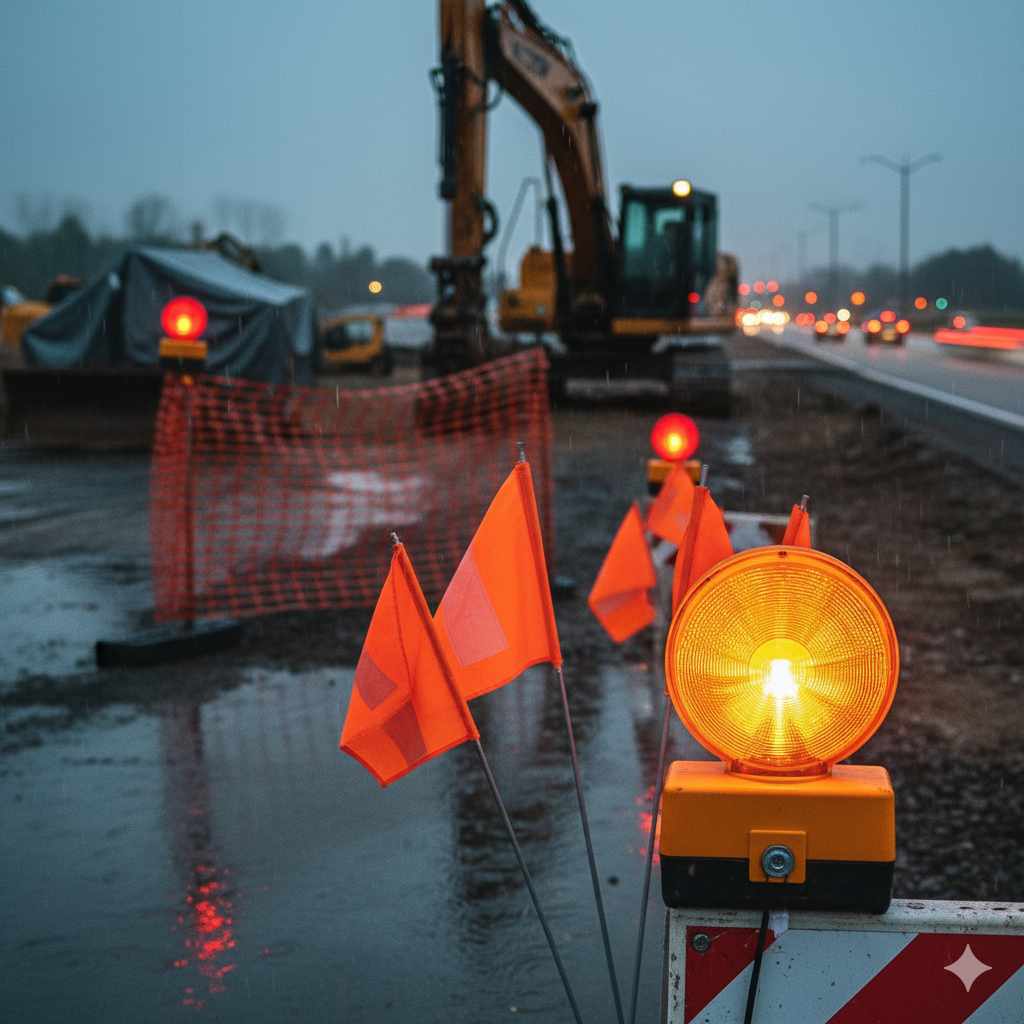
Quick Summary: Standard orange flags are best for marking stationary hazards like open trenches or equipment in daylight. Flashing warning lights are essential for low visibility conditions, nighttime, or high-traffic areas to grab immediate attention and prevent accidents. Choose based on visibility needs and hazard type.
Working on a home improvement project, especially one that impacts your yard or driveway, often means dealing with temporary hazards. You might have dug a trench for a new irrigation system, left some tools out, or are painting a section of your fence. These situations create risks for family, friends, and even delivery drivers. You want to make sure everyone stays safe and knows to be careful. This can feel a bit overwhelming, but it’s simpler than you think! We’ll break down exactly when to use those bright orange flags and when to switch on those blinking warning lights, so you can keep your project zone secure and everyone out of harm’s way. Let’s get your DIY safety sorted!
Understanding Your Safety Signals: Orange Flags vs. Flashing Lights
As a DIY enthusiast, keeping your workspace safe is just as important as the project itself. You’ve likely seen those bright orange flags and flashing warning lights at construction sites or when roadwork is happening. They’re there for a reason – to alert people to potential dangers. But when do you use which? It’s not just about grabbing attention; it’s about using the right tool for the job to prevent accidents. Let’s dive into what each of these safety signals is best for.
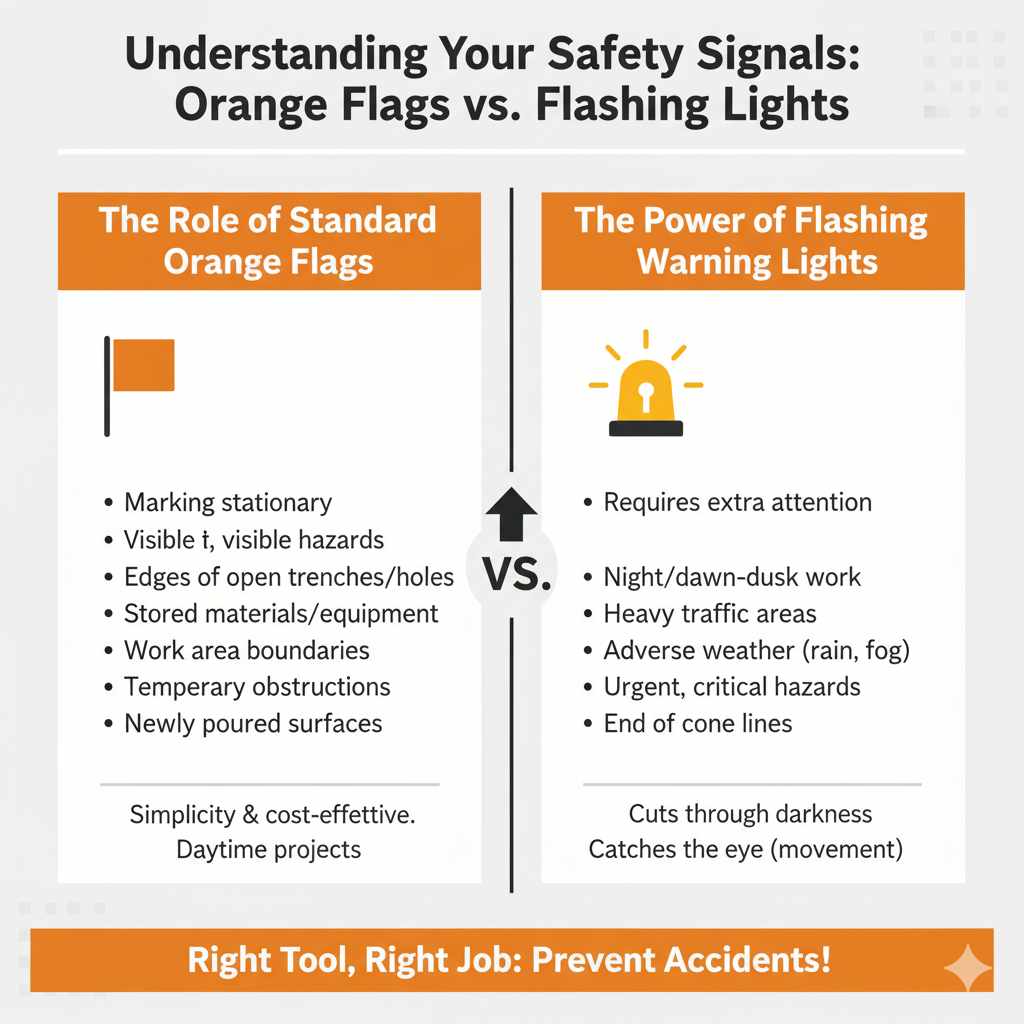
The Role of Standard Orange Flags
Orange flags are your go-to for marking stationary, visible hazards. Think of them as clear, bright signs that say, “Look here! Something is different.” They are highly visible in daylight and are perfect for situations where the hazard isn’t moving and the area is generally well-lit.
When to Use Orange Flags:
- Marking the edges of open trenches or holes in the ground.
- Indicating the location of stored materials or equipment that might be in the way.
- Delineating the boundaries of a work area where digging or construction is occurring.
- Highlighting temporary obstructions on pathways or driveways.
- Signaling the presence of newly poured concrete or freshly sealed surfaces.
The beauty of orange flags is their simplicity and cost-effectiveness. They are easy to deploy, require no power, and are universally recognized as a warning. For daytime projects where clear visibility is not an issue, they provide an effective visual cue.
The Power of Flashing Warning Lights
Flashing warning lights, often seen as beacons or strobes, are designed for situations where extra attention is needed. They cut through darkness, fog, rain, or even bright sunlight when a simple flag might be missed. Their blinking nature is specifically engineered to catch the eye and signal a more urgent or critical hazard.
When to Use Flashing Warning Lights:
- Working at night or during dawn/dusk hours.
- In areas with heavy pedestrian or vehicle traffic where maximum visibility is crucial.
- During adverse weather conditions like heavy rain, snow, or fog.
- To warn about moving equipment or vehicles within the work zone.
- When a hazard needs immediate and undeniable attention.
- Marking the end of a long line of cones or barriers.
Flashing lights are especially effective because the human eye is naturally drawn to movement and flashing patterns. This makes them a superior choice when passive visibility might not be enough to ensure safety. You can find various types, from battery-powered portable units to solar-powered options that are great for longer-term projects.
Choosing the Right Safety Tool for Your Project
Deciding between orange flags and flashing lights depends on a few key factors related to your specific project and its environment. It’s all about matching the warning to the risk.
Assessing Your Hazard
First, consider what you are trying to warn people about. Is it a static, visible obstacle, or something that requires immediate, unavoidable attention?
- Stationary Hazards: A hole in the ground, a pile of lumber, or a parked wheelbarrow are typically well-marked with orange flags during daylight.
- Dynamic or Low-Visibility Hazards: If you’re working near a driveway where cars might be entering and exiting, especially at dusk, or if you’re digging a trench that needs to be seen from a distance in poor light, flashing lights become essential.
Considering Environmental Conditions
The environment where your project is taking place plays a huge role in selecting the appropriate safety signal.
- Daylight vs. Nighttime: This is the most obvious differentiator. Orange flags are highly visible in good light. Flashing lights are critical when natural light fades.
- Weather: Heavy rain, snow, or fog can significantly reduce visibility. In such conditions, the intermittent flash of a warning light can pierce through the gloom much better than a static flag.
- Traffic Volume: If your project area sees a lot of foot traffic or vehicle movement, you need a more robust warning system. Flashing lights are more attention-grabbing in busy areas than flags alone.
Project Duration and Scale
The length of time your hazard will be present and the size of your project also influence your choice.
- Short-Term Projects: For a quick task that might leave a minor obstruction for a few hours, a few strategically placed orange flags might suffice.
- Long-Term Projects: If your project will span days or weeks, or if the hazard is significant (like a deep excavation), a combination of flags and flashing lights, or solely flashing lights, might be necessary for continuous safety.
A Practical Comparison: Flags vs. Lights
To make the decision even clearer, let’s look at a direct comparison of their strengths and weaknesses in common DIY scenarios.
| Feature | Standard Orange Flags | Flashing Warning Lights |
|---|---|---|
| Best For | Daytime, stationary hazards, marking boundaries. | Nighttime, low visibility, high traffic, urgent warnings. |
| Visibility | Good in daylight, can be missed in poor light or distance. | Excellent in all light conditions, highly attention-grabbing. |
| Power Requirement | None. | Batteries, solar power, or mains power. |
| Cost | Very low. | Moderate to high, depending on type and features. |
| Ease of Use | Extremely simple to deploy. | Simple to deploy, but may require charging or battery checks. |
| Durability | Can be affected by wind and weather. | Generally robust, but electronic components can be sensitive. |
| Typical Use Case | Marking a shallow trench for a garden hose. | Warning about a large excavation at night. |
Implementing Safety Measures: Step-by-Step
Now that you understand the differences, let’s walk through how to effectively use these safety tools in your home projects.
Step 1: Identify and Assess the Hazard
Before you even pick up a flag or a light, walk around your project area. What are the potential dangers? Is it a tripping hazard, a hole, a sharp object, or a wet surface? Who might encounter this hazard (e.g., kids playing, guests, delivery personnel)? How visible is the hazard naturally?
Step 2: Choose Your Safety Signal(s)
Based on your hazard assessment, decide which signal is most appropriate. For most daytime, simple hazards, orange flags will work. If it’s dark, foggy, or the hazard is particularly dangerous, opt for flashing lights. Sometimes, a combination is best – using flags to delineate an area and a flashing light at a critical point.
Step 3: Deploy Safely and Effectively
For Orange Flags:
- Placement: Place flags at regular intervals around the hazard. For a trench, put one at each end and several along the sides. For an obstruction, place one directly next to it and perhaps one on the approach.
- Visibility: Ensure the flags are upright and not obscured by other materials. They should be easily seen from a reasonable distance.
- Securing: If the ground is soft, push the flag stakes firmly into the soil. If it’s hard, you might need a mallet.
For Flashing Warning Lights:
- Placement: Position lights where they will be most visible to approaching individuals. This might be at the beginning of a hazard zone, on top of a barrier, or near the hazard itself.
- Functionality Check: Turn the light on and ensure it’s flashing correctly. If it’s battery-powered, check the battery level. For solar-powered lights, ensure they’ve had sufficient sunlight to charge.
- Securing: Most warning lights have a base that can be placed on flat surfaces or weighted down. Some can be attached to cones or poles.
Step 4: Maintain Your Safety Signals
Throughout your project, periodically check your flags and lights. Are the flags still standing? Has a light been knocked over? Are batteries running low? Regular checks ensure continuous safety.
Step 5: Remove When No Longer Needed
Once your project is complete and the hazard is removed or made safe, remember to take down your flags and lights. Leaving them up unnecessarily can cause confusion or lead people to ignore them over time.
When to Use Both: Enhanced Safety
There are situations where a single type of warning isn’t enough. Combining orange flags and flashing warning lights can provide a robust safety system, especially for larger or more complex projects.
- Large Excavations: Use flags to mark the entire perimeter of a large dig site and place flashing lights at key entry points or at intervals along the boundary, especially if work continues into the evening.
- Driveway or Road Work: If you’re working on your driveway and need to block off access for a day or two, use cones with flags attached to mark the edges, and place flashing lights at the entrance to signal that the area is closed, particularly at night.
- Areas with Mixed Traffic: If your project area is used by both pedestrians and vehicles, using flags to guide pedestrian flow and flashing lights to warn vehicles can create a safer environment for everyone.
This layered approach ensures that the hazard is visible in all conditions and from various angles, significantly reducing the risk of accidents. You can learn more about workplace safety best practices from organizations like the Occupational Safety and Health Administration (OSHA), which provides valuable guidance applicable to any work zone, including your DIY projects.
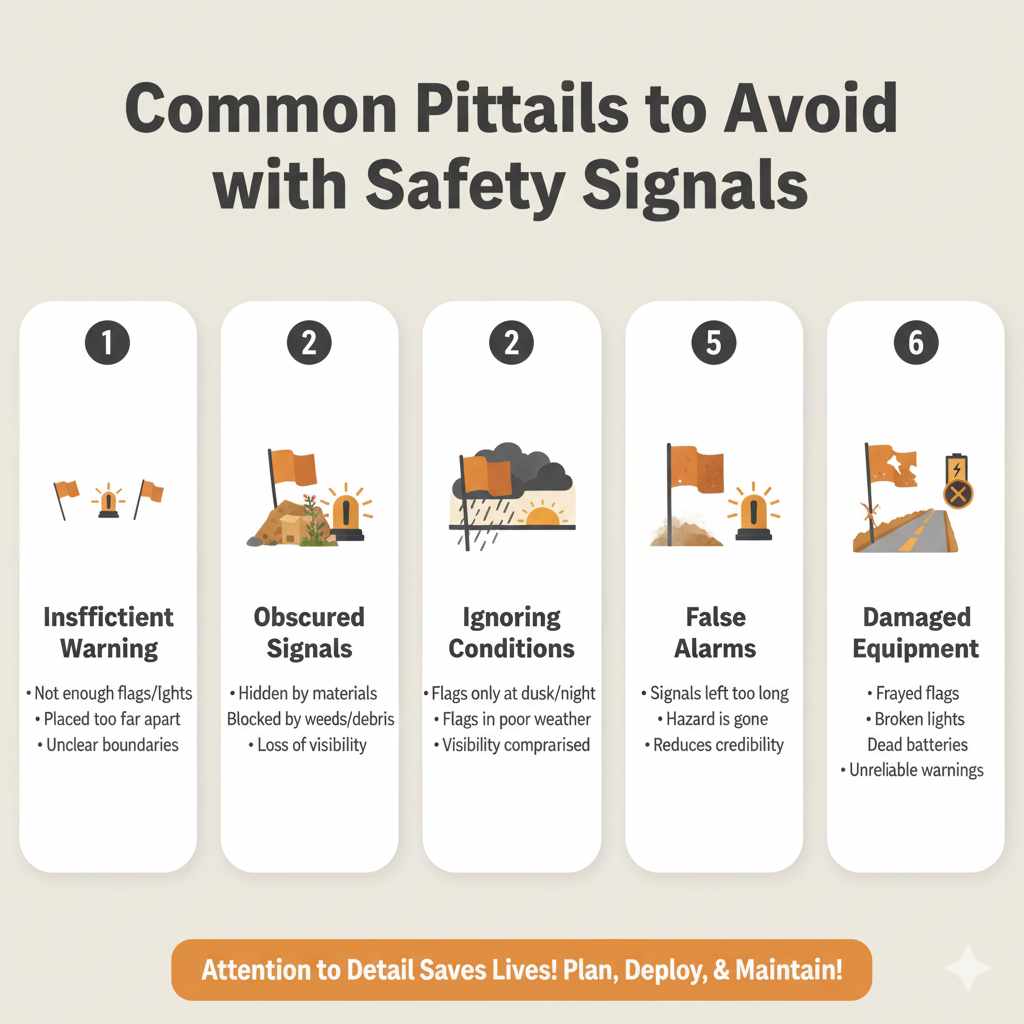
Common Pitfalls to Avoid
Even with the best intentions, safety measures can sometimes fall short. Here are a few common mistakes to watch out for:
- Insufficient Warning: Not using enough flags or lights, or placing them too far apart.
- Obscured Signals: Letting materials, weeds, or debris hide your warning flags or lights.
- Ignoring Conditions: Relying solely on flags during dusk or poor weather.
- False Alarms: Leaving safety devices up long after the hazard is gone.
- Damaged Equipment: Using frayed flags or lights with dead batteries.
A little attention to detail in deploying and maintaining your safety signals can make a world of difference.
Frequently Asked Questions (FAQ)
Q1: Are orange flags mandatory for DIY projects?
While not always legally mandated for small DIY projects like they are for commercial sites, using orange flags or other visual warnings is highly recommended for any project that creates a hazard. It’s about being a responsible homeowner and protecting others.
Q2: Can I use regular garden stakes with orange paint instead of flags?
It’s better to use actual safety flags or brightly colored, highly visible materials specifically designed for warning. Orange flags are a standard, universally recognized signal. Painted stakes might not be as visible or might be mistaken for something else.
Q3: How long should a flashing warning light stay on?
Flashing warning lights are designed for continuous operation while the hazard is present. Ensure they have a reliable power source (charged batteries, solar power) to last for the duration of your project, especially if it extends into the night.
Q4: What’s the difference between an orange flag and a construction flag?
In the context of safety warnings, “orange flag” and “construction flag” are often used interchangeably. They both refer to the bright orange, typically square or triangular pieces of fabric or plastic attached to a pole or stake, used to mark hazards.
Q5: Is it okay to use a red flashing light instead of orange?
Red lights are often associated with stopping or danger, and while they are attention-grabbing, standard safety protocols often prefer amber or orange for general hazard marking. Red lights might be reserved for specific emergency vehicle signals. For general DIY hazard marking, stick with standard orange or amber flags and lights.
Q6: My project is in my backyard, away from the street. Do I still need warnings?
Yes, especially if family members, friends, or pets will be in the area. A hole in the lawn or a pile of tools can be just as dangerous to someone relaxing in their backyard as it is to a passerby on the street. Always consider who might encounter the hazard.
Q7: Where can I buy good quality orange flags and flashing warning lights?
You can find these safety items at most hardware stores, home improvement centers, and online retailers. Look for durable materials that can withstand outdoor conditions. For flashing lights, consider options with long battery life or solar charging capabilities.
Conclusion
Keeping your DIY projects safe doesn’t have to be complicated. By understanding the distinct roles of standard orange flags and flashing warning lights, you can make informed decisions to protect yourself and others. Remember, orange flags are excellent for clearly marking stationary hazards in daylight, offering a simple and visible alert. Flashing warning lights are your powerful allies when visibility is compromised—during nighttime, bad weather, or in busy areas—demanding immediate attention. For larger or more critical projects, combining both can create an unmissable safety net. Always assess your specific hazard, consider the environmental conditions, and deploy your chosen signals thoughtfully. With a little preparation and attention to these safety basics, you can tackle your home improvement goals with confidence, knowing you’ve taken the right steps to keep everyone safe and sound.