
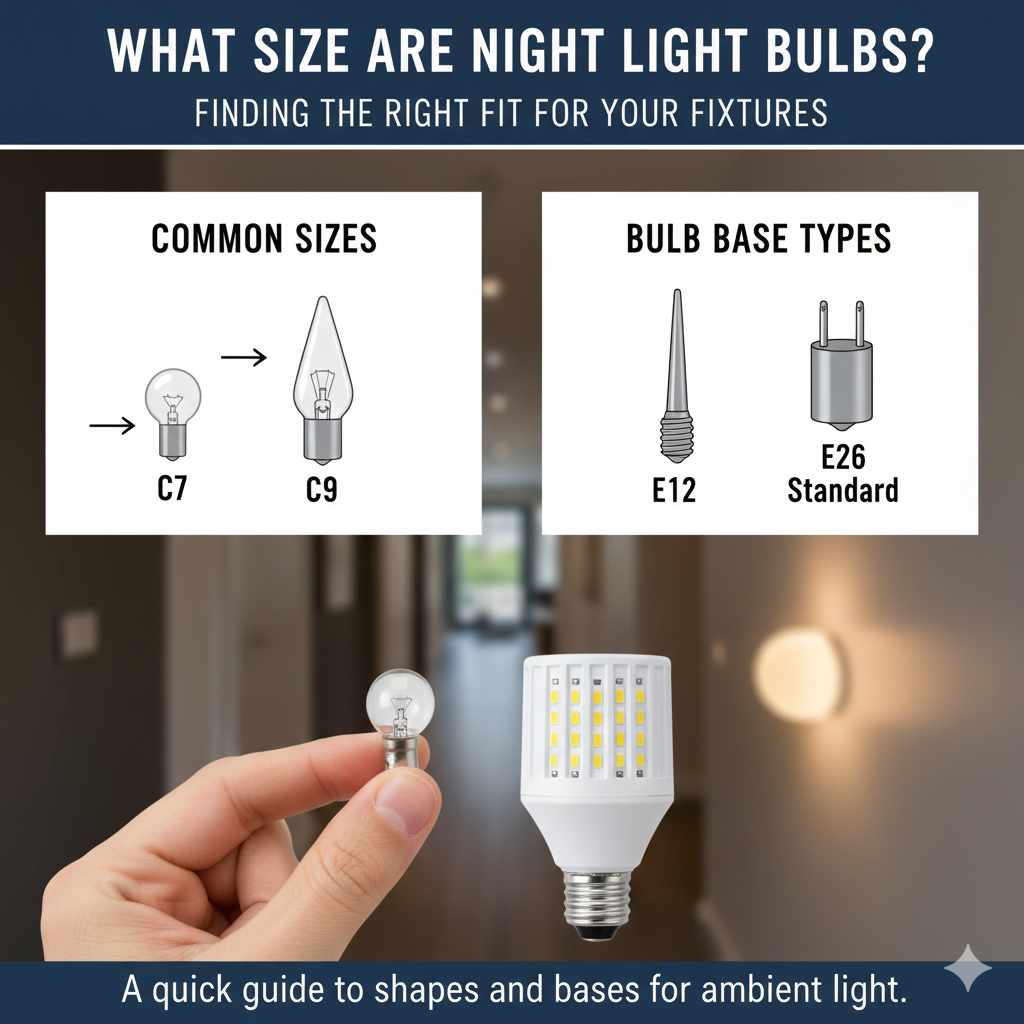
Quick Summary: Night light bulbs come in various common sizes, with the most frequent being C7 and E12 candelabra bases. Understanding these sizes ensures you pick the right bulb for your fixture, providing safe, gentle illumination without hassle.
Night lights are a simple, wonderful way to add a touch of comfort and safety to any room, especially for little ones or in hallways. But when it comes time to replace a bulb, you might find yourself staring at a tiny socket and wondering, “What size are night light bulbs, anyway?” It can feel a bit confusing with so many different types of bulbs out there. Don’t worry! This guide is here to make it super simple. We’ll walk through the common sizes and how to easily find the perfect fit for your night light. Let’s get your comforting glow back on!
Understanding Night Light Bulb Sizes: A Beginner’s Guide
As your go-to guide for home improvement, I know that sometimes the smallest details can cause the biggest headaches. Figuring out the right bulb size for a night light is one of those things. It’s not about complex wiring or fancy tools; it’s just about knowing what to look for. The good news is, most night lights use a few standard bulb bases that are easy to identify.
The “size” of a night light bulb usually refers to two main things: the shape and size of the glass bulb itself, and the size of the metal base that screws into the socket. Getting these right means your night light will not only fit but also function as intended, providing that soft, ambient light you’re looking for.
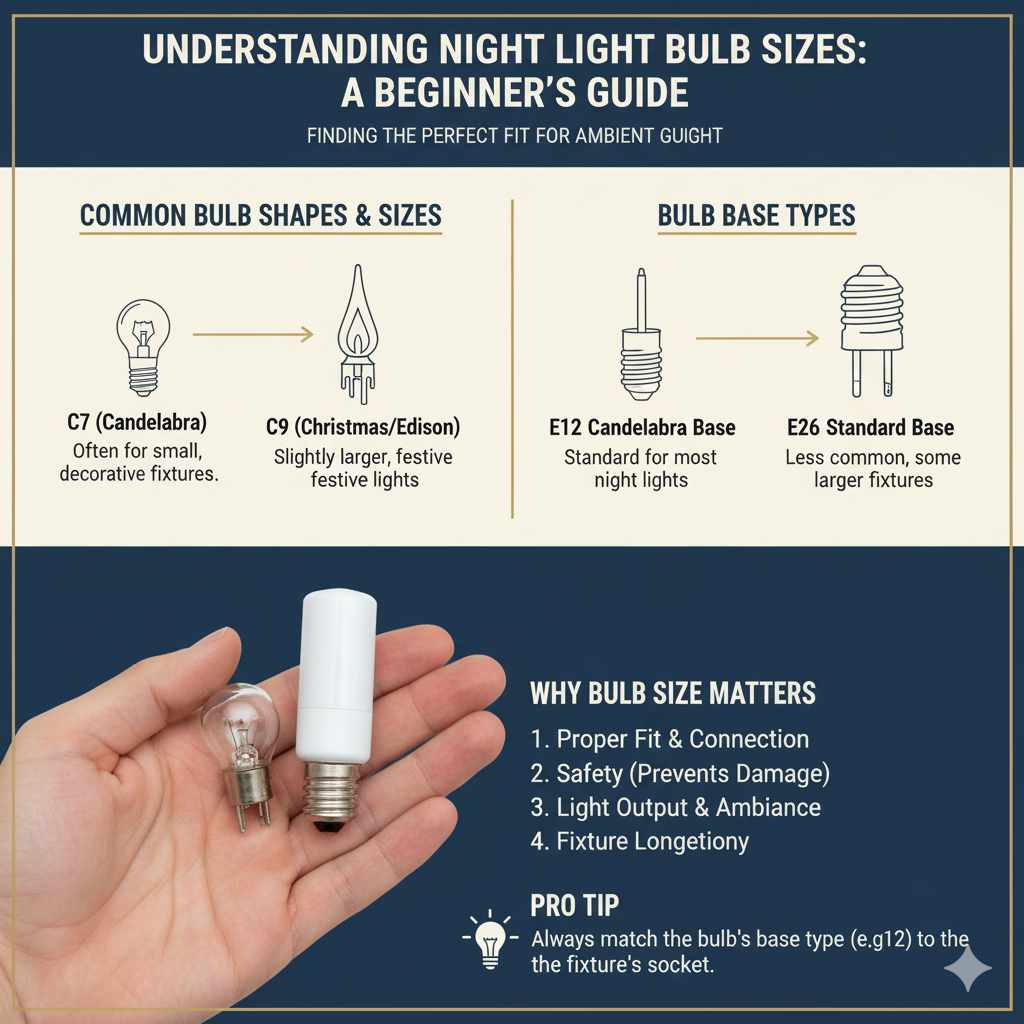
Why Bulb Size Matters
It might seem like a small detail, but using the correct bulb size is crucial for a few reasons:
- Proper Fit: The base of the bulb needs to match the socket in your night light fixture. Too small or too large, and it simply won’t connect or stay in place.
- Safety: Using the wrong wattage or type of bulb can be a fire hazard or damage your fixture. Night lights are designed for low-wattage bulbs.
- Light Output: Different bulb shapes and sizes can affect how the light is diffused and spread, impacting the overall ambiance.
- Longevity: The right bulb ensures your night light operates efficiently and doesn’t overheat, which can shorten its lifespan.
The Most Common Night Light Bulb Bases
When you’re looking at night lights, you’ll mostly encounter two types of bulb bases. These are the metal parts at the bottom of the bulb that screw into the socket. Knowing these will help you immensely when you’re at the store or shopping online.
1. Candelabra Base (E12)
This is perhaps the most common base for night lights. The “E” in E12 stands for Edison, the inventor of the screw-in light bulb, and the “12” refers to the diameter of the base in millimeters. So, an E12 base is about 12mm across.
Characteristics of E12 bulbs:
- Smaller than a standard household bulb base (which is usually E26 or E27).
- Often found in decorative lighting, chandeliers, and, of course, night lights.
- They typically come in smaller bulb shapes, like torpedo, round, or flame tips.
When you see a night light with a small, screw-in base, chances are it’s an E12 candelabra base. It’s a good idea to unscrew the old bulb (make sure the night light is unplugged first!) and look at the base. You might see “E12” printed on it, or you can measure its diameter to confirm.
2. Intermediate Base (E17)
While less common for typical plug-in night lights than the E12, the E17 intermediate base does appear in some applications, especially in larger or older night light fixtures, or sometimes in appliance indicators. The E17 base is 17mm in diameter.
Characteristics of E17 bulbs:
- Larger than an E12 candelabra base but smaller than a standard E26/E27 base.
- Often used in certain types of ovens, microwaves, and some decorative lamps.
- Bulb shapes can vary, but they are generally a bit more substantial than E12 bulbs.
If you can’t find an E12 bulb that fits, or if the socket looks a bit wider, check if it might be an E17. Again, checking the old bulb or the fixture itself for markings is your best bet.
3. Miniature Screw Base (E5)
You might encounter E5 bases in very small, specialized night lights or accent lights. This base is only 5mm in diameter. These are quite rare for general home night lights but are worth knowing about for completeness.
Characteristics of E5 bulbs:
- Very tiny, making them suitable for miniature lamps and specific decorative items.
- Often used in string lights or small craft projects.
Common Night Light Bulb Shapes
Beyond the base size, the shape of the glass part of the bulb also plays a role in how light is cast. Here are some common shapes you’ll find for night lights:
- C7: This is a very common shape for night light bulbs. It’s essentially a smaller version of the old-fashioned incandescent Christmas light bulb, with a roughly cylindrical shape that tapers to a rounded or flat top. C7 bulbs typically use an E12 candelabra base.
- C35/B (Torpedo/Bulbous): These bulbs are more rounded or bulb-shaped, often with a slightly tapered tip. They can come with E12 bases and are a popular choice for a softer, more diffused glow.
- G-Type (Globe): While less common for standard plug-in night lights, small globe-shaped bulbs can be used in some decorative night light fixtures. These often have an E12 base.
- Specialty Shapes: Some decorative night lights feature bulbs shaped like stars, animals, or other figures. These will usually have a specific base size (most often E12) and the shape is integrated into the bulb’s design.
LED vs. Incandescent Night Light Bulbs
When you’re choosing a night light bulb, you’ll also have the option between traditional incandescent bulbs and modern LED bulbs. Both have their pros and cons, and understanding them can help you make the best choice for your needs.
Incandescent Bulbs
These are the older, traditional type of bulbs. They produce light by heating a filament until it glows. For night lights, they are typically very low wattage (usually 4-7 watts).
Pros:
- Inexpensive to purchase initially.
- Provide a warm, familiar glow.
- Readily available in common night light sizes.
Cons:
- Use more energy than LEDs.
- Get hot to the touch, which can be a safety concern, especially around children.
- Have a shorter lifespan compared to LEDs.
LED (Light Emitting Diode) Bulbs
LEDs are the modern, energy-efficient choice. They produce light using semiconductors and use significantly less electricity.
Pros:
- Extremely energy-efficient, saving you money on electricity bills.
- Produce very little heat, making them much safer to touch.
- Have a very long lifespan, often lasting for years.
- Available in a wide range of colors and brightness levels.
- More durable as they have no fragile filament.
Cons:
- Higher initial purchase price, though this is often offset by energy savings and longevity.
- Some people find the light quality slightly different from incandescent, though this is improving rapidly.
For most people, especially when considering safety and long-term cost, LED night light bulbs are the way to go. They offer peace of mind and are better for your wallet and the environment. You can find LED bulbs designed to fit E12 and other common night light bases.
How to Find the Right Size Night Light Bulb: A Step-by-Step Approach
Don’t let the variety of options overwhelm you! Finding the right bulb is straightforward if you follow these simple steps:
Step 1: Unplug the Night Light!
This is the most important safety step. Before you do anything else, make sure the night light is unplugged from the wall socket. This prevents any risk of electric shock.
Step 2: Remove the Old Bulb
Gently unscrew the old bulb from the socket. It usually just twists counter-clockwise, like a regular light bulb. If the bulb is broken, be very careful and consider wearing gloves. If it’s stuck, try a gentle wiggle.
Step 3: Inspect the Old Bulb
Once you have the old bulb out, take a close look at it. You’re looking for:
- The Base: Check the size of the metal screw base. Is it small (likely E12) or slightly larger? Sometimes, the base itself will have markings like “E12” or “C7”.
- The Shape: Note the shape of the glass part of the bulb. Is it a torpedo shape, a small round bulb, or something else?
- Wattage: Look for the wattage printed on the bulb. Night lights almost always use low wattage (e.g., 4W, 7W). It’s crucial not to exceed the recommended wattage for your fixture.
Step 4: Check the Fixture (If Possible)
If the old bulb is missing or unreadable, look at the night light fixture itself. Sometimes, there’s a label or engraving near the socket that indicates the required bulb type or maximum wattage. This is especially true for newer fixtures.
Step 5: Measure the Base
If there are no markings, you can measure the diameter of the metal base. A standard E12 candelabra base is about 12mm (or roughly half an inch) across. An E17 intermediate base is about 17mm (or about 2/3 of an inch).
Step 6: Purchase the Correct Bulb
Now you know what you need! Head to your local hardware store, supermarket, or online retailer. Look for bulbs that match the base size (most likely E12), shape (like C7), and wattage. If you’re opting for LED, ensure it’s an LED bulb with the correct E12 base and a similar brightness level to what you’re replacing.
Step 7: Install the New Bulb
With the night light still unplugged, gently screw the new bulb into the socket. It should turn clockwise and feel snug, but don’t overtighten it. Plug the night light back in, and you should have your comforting light again!
Common Night Light Bulb Sizes and Types Chart
To make things even clearer, here’s a quick reference chart. Remember, for most standard plug-in night lights, you’ll be looking at the E12 base with a C7 or similar shape bulb.
| Base Type | Diameter (approx.) | Common Bulb Shapes | Typical Use | Example Wattage (Incandescent) |
|---|---|---|---|---|
| E12 (Candelabra) | 12mm (0.47 inches) | C7, Torpedo, Flame Tip, Small Globe | Most common for night lights, decorative lamps, chandeliers | 1W – 7W |
| E17 (Intermediate) | 17mm (0.67 inches) | Various, often slightly larger | Some appliance lights, larger night lights, ovens | 7W – 15W |
| E5 (Miniature Screw) | 5mm (0.20 inches) | Tiny, specialized shapes | Very small decorative lights, string lights, crafts | 1W – 3W |
Note: Wattage for LED bulbs is measured differently. An LED that uses only 1-2 watts can often replace a 7-watt incandescent bulb, providing similar brightness while being far more efficient. Always check the packaging for equivalent wattage if switching from incandescent to LED.
Where to Buy Night Light Bulbs
Finding replacement bulbs for your night lights is usually quite easy. You can find them at:
- Hardware Stores: Stores like Home Depot, Lowe’s, Ace Hardware, or your local independent hardware store are excellent places to find a variety of bulb types.
- Supermarkets and Discount Stores: Many larger grocery stores and retailers like Walmart or Target have a lighting section where you can often find common night light bulbs.
- Online Retailers: Amazon, eBay, and specialized lighting websites offer a huge selection. This is often the best place to find specific LED replacements or bulk packs.
- Specialty Lighting Stores: If you have a store dedicated to lighting fixtures and bulbs, they will undoubtedly have what you need.
When buying online, make sure to double-check the base size (E12 is most common), the bulb shape, and the wattage. Reading customer reviews can also be helpful!
Tips for Using and Maintaining Night Lights
To get the most out of your night lights and ensure they function safely and effectively, here are a few tips:
- Keep it Clean: Dust can accumulate on the bulb and the fixture, dimming the light and potentially becoming a fire hazard if it’s an incandescent bulb. Wipe them down gently with a dry or slightly damp cloth during regular cleaning.
- Check for Damage: Periodically inspect the cord and plug of your night light for any signs of fraying or damage. If you see any, it’s time to replace the fixture.
- Use the Correct Wattage: As mentioned, always stick to the recommended wattage. Exceeding it is a common cause of overheating and potential fire. For incandescent bulbs, this is usually 7 watts or less.
- Consider LED Replacements: If you’re still using incandescent bulbs, consider switching to LED versions. They are safer, more energy-efficient, and last much longer. Many LED night light bulbs mimic the warm glow of incandescent bulbs.
- Placement Matters: Position night lights where they provide the most useful illumination without causing glare or disruption to sleep. For example, in a hallway, aim for a mid-height placement.
- Test Regularly: Especially if you have young children, ensure your night lights are functioning correctly before bedtime.
Understanding Bulb Wattage for Night Lights
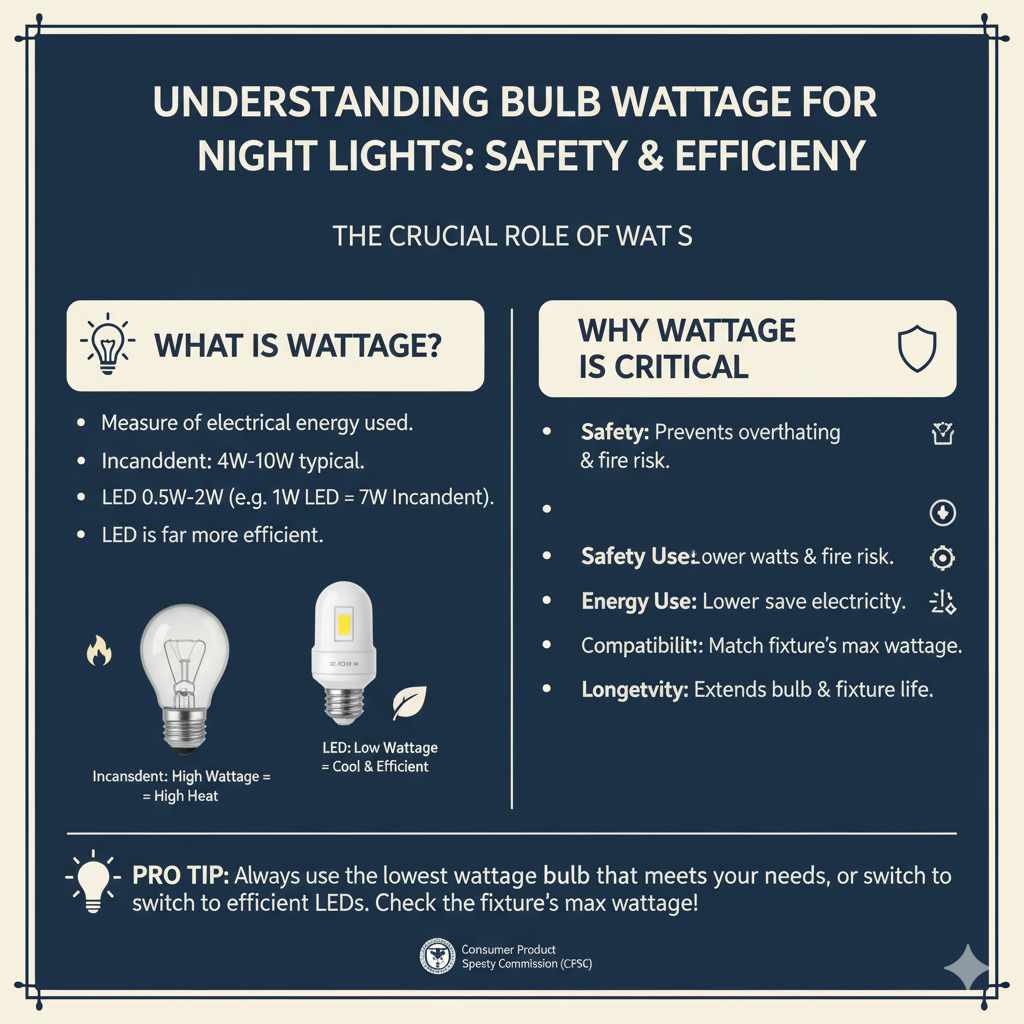
Wattage is a measure of how much energy a bulb uses. For incandescent night light bulbs, you’ll typically see wattages of 4W, 7W, or sometimes up to 10W. For LED night light bulbs, the actual wattage consumed will be much lower, often around 0.5W to 2W, but they will be rated with an “equivalent wattage” that indicates their brightness compared to an incandescent bulb (e.g., a 1W LED might be equivalent to a 7W incandescent).
Why Wattage is Critical:
- Heat: Incandescent bulbs produce heat. Higher wattage means more heat. Night light fixtures are designed for very low wattage bulbs to prevent overheating. Using a bulb with too high a wattage is a significant fire risk.
- Energy Consumption: Higher wattage means more electricity used. While night lights are generally low power, LEDs are dramatically more efficient.
- Fixture Compatibility: The fixture itself has limitations. Always adhere to any maximum wattage recommendations printed on the night light. You can learn more about safe lighting practices from resources like the Consumer Product Safety Commission (CPSC).
When in doubt, always choose the lowest wattage bulb that provides adequate light for your needs, or opt for an LED replacement that specifies its compatibility with night light fixtures.
Frequently Asked Questions About Night Light Bulbs
Q1: What is the most common size for a night light bulb?
The most common size for night light bulbs is the E12 candelabra base, which measures about 12mm in diameter. These are often paired with C7-shaped bulbs.
Q2: Can I use a regular light bulb in a night light?
No, you should not use a regular household light bulb (which typically has an E26 base) in a night light. The base is too large and will not fit. Also, regular bulbs are usually much higher wattage and can be a fire hazard.
Q3: How do I know if my night light uses an E12 or E17 bulb?
The easiest way is to remove the old bulb and check for markings. If there are no markings, measure the diameter of the metal base. An E12 base is about 12mm, while an E17 is about 17mm.
Q4: Are LED night light bulbs safe?
Yes, LED night light bulbs are very safe. They produce significantly less heat than incandescent bulbs, making them cooler to the touch and reducing fire risk. They are also more energy-efficient and last much longer.
Q5: What does “C7” mean for a night light bulb?
“C7” refers to the shape of the glass bulb. It’s a common shape for night lights, resembling a smaller version of the old Christmas light bulbs, typically with a rounded or slightly tapered end. C7 bulbs usually use an E12 candelabra base.
Q6: My night light bulb keeps burning out quickly. What could be the problem?
If your incandescent bulbs are burning out fast, it could be due to using a bulb with too high a wattage, or the fixture itself might be faulty, causing it to overheat. Ensure you are using the correct, low-wattage bulb and consider switching to a much more durable LED bulb.
Conclusion
Navigating the world of night light bulbs might have seemed a bit daunting at first, but as you can see, it’s quite manageable! The vast majority of night lights you’ll encounter use the E12 candelabra base, often with a C7 shaped bulb. By taking a moment to check the old bulb or the fixture itself, you can confidently find the right replacement. Whether you choose the familiar glow of incandescent or the efficient, long-lasting benefits of LED, ensuring you have the correct size and wattage is key to safe, effective, and comforting illumination in your home. So go ahead, brighten up those dark corners with confidence!