
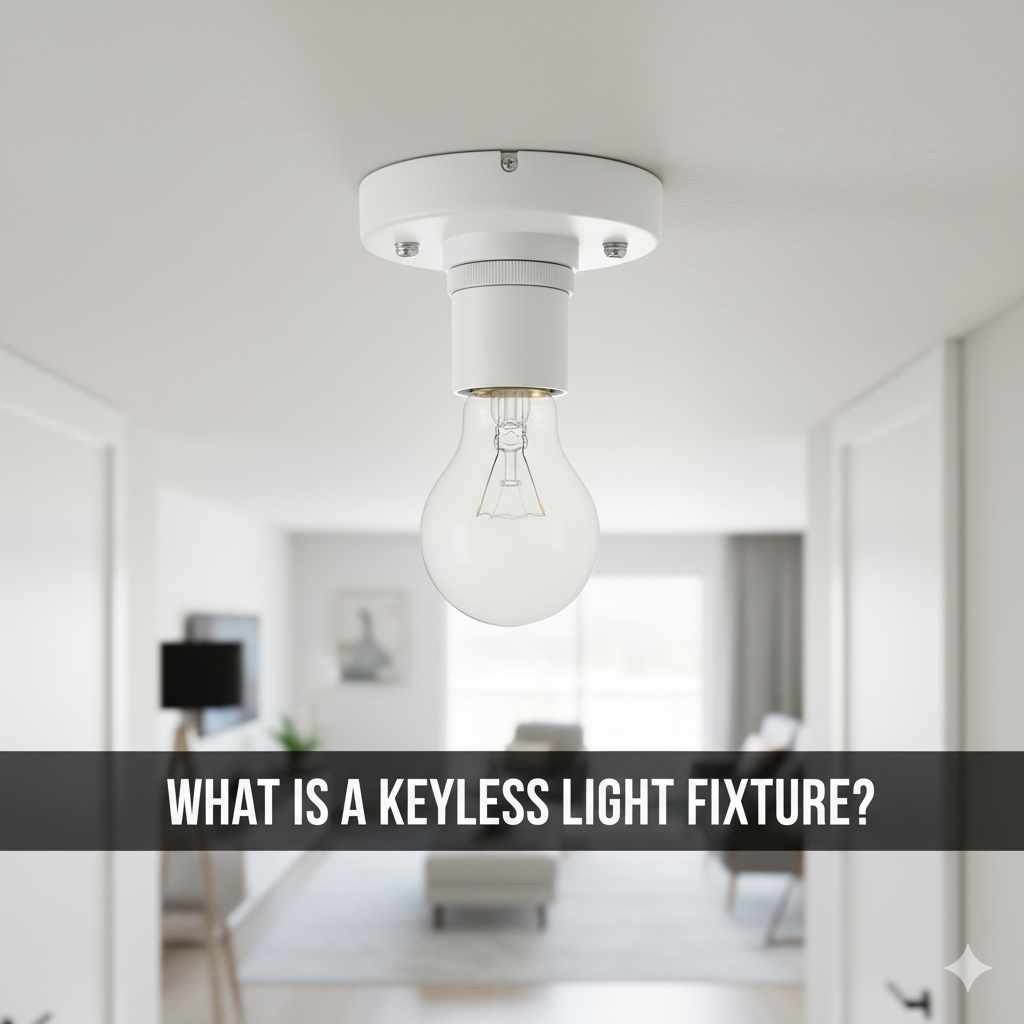
A keyless light fixture is a type of light socket that doesn’t have a built-in on/off switch. You control the light using an external switch, like a wall switch or by screwing/unscrewing the bulb. It’s a simple, reliable, and often more affordable lighting solution for various home applications.
Ever found yourself staring at a light socket, wondering why it looks a bit different, or perhaps you’ve encountered one that needs a separate switch to work? You’re not alone! Many homeowners come across these “keyless” light fixtures and feel a little confused about their purpose and how they fit into our homes. These simple devices are actually quite common and incredibly useful, often found in places where a built-in switch just isn’t practical or necessary. They offer a straightforward way to bring light to spaces, and understanding them is easier than you might think. In this guide, we’ll demystify what a keyless light fixture is, explore where you’ll typically find them, and explain why they are a go-to choice for many lighting needs. Get ready to shed some light on this common household item!
What Exactly Is a Keyless Light Fixture?
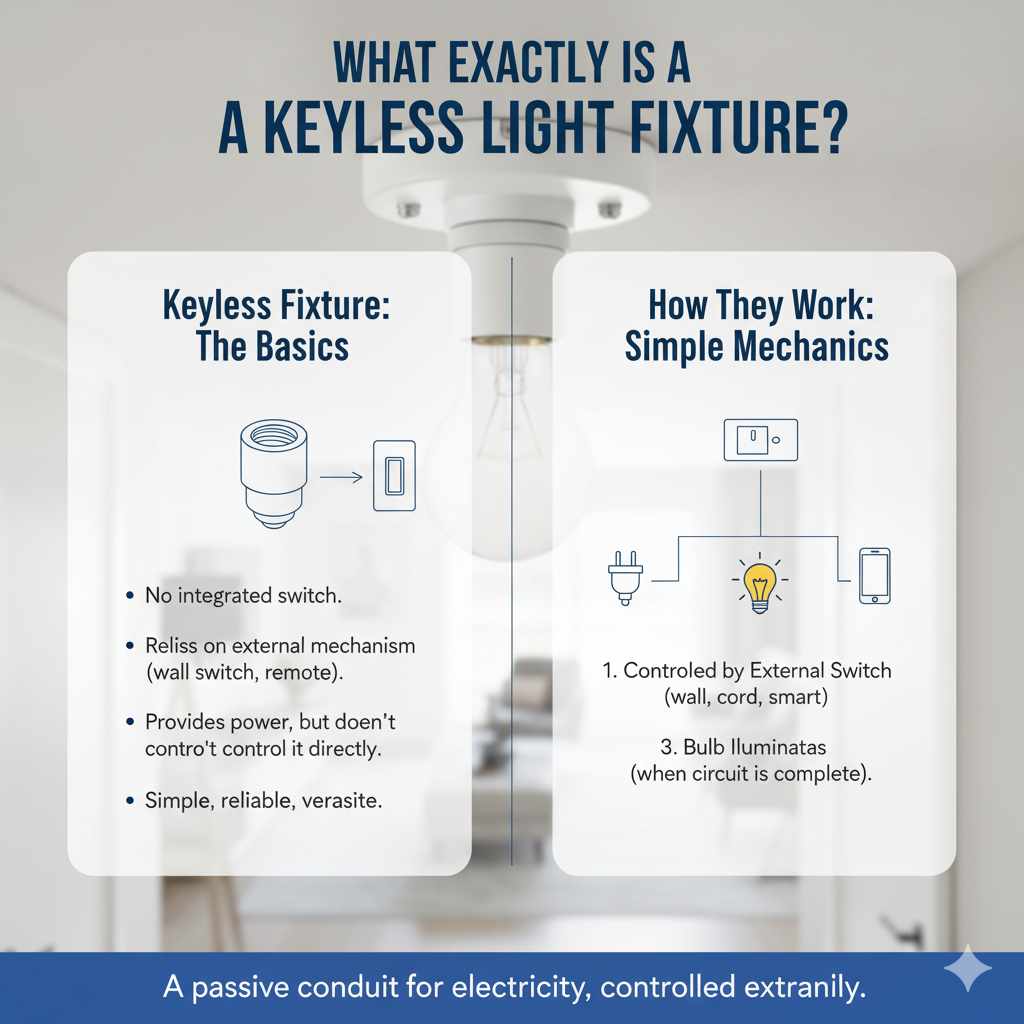
At its core, a keyless light fixture is a light socket designed without an integrated switch. Unlike a lamp with a rotary knob or a pull chain, a keyless socket relies on an external mechanism to turn the light on and off. This means you can’t flip a switch directly on the fixture itself. The “keyless” name comes from the absence of a traditional switch, which historically might have been operated by a “key” or a similar turning mechanism.
Think of it like this: a standard lamp has its own built-in controls. A keyless fixture, however, is like the bare bones of a light socket – it provides the connection for the bulb to receive power, but the power itself is controlled elsewhere. This simplicity is its defining characteristic and the source of its versatility.
How They Work: The Simple Mechanics
The operation of a keyless light fixture is elegantly simple. The socket contains electrical contacts that connect to the base of a light bulb when it’s screwed in. When electricity flows to the fixture through its wiring, the bulb lights up. The crucial part is that this flow of electricity is managed by a separate switch. This could be:
- A wall-mounted light switch.
- A switch on the power cord of a plug-in fixture.
- A smart home system or timer.
- Simply screwing the bulb in to complete the circuit and unscrewing it to break it (though this is less common for everyday use).
The fixture itself is designed to be a passive conduit for electricity, waiting for the signal from an external control to illuminate. This design makes them highly reliable because there are fewer moving parts to break or malfunction.
Where Do You Typically Find Keyless Light Fixtures?
You might be surprised at how often you encounter keyless light fixtures in your daily life. Their simple design makes them ideal for a variety of applications where a built-in switch would be inconvenient or redundant. Here are some common places you’ll find them:
1. Closets and Pantries
In closets and pantries, a keyless fixture is often paired with a door-activated switch. When you open the door, the switch closes the circuit, and the light turns on. When you close the door, the switch opens the circuit, and the light turns off. This is incredibly convenient, as you don’t have to fumble for a switch in the dark. The fixture itself is usually a simple, utilitarian dome or ceiling-mounted light.
2. Garages and Workshops
Garages and workshops often use keyless fixtures, especially for overhead lighting. These are typically wired to a wall switch located near the entrance. The focus here is on durable, functional lighting that can be easily controlled from a distance. Sometimes, you might find them with a pull chain, which technically makes them not “keyless” in the strictest sense, but the base socket is still the key component.
3. Basements and Attics
Unfinished or utility spaces like basements and attics frequently utilize keyless fixtures. Like garages, they are usually controlled by wall switches. Their simple construction means they are often more robust and less expensive, making them a practical choice for areas where aesthetics are secondary to function.
4. Outdoor Lighting
Many outdoor fixtures, such as porch lights or soffit lights, use keyless sockets. These are wired to indoor switches or controlled by photocells or timers. The absence of an internal switch simplifies the fixture’s design, making it more resistant to weather elements.
5. Industrial and Commercial Settings
In warehouses, factories, and other industrial environments, keyless fixtures are prevalent. They are chosen for their durability, simplicity, and ease of maintenance. They are often integrated into larger lighting systems controlled centrally.
6. Decorative Fixtures (with External Controls)
While often associated with utilitarian spaces, keyless sockets are also found in more decorative fixtures. Think of pendant lights or chandeliers where the switch is integrated into the wall or a dimmer system. The fixture itself might be ornate, but the socket is still designed to be controlled externally.
Types of Keyless Light Fixtures
Keyless light fixtures come in various forms, each suited for different installation needs and aesthetic preferences. While the core function remains the same – providing a switchless socket – the housing and mounting differ.
1. Surface-Mount Fixtures
These are the most common type. They are designed to be mounted directly onto a flat surface, such as a ceiling or wall. They typically have a base that attaches to the electrical box, and the socket is housed within a decorative cover or a simple dome. Many closet and utility lights fall into this category.
2. Recessed Fixtures (Can Lights)
Recessed lighting, often called “can lights,” uses a keyless socket housed within a can that is installed into a ceiling. While the socket itself is keyless, the entire unit is wired to an external switch. The bulb is typically screwed into a socket that’s part of the internal assembly.
3. Pendant and Chandelier Sockets
In pendant lights and chandeliers, the socket itself is usually keyless. The entire fixture is then wired to a wall switch, dimmer, or sometimes a remote control. The focus is on the decorative aspect of the fixture, with the control handled separately.
4. Gooseneck or Barn Lights
These outdoor or industrial-style fixtures often feature a keyless socket mounted on an arm. They are typically wired to a wall switch and are popular for their rustic or utilitarian aesthetic.
Key Differences: Keyless vs. Switched Fixtures
Understanding the distinction between keyless and switched fixtures is crucial for choosing the right lighting solution for your home. The primary difference lies in the presence or absence of an integrated switch.
| Feature | Keyless Light Fixture | Switched Light Fixture |
|---|---|---|
| On/Off Control | Requires an external switch (wall switch, cord switch, etc.) | Has a built-in switch (rotary, pull chain, push button) |
| Complexity | Simpler design, fewer moving parts | More complex due to integrated switch mechanism |
| Installation | Generally straightforward wiring to an external control | Can be more involved if the switch mechanism is complex |
| Cost | Often more affordable due to simplicity | Can be more expensive due to the added switch component |
| Durability | Potentially more durable due to fewer failure points | Switch mechanism can be a point of failure over time |
| Common Uses | Closets, garages, basements, outdoor lights, chandeliers | Table lamps, floor lamps, some ceiling fixtures where a pull chain is desired |
The choice between a keyless and a switched fixture often comes down to the intended location and how you want to control the light. For areas where a wall switch is already present or logical, a keyless fixture is usually the more efficient and cost-effective choice.
Benefits of Using Keyless Light Fixtures
Why choose a keyless fixture when so many options with built-in switches exist? The advantages are compelling, especially for DIYers looking for practical and reliable lighting solutions.
1. Simplicity and Reliability
With no internal switch mechanism, there are fewer components that can wear out or break. This makes keyless fixtures incredibly reliable and long-lasting. They are less prone to electrical faults related to switch failure.
2. Cost-Effectiveness
The simpler design often translates to a lower purchase price. When you’re outfitting multiple spaces, like a large garage or basement, the cost savings can add up significantly. You can also find basic, functional keyless fixtures for very affordable prices.
3. Versatility in Control
While they lack an on-fixture switch, they offer great flexibility in how you control them. You can integrate them with smart home systems, motion sensors, timers, or simple wall switches, allowing for customized automation and control.
4. Ease of Installation (in many cases)
For basic surface-mount fixtures, installation is often a straightforward process of connecting wires to the socket and mounting the fixture. This can be a confidence booster for beginner DIYers. Always ensure power is off at the breaker before starting any electrical work!
5. Durability in Harsh Environments
In areas exposed to dust, moisture, or temperature fluctuations (like garages or workshops), the sealed or robust design of many keyless fixtures makes them more durable than fixtures with exposed or complex switch mechanisms.
Potential Downsides to Consider
While keyless fixtures offer many advantages, it’s also good to be aware of their limitations:
- Reliance on External Switches: If the external switch fails, the light won’t work, and you’ll need to troubleshoot that component.
- Not Ideal for Portable Lamps: They are generally not suitable for table or floor lamps where a built-in switch is expected and convenient.
- Manual Bulb Operation: In rare, basic applications, the only way to turn them off might be to unscrew the bulb, which isn’t practical for regular use.
Installing a Keyless Light Fixture: A Beginner’s Guide
Installing a simple surface-mount keyless light fixture is a very achievable DIY project for beginners. Safety is paramount when working with electricity, so always remember to turn off the power at the circuit breaker before you begin. If you’re ever unsure, it’s best to consult a qualified electrician.
Tools and Materials You’ll Need:
- New keyless light fixture
- Screwdriver set (Phillips and flathead)
- Wire strippers/cutters
- Voltage tester (non-contact is easiest for beginners)
- Wire nuts
- Electrical tape
- Ladder or step stool
- Safety glasses
- Pliers (optional, but helpful)
Step-by-Step Installation Process:
- Turn Off Power: Go to your home’s electrical panel (breaker box) and locate the breaker that controls the circuit for the light fixture you’ll be replacing or installing. Flip it to the “OFF” position.
- Verify Power is Off: Use your non-contact voltage tester near the existing fixture’s wiring or the junction box where the new fixture will connect. If the tester lights up or beeps, the power is still on. Go back to the breaker box and try again. Do not proceed until you are certain the power is off.
- Remove Old Fixture (if applicable): Unscrew any decorative covers or globes. You’ll then see how the fixture is attached to the ceiling or wall. Typically, there are mounting screws. Once these are removed, gently pull the fixture away from the ceiling. You will see the electrical wires connected with wire nuts. Unscrew the wire nuts to disconnect the old fixture’s wires from the house wiring.
- Prepare the New Fixture: Unpack your new keyless light fixture. It will usually come with a mounting bracket or screws. Identify the wires on the new fixture – typically black (hot), white (neutral), and sometimes a bare copper or green wire (ground).
- Connect the Wires:
- Ground Wire: Connect the ground wire from the fixture (usually green or bare copper) to the ground wire from your house wiring. Use a wire nut. If your house wiring doesn’t have a ground wire, you may need to consult an electrician or a guide on grounding techniques. For safety, it’s highly recommended to have a ground connection. You can learn more about electrical grounding from resources like the National Fire Protection Association (NFPA).
- Neutral Wire: Connect the white wire from the fixture to the white wire from your house wiring. Use a wire nut.
- Hot Wire: Connect the black wire from the fixture to the black wire from your house wiring. Use a wire nut.
Ensure all wire connections are secure by gently tugging on them. Wrap each wire nut with electrical tape for extra security.
- Mount the Fixture: Carefully tuck the connected wires back into the electrical box. Align the new fixture with the mounting screws or bracket and secure it to the ceiling or wall. Some fixtures have screws that go through the base of the fixture into the mounting bracket.
- Install the Bulb: Screw in an appropriate light bulb (check the fixture’s wattage rating to avoid using a bulb that’s too powerful).
- Restore Power: Go back to your electrical panel and flip the breaker back to the “ON” position.
- Test the Light: Turn on the external switch (wall switch, etc.) to ensure your new keyless light fixture is working correctly.
Remember, this is a simplified guide. Always refer to the manufacturer’s instructions that come with your specific fixture. For more in-depth electrical safety information, resources like Consumer Product Safety Commission (CPSC) offer valuable tips.
Maintaining Your Keyless Light Fixtures
Keyless light fixtures are known for their low maintenance, but a little care can ensure they continue to function reliably for years to come.
- Regular Cleaning: Dust and cobwebs can accumulate on the fixture and bulb. Gently wipe them down with a dry or slightly damp cloth. Ensure the fixture is cool and power is off before cleaning.
- Check Bulb Wattage: Always adhere to the maximum wattage recommended for the fixture. Exceeding this can overheat the socket and potentially cause damage or a fire hazard.
- Inspect Wiring (Periodically): If you notice flickering lights or any signs of damage, turn off the power and inspect the wire connections. Ensure wire nuts are tight and there’s no frayed insulation.
- Tighten Loose Fixtures: Over time, vibrations or settling can loosen mounting screws. Periodically check that the fixture is securely attached to the wall or ceiling.
Keyless Light Fixtures vs. Smart Lighting
In today’s connected homes, it’s natural to wonder how keyless fixtures fit into the world of smart lighting. The beauty is, they integrate perfectly!
A keyless fixture is essentially a blank canvas for smart control. You can:
- Use Smart Bulbs: Replace the traditional bulb with a smart bulb. You can then control the bulb’s on/off, dimming, and color through a smartphone app or voice commands, even though the fixture itself has no switch.
- Install a Smart Switch: If the keyless fixture is wired to a standard wall switch, you can replace that wall switch with a smart switch. This allows you to control the light remotely or set schedules.
- Connect to Smart Plugs: For plug-in fixtures with keyless sockets, you can plug them into a smart plug, giving you app-controlled power to the entire fixture.
This means you can enjoy the benefits of smart home technology – convenience, energy savings, and enhanced security – without needing to replace your existing keyless fixtures. They are a perfect foundation for a smart lighting setup.

Frequently Asked Questions (FAQ)
Q1: What does “keyless” mean for a light fixture?
A1: It means the light fixture itself does not have a built-in switch (like a pull chain or rotary knob) to turn the light on and off. You need an external switch, such as a wall switch, to control the power.
Q2: Are keyless light fixtures safe?
A2: Yes, when installed correctly and used within their specified wattage limits, keyless light fixtures are very safe. Their simple design has fewer points of failure compared to fixtures with integrated switches.
Q3: Can I replace a regular light fixture with a keyless one?
A3: Generally, yes. If your existing fixture is controlled by a wall switch, you can likely replace it with a keyless fixture. If the existing fixture has its own pull chain or switch, you’ll need to ensure the wiring supports an external switch control.
Q4: Do I need a ground wire for a keyless light fixture?
A4: It is highly recommended to connect a ground wire for safety. Modern electrical codes require grounding for most fixtures. If your existing wiring lacks a ground wire, consult a qualified electrician.
Q5: What kind of bulbs can I use in a keyless fixture?
A5: You can use standard incandescent, LED, or CFL bulbs, as long as they do not exceed the maximum wattage rating specified on the fixture. Always check the fixture for this information.
Q6: How do I control a keyless fixture if there’s no wall switch nearby?
A6: You can install a new wall switch, use a smart bulb controlled by an app or voice assistant, or use a plug-in fixture connected to a smart plug or a switched outlet.
Q7: Are keyless fixtures more expensive than switched ones?
A7: Typically, basic keyless fixtures are less expensive than those with built-in switches due to their simpler construction. However, decorative keyless fixtures can vary widely in price.
Conclusion
Understanding “what is a keyless light fixture” opens up a world of simple, reliable, and adaptable lighting solutions for your home. From the practical utility of a closet light to the foundation for a smart home system, these un-switched sockets are incredibly versatile. Their straightforward design means fewer headaches, lower costs, and a greater ability to integrate with modern control methods like smart home technology. Whether you’re a seasoned DIYer or just starting to tackle home improvement projects, installing or understanding keyless fixtures is a valuable skill. Remember to always prioritize safety by turning off power before any electrical work, and don’t hesitate to call a professional if you feel unsure. With the right knowledge and a few simple steps, you can confidently bring efficient and effective light to any corner of your home.