
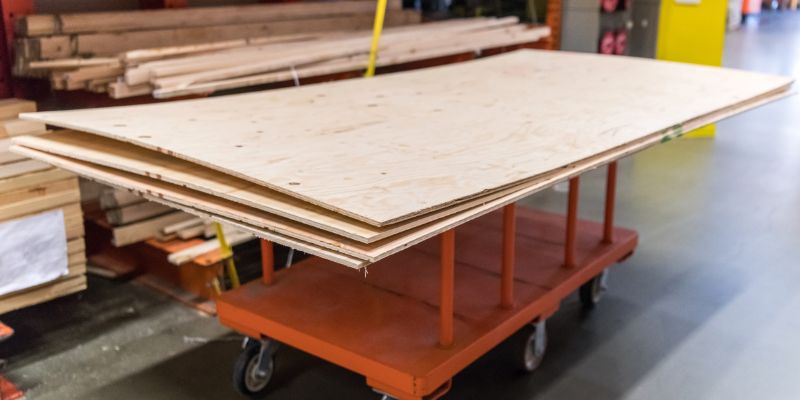
For fires involving wood, paper, and fabric, the best fire extinguisher to have on hand is a Class A rated extinguisher. These are specifically designed to tackle ordinary combustibles like wood, paper, textiles, and plastics, making them essential for any workshop or home.
Welcome to the shop! As a fellow woodworker, I know how much we love the smell of sawdust and the satisfaction of creating something with our own hands. But when we’re surrounded by wood, sandpaper, finishes, and all sorts of materials, safety is always top of mind. One of the biggest concerns for any woodworker, especially when starting out, is fire safety. It’s easy to get caught up in a project, but a small spark can quickly turn into a big problem, particularly with common materials like wood, paper, and fabric. Don’t worry, though! Figuring out the right fire extinguisher isn’t as complicated as it might seem. We’ll break down exactly what you need to know so you can feel confident and secure in your workspace. Let’s get your shop protected!
Understanding Fire Classes: The Key to Choosing the Right Extinguisher
Fires aren’t all the same, and that’s why fire extinguishers are categorized into different classes. Knowing these classes is the first step to picking the best tool for the job. Think of it like having different tools for different tasks – you wouldn’t use a hammer to tighten a screw, right? The same applies to fire safety. Using the wrong type of extinguisher can actually make a fire worse or be completely ineffective. We’ll focus on the types of fires you’re most likely to encounter with everyday materials like wood, paper, and fabric, and then dive into the extinguishers designed for them.
What are Common Fire Classes?
Fire classification systems help us quickly identify what a fire is burning and what type of extinguisher is needed. While there are several systems worldwide, the most common one in North America breaks fires down into five classes:
- Class A: Ordinary Combustibles – These are fires involving materials like wood, paper, cloth, rubber, and plastics. These are the materials you’ll find most often in a woodworking shop or home.
- Class B: Flammable Liquids and Gases – This includes fires involving gasoline, oil, grease, propane, and natural gas.
- Class C: Energized Electrical Equipment – These are fires that involve live electrical equipment, such as motors, appliances, and wiring. It’s crucial to use an extinguisher that won’t conduct electricity.
- Class D: Combustible Metals – These fires involve metals like magnesium, titanium, potassium, and sodium. These are less common in typical home or workshop settings.
- Class K: Cooking Oils and Fats – These are fires that occur in commercial cooking equipment, involving vegetable oils, animal fats, and other cooking media.
Why Class A is Crucial for Wood, Paper, and Fabric Fires
When we talk about fires involving wood, paper, and fabric, we are specifically referring to Class A fires. These materials are called “ordinary combustibles” because they are common, everyday items that burn readily and leave behind an ash residue. A Class A fire extinguisher is designed to cool the burning material and prevent re-ignition. They typically work by using water or a water-based solution to cool the fuel below its ignition temperature and to smother the flames.
For example, a pile of wood shavings, a stack of paper blueprints, or a fabric drop cloth can all easily ignite. A Class A extinguisher is your go-to for these situations because it directly addresses the nature of these materials. It’s the most fundamental type of fire extinguisher for general use in most environments, especially workshops where these materials are abundant.
The Best Fire Extinguisher for Wood, Paper, and Fabric: Class A
Now that we understand fire classes, let’s get straight to the star of the show for your woodworking needs: the Class A fire extinguisher. This is the champion for tackling those common fires involving wood, paper, and fabric. But not all Class A extinguishers are created equal, and there are a few types you might encounter. We’ll explore them so you can make an informed choice for your shop or home.
Types of Class A Extinguishers
While all Class A extinguishers are designed for ordinary combustibles, they achieve this through different extinguishing agents. Here are the most common types you’ll find:
1. Water Extinguishers (APW – Air-Pressurized Water)
How they work: These are the most straightforward Class A extinguishers. They simply contain water, and when you pull the pin and squeeze the handle, pressurized air forces the water out in a strong stream. The water cools the burning material, which is highly effective for Class A fires.
Pros:
- Extremely effective on Class A fires.
- Environmentally friendly and non-toxic.
- Very affordable to purchase and recharge.
- Leaves no messy residue other than water itself.
Cons:
- Cannot be used on electrical fires (Class C) or flammable liquid fires (Class B). Water conducts electricity, so spraying it on an electrical fire could cause electrocution or spread the fire.
- Can freeze in cold temperatures if not properly stored or if the water has additives.
- Can cause water damage to sensitive equipment or materials if not used carefully.
Best for: Primarily for areas where electrical hazards or flammable liquids are not a significant concern, but Class A materials are prevalent. Think of a basic storage area for wood, paper, or textiles.
2. Water Mist Extinguishers
How they work: These advanced extinguishers use de-ionized water that is converted into a fine mist. This mist is incredibly effective at cooling and also creates a barrier that can help suppress flames. The fine mist also makes them safer to use around electrical equipment compared to standard water extinguishers because de-ionized water is not a conductor.
Pros:
- Highly effective on Class A fires.
- Can be safely used on Class C (electrical) fires due to the de-ionized water and fine mist, which minimizes conductivity.
- Minimal water damage compared to standard water extinguishers.
- No messy chemical residue.
Cons:
- More expensive than standard water extinguishers.
- May have a shorter discharge time.
- Not effective on Class B (flammable liquids) or Class D (combustible metals) fires.
Best for: Areas where you have a mix of Class A materials and potential electrical hazards, such as a home workshop, a kitchen, or an office space. They offer a good balance of effectiveness and safety.
3. Foam Extinguishers (AFFF – Aqueous Film-Forming Foam)
How they work: These extinguishers contain a water-based foam solution. When discharged, the foam forms a blanket over the burning material, cooling it and, more importantly, smothering the fire by separating the fuel from the oxygen. They are very effective on both Class A and Class B fires.
Pros:
- Effective on both Class A and Class B fires, offering versatility.
- The foam blanket helps prevent re-ignition.
- Can be less damaging than dry chemical extinguishers.
Cons:
- Cannot be used on electrical fires (Class C) because the water content conducts electricity.
- The foam can be messy and may require significant cleanup.
- Some foam agents (like AFFF) have environmental concerns due to per- and polyfluoroalkyl substances (PFAS).
- Can be more expensive than basic water extinguishers.
Best for: Situations where there’s a significant risk of both Class A and Class B fires, such as workshops with flammable liquids alongside wood and paper. However, the presence of electrical equipment makes them less ideal for a general workshop than a multi-class extinguisher.
4. Dry Chemical Extinguishers (ABC)
How they work: These extinguishers contain a fine powder, most commonly monoammonium phosphate. They work by interrupting the chemical reaction of the fire. When discharged, the powder smothers the flames and breaks the chain reaction of combustion.
Pros:
- Highly versatile, effective on Class A, B, and C fires. This is often the most common type found in homes and vehicles because of its broad application.
- The powder is generally non-conductive, making it safe for electrical fires.
- Long shelf life and relatively low cost.
Cons:
- Can be very messy! The fine powder gets everywhere and can be corrosive to electronics and metals if not cleaned up promptly.
- The powder can obscure vision, making it difficult to fight the fire effectively.
- It doesn’t cool the material as effectively as water, so there’s a higher risk of re-ignition if the material isn’t fully extinguished.
- The powder can be irritating to the respiratory system and skin.
Best for: General-purpose fire safety where you might encounter a mix of fire types. In a woodworking shop, an ABC extinguisher is a solid choice for overall protection, but you’ll need to be prepared for the cleanup and understand its limitations for Class A fires compared to water.
The Verdict: What’s Truly Best for Wood, Paper, and Fabric?
For fires specifically involving wood, paper, and fabric (Class A materials), a water-based extinguisher is scientifically the most effective. Water cools the burning material below its ignition point, preventing re-ignition, which is crucial for smoldering materials like wood. A standard Air-Pressurized Water (APW) extinguisher is excellent for this purpose if electrical hazards are minimal.
However, in a typical woodworking shop, you might also have electrical tools, dust collection systems, or even flammable finishes. This is where a multi-purpose ABC dry chemical extinguisher becomes a very practical choice for overall safety. While it might not cool materials as effectively as water, its ability to tackle Class A, B, and C fires makes it a robust all-rounder. You just need to be mindful of the cleanup and the potential for re-ignition if the material isn’t fully cooled.
A Water Mist extinguisher offers a fantastic compromise: it’s excellent for Class A fires and safe for Class C (electrical) fires, with minimal mess. If your budget allows, this is an increasingly popular and highly recommended option for mixed-hazard environments like workshops.
Comparing Extinguisher Types for Workshop Safety
To help you visualize the differences and make the best decision for your workshop, here’s a comparison table. This will highlight how each type performs against the fire classes most relevant to woodworkers.
| Extinguisher Type | Class A (Wood, Paper, Fabric) | Class B (Flammable Liquids) | Class C (Electrical) | Pros for Woodworkers | Cons for Woodworkers |
|---|---|---|---|---|---|
| Water (APW) | Excellent | Not Recommended | Dangerous! | Effective cooling, no residue, affordable. | Limited to Class A only, risk with electrical/liquids. |
| Water Mist | Excellent | Limited/Not Recommended | Good (with de-ionized water) | Safe for electrical, minimal mess, effective cooling. | More expensive, not for Class B/D. |
| Foam (AFFF) | Excellent | Very Good | Not Recommended | Effective on A & B, smothers well. | Cannot use on electrical, messy, potential environmental concerns with some foams. |
| Dry Chemical (ABC) | Good | Very Good | Very Good | Versatile (A, B, C), widely available, affordable. | Messy residue, can damage electronics, risk of re-ignition if not cooled. |
Key Features to Look For in a Fire Extinguisher
When you’re shopping for a fire extinguisher, beyond the class rating, there are a few other things to consider to ensure you’re getting a quality and suitable product for your woodworking space.
1. Pressure Gauge
Most portable fire extinguishers will have a pressure gauge. This gauge tells you if the extinguisher is properly pressurized and ready for use. The needle should be in the green zone. If it’s in the red, the extinguisher may not have enough pressure to discharge effectively.
2. Size and Weight
Fire extinguishers come in various sizes, typically measured in pounds. For a home workshop, a 5-pound extinguisher is often a good balance of fire-fighting power and manageable weight. Larger workshops might consider 10-pound or even 20-pound units, but ensure you can easily handle and operate them. Remember, an extinguisher that’s too heavy to deploy quickly isn’t very useful.
3. UL Rating (or equivalent certification)
Look for a UL (Underwriters Laboratories) rating or a similar certification from a recognized testing laboratory. This ensures the extinguisher has been tested and meets safety standards. For example, a common rating for an ABC extinguisher might be 2A:10B:C. The numbers indicate the extinguisher’s effectiveness; higher numbers mean greater capacity.
4. Ease of Use and Maintenance
Ensure the extinguisher is simple to operate. Most follow the P.A.S.S. method (Pull, Aim, Squeeze, Sweep), which we’ll cover next. Also, check the manufacturer’s recommendations for inspection and maintenance. Most require a visual inspection monthly and professional servicing annually or every few years, depending on the type and local regulations.
How to Use a Fire Extinguisher: The P.A.S.S. Method
Knowing which extinguisher to buy is only half the battle. Knowing how to use it is critical. The good news is, it’s straightforward, and the universally taught method is P.A.S.S. Keep this in mind, and you’ll be prepared should the worst happen.
- P – Pull the Pin: This will break the tamper seal and allow you to discharge the extinguisher. Most pins are located at the top of the extinguisher, below the handle.
- A – Aim Low: Aim the nozzle or hose at the base of the fire, not at the flames themselves. Hitting the flames won’t extinguish the source of the fire.
- S – Squeeze the Lever: Squeeze the operating lever slowly and evenly to discharge the extinguishing agent.
- S – Sweep from Side to Side: Move the nozzle back and forth across the base of the fire until it appears to be out. Watch the fire area carefully, as fires can re-ignite.
It’s important to remember that fire extinguishers are for small, contained fires. If a fire is spreading rapidly, is too large to handle, or if you don’t have a clear escape route, evacuate immediately and call the fire department.
Where to Place Fire Extinguishers in Your Workshop
Strategic placement is key to effective fire safety. You want your extinguishers to be easily accessible in an emergency, but also protected from damage or accidental discharge.
- Near Exits: Place extinguishers near main exits and escape routes so you can fight the fire and still have a way out.
- At a Safe Distance: Don’t place them too close to potential fire hazards, like a furnace or a welding area, where they might be compromised or difficult to reach during a fire.
- Visible and Accessible: Mount extinguishers on a wall using the provided bracket, at a height that is easily reachable for most adults. They should be clearly visible and not blocked by equipment or stored materials.
- Consider Different Zones: If you have different areas in your workshop with varying risks (e.g., a woodworking area with dust and scrap wood, a finishing area with flammable solvents, an electrical panel area), consider placing appropriate extinguishers in each zone. For instance, an ABC extinguisher might be best near your dust collector and general woodworking areas, while a Class B or K might be considered near solvent storage if applicable.
- Multiple Units: For larger workshops, it’s wise to have more than one extinguisher. This ensures you have coverage no matter where a fire might start and provides a backup if one is used or inaccessible.
The National Fire Protection Association (NFPA) provides excellent guidance on fire safety in various environments, including workshops. Their standards, like NFPA 10, offer detailed recommendations for the selection, placement, and maintenance of fire extinguishers. You can find valuable resources on their website, nfpa.org.
Maintenance and Inspection: Keeping Your Extinguisher Ready
A fire extinguisher is only useful if it’s in working order. Regular inspection and maintenance are crucial. Think of it as part of your tool maintenance routine – essential for safety and effectiveness.
Monthly Visual Inspections
Once a month, take a moment to:
- Check the Pressure Gauge: Ensure the needle is in the green zone.
- Inspect the Pin and Tamper Seal: Make sure the pin is in place and the seal is intact. If the seal is broken, it might indicate the extinguisher has been used or tampered with.
- Look for Damage: Check the cylinder for any dents, corrosion, or leaks. Ensure the hose and nozzle are clear and free from obstructions.
- Verify Accessibility: Make sure the extinguisher is still in its proper location, visible, and not blocked.
If you notice any issues, consult the manufacturer’s manual or a fire safety professional.
Annual Professional Maintenance
In addition to your monthly checks, most types of fire extinguishers require annual professional maintenance. A certified technician will perform a more thorough inspection, checking internal components, the extinguishing agent, and the propellant. They will tag the extinguisher with the date of service and their certification. This ensures your extinguisher is ready to perform when needed.
Hydrostatic Testing
Fire extinguishers also need periodic hydrostatic testing to check the integrity of the cylinder under pressure. The frequency varies by extinguisher type, but it’s typically every 5 to 12 years. The service tag on your extinguisher should indicate when the next test is due.
FAQ: Your Top Fire Safety Questions Answered
Here are some common questions beginners have about fire extinguishers for their woodworking spaces:
Q1: What is the absolute best type of fire extinguisher for a woodworking shop?
A1: For a woodworking shop, a multi-purpose ABC dry chemical extinguisher is often recommended due to its versatility in handling Class A (wood, paper, fabric), Class B (flammable liquids like finishes), and Class C (electrical equipment) fires. However, if your shop has minimal risk of Class B or C fires, a water mist extinguisher is an excellent, cleaner alternative that is effective on Class A and safe for Class C fires.
Q2: Can I use a water extinguisher on wood scraps or sawdust fires?
A2: Yes, absolutely! Water extinguishers (APW) are specifically designed for Class A fires, which include wood, paper, and fabric. They work by cooling the burning material. Just ensure there are no electrical hazards or flammable liquids present when you use a standard water extinguisher.
Q3: Is an ABC extinguisher safe to use around my power tools and electrical equipment?
A3: Yes, ABC dry chemical extinguishers are rated for Class C fires, meaning they are safe to use on electrical fires. The dry powder itself is non-conductive. However, the powder can be corrosive and damage sensitive electronics if not cleaned up thoroughly and promptly after use.
Q4: How often do I need to replace a fire extinguisher?
A4: Fire extinguishers don’t typically need to be replaced unless they are damaged, have been used, or fail a hydrostatic test. They require regular inspection and annual maintenance by a professional. The cylinder itself can last for many years, often 10-20 years or more, provided it’s maintained correctly.
Q5: I saw a small fire extinguisher in a car. Is that the same kind I need for my workshop?
A5: Small extinguishers found in cars are often rated for Class B and C fires (like flammable liquids and electrical fires). While they might have a Class A rating, they are usually too small to be effective for the types and potential scale of Class A fires that could occur in a woodworking shop with larger quantities of materials. It’s best to have a larger, appropriately rated extinguisher specifically for your workshop.
Q6: What about fire extinguishers for aerosol cans or flammable finishes?
A6: Flammable finishes, solvents, and aerosol cans fall under Class B fires. If your workshop has a significant amount of these materials, you’ll want an extinguisher that is effective on both Class A and Class B fires. An ABC dry chemical extinguisher or a Class B rated foam extinguisher would be suitable. Remember, ABC is the most versatile option for a mixed-hazard environment.
Q7: Do I need to worry about fire extinguishers for Class K fires in my workshop?
A7: Class K fires involve cooking oils and fats and are typically found in commercial kitchens. Unless you have a dedicated cooking setup in your workshop that uses large amounts of cooking oils or fats, a Class K extinguisher is generally not necessary for a woodworking space. Focus on Class A, B, and C protection.
Conclusion: Your Safe and Sound Workshop Awaits
Choosing the right fire extinguisher for your woodworking projects involving wood, paper, and fabric is a critical step in ensuring a safe and productive workshop. We’ve learned that Class A rated extinguishers are the primary choice for these materials, with water-based options offering excellent cooling and smothering capabilities. For the realities of a woodworking environment, where electrical tools and potentially flammable finishes are also present, a versatile ABC dry chemical extinguisher is a practical and widely available solution. If you prefer a cleaner, more advanced option that’s safe around electronics, consider a water mist extinguisher.
Remember to always look for extinguishers with clear UL ratings, check the pressure gauge monthly, and follow the P.A.S.S. method in an emergency. Proper placement and regular maintenance are non-negotiable for ensuring your extinguisher is ready when you need it most. By taking these steps, you’re not just buying a piece of safety equipment; you’re investing in peace of mind, allowing you to focus on the joy and creativity of woodworking without unnecessary worry. Stay safe, build smart, and happy creating!