
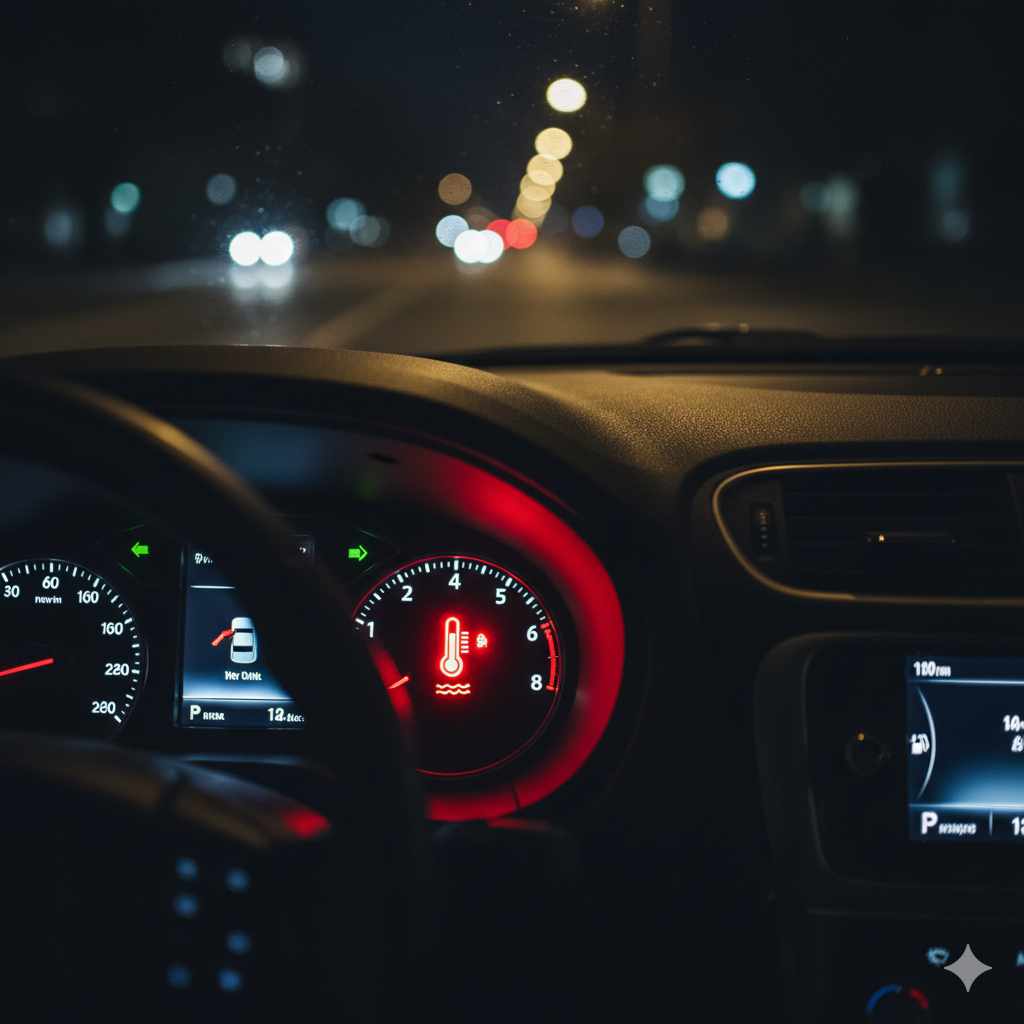
The temperature warning light on your dashboard means your engine is overheating. Stop driving immediately and let it cool down to prevent serious damage. This guide will help you understand what it means and what to do.
Hitting the road should be a breeze, right? But then, a little light pops up on your dashboard, looking like a thermometer in a wavy puddle. That’s the temperature warning light, and seeing it can definitely make your heart skip a beat. Don’t worry, though! Many drivers encounter this, and understanding what it’s trying to tell you is the first step to keeping your car running smoothly. Think of it as your car’s way of saying, “Hey, I’m getting a little too warm back here!” This guide is here to break down exactly what that light means, why it happens, and what you can do to fix it, all in simple, easy-to-follow steps. We’ll get you back on the road feeling confident and in control.
Understanding Your Car’s Temperature Warning Light
That little red or orange light shaped like a thermometer in a wavy line is your engine’s way of signaling that it’s getting too hot. Your car’s engine needs to operate within a specific temperature range to function correctly. When it gets too hot, it’s called overheating, and this can lead to some expensive problems if not addressed quickly. This warning light is a crucial safety feature designed to alert you before minor issues turn into major repairs.
Think of your car’s cooling system like a thermostat in your house. It works to keep things at a comfortable, consistent temperature. If that system has a hiccup, your engine can quickly become too hot, just like your house would if the AC broke on a sweltering day. The temperature warning light is your signal to take action, just like you’d adjust your thermostat or call a repair person.
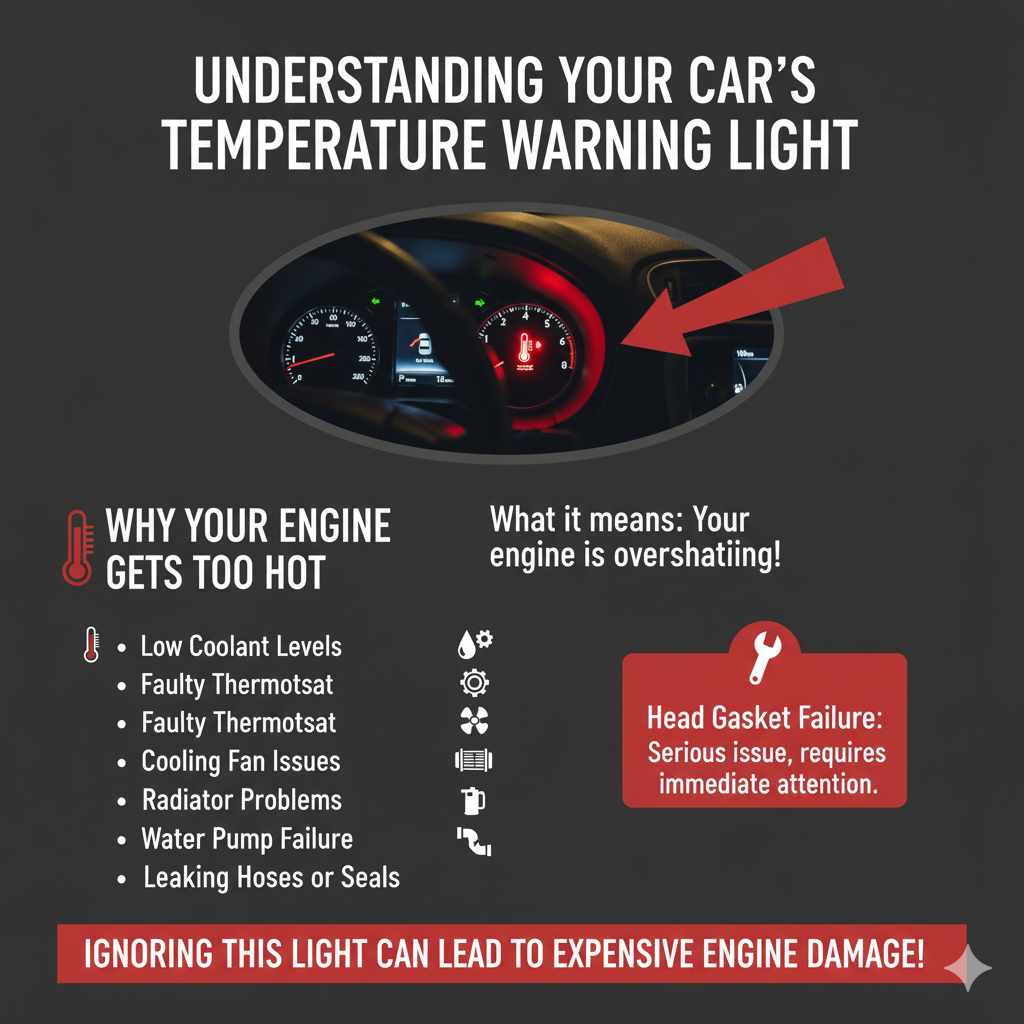
Why Your Engine Gets Too Hot
Several things can cause your engine to overheat. Most of these are related to your car’s cooling system not doing its job properly. Here are some common culprits:
- Low Coolant Levels: Coolant (also known as antifreeze) is the liquid that circulates through your engine to absorb heat and carry it away to the radiator. If there isn’t enough coolant, the system can’t cool the engine effectively. This is often due to leaks.
- Faulty Thermostat: The thermostat is like a valve that controls the flow of coolant. If it gets stuck closed, it prevents coolant from reaching the radiator to be cooled, causing the engine to overheat.
- Cooling Fan Issues: The cooling fan (usually electric or belt-driven) pulls air through the radiator, especially when the car is moving slowly or stopped. If the fan isn’t working, the radiator can’t dissipate heat efficiently.
- Radiator Problems: The radiator is where the hot coolant releases its heat. If it’s clogged with debris or is damaged, it can’t cool the coolant properly.
- Water Pump Failure: The water pump circulates the coolant throughout the engine and cooling system. If it fails, the coolant stops flowing, and the engine quickly overheats.
- Leaking Hoses or Seals: Hoses and seals can degrade over time and develop cracks or become loose, leading to coolant leaks.
- Head Gasket Failure: This is a more serious issue where the gasket between the engine block and cylinder head fails, allowing coolant to leak into the combustion chambers or oil, or exhaust gases to enter the cooling system.
What To Do When The Temperature Warning Light Comes On
Seeing that light can be alarming, but staying calm is key. Your immediate action can make a big difference in preventing damage. Here’s a step-by-step guide:
- Pull Over Safely: As soon as you see the temperature warning light, find a safe place to pull over. This might be the shoulder of the road, a parking lot, or a side street. Turn off the engine immediately. Continuing to drive an overheating engine can cause severe and costly damage, such as a blown head gasket or a cracked engine block.
- Turn On The Heater (Temporarily): This might sound strange, but turning your car’s heater on full blast can help draw some heat away from the engine. It’s a temporary measure to help cool things down slightly while you’re pulling over or waiting for the engine to cool.
- Let The Engine Cool Down: Do NOT attempt to open the radiator cap or coolant reservoir cap while the engine is hot. The cooling system is under pressure, and opening it can cause scalding hot coolant to spray out, leading to severe burns. Wait at least 30-60 minutes, or until the engine is cool to the touch, before attempting any checks.
- Check The Coolant Level (When Cool): Once the engine has cooled down significantly, carefully check the coolant level. You’ll typically find a translucent plastic reservoir near the engine, usually with “MIN” and “MAX” lines. If the level is below the “MIN” line, your car is low on coolant.
- Inspect For Obvious Leaks: While you’re there, look for any visible signs of leaks. Check under the car for puddles of coolant (it’s usually bright green, pink, or orange and has a sweet smell). Look at the hoses, radiator, and around the engine for any drips or wet spots.
- Add Coolant (If Necessary and Safe): If the coolant level is low and you have the correct type of coolant (check your owner’s manual for the specific type recommended for your vehicle), you can add some. Slowly open the reservoir cap (again, only when cool) and add coolant until it reaches the “MAX” line. If you don’t have coolant, plain water can be used in an emergency, but it’s best to get the system flushed and refilled with the proper coolant mix as soon as possible. Mixing coolant types can cause problems.
- Assess the Situation and Seek Professional Help: If the coolant level was fine, or if you had to add a lot of coolant, or if you see obvious leaks, it’s time to call for roadside assistance or a tow truck. Driving further could worsen the problem. Even if you added coolant and the light goes off, it’s wise to have a mechanic inspect the cooling system to find the root cause. A persistent or recurring temperature warning light indicates a problem that needs professional attention.
Safety First: Never Open a Hot Radiator Cap!
I can’t stress this enough, and it’s worth repeating: never, ever try to open the radiator cap or coolant reservoir when your engine is hot. The cooling system operates under significant pressure, and the coolant inside is extremely hot. Opening it prematurely can result in a dangerous spray of boiling liquid that can cause severe burns. Always wait for the engine to cool down completely, which can take an hour or more after shutting it off. Your safety is the top priority.
Common Causes and Simple Fixes
Let’s dive a little deeper into some of the most common reasons for overheating and what you, as a homeowner and DIY enthusiast, might be able to address yourself, or at least understand when talking to your mechanic.
Low Coolant Level
What it is: As mentioned, coolant is vital. When it’s low, the engine can’t shed heat effectively.
Why it happens: The most common reason for low coolant is a leak somewhere in the system. This could be a small crack in a hose, a faulty seal, or a problem with the radiator or water pump.
What you can do:
- Check the level: When the engine is cool, check the coolant reservoir.
- Add coolant: If low, add the correct type of coolant (or water in a pinch).
- Look for leaks: Inspect hoses, the radiator, and the water pump area for signs of wetness or drips.
- When to call a pro: If you’re frequently adding coolant, or if you see significant leaks, it’s time for a mechanic to find and fix the leak.
Faulty Thermostat
What it is: The thermostat regulates coolant flow. If it’s stuck closed, coolant can’t get to the radiator to cool down.
Why it happens: Thermostats can fail over time due to corrosion or wear.
What you can do:
- Symptoms: The engine might overheat quickly, and the upper radiator hose might be very hot while the lower one is cool.
- DIY potential: Replacing a thermostat is a moderately difficult DIY job for some. It involves draining some coolant, removing the thermostat housing, replacing the part, and refilling the system. Tools needed often include wrenches and a drain pan. Always consult your car’s repair manual.
- When to call a pro: If you’re not comfortable with this type of repair or lack the right tools, a mechanic can replace it quickly.
Cooling Fan Issues
What it is: This fan is crucial for cooling the radiator, especially at low speeds or when stopped.
Why it happens: The fan motor can burn out, a fuse can blow, or a relay can fail. For belt-driven fans, the belt itself could be broken or slipping.
What you can do:
- Check for operation: With the engine running and at operating temperature (but not overheating!), see if the fan is spinning.
- Fuse/Relay check: Consult your owner’s manual to locate and check the fuse and relay for the cooling fan. These are relatively simple electrical components to test or replace.
- When to call a pro: If the fan motor itself is suspected to be faulty, or if it’s a complex system, it’s best left to a professional.
Radiator Problems
What it is: The radiator is where heat exchange happens. Blockages or damage impede this.
Why it happens: Debris (leaves, bugs, dirt) can clog the fins from the outside. Internal blockages can occur from sediment or sludge if coolant isn’t changed regularly. Corrosion can also lead to leaks.
What you can do:
- External cleaning: You can gently spray the radiator fins with water from a hose to remove external debris. Be careful not to bend the fins.
- Internal flushing: A radiator flush product can sometimes help clear minor internal clogs, but this is often best done as part of a professional service.
- When to call a pro: Internal clogs or leaks in the radiator usually require replacement, which is a job for a mechanic.
Understanding Coolant: The Lifeblood of Your Engine’s Health
Coolant, or antifreeze, is a specially formulated fluid that does more than just prevent your engine from freezing in the winter. It has a much higher boiling point than water, which is essential for keeping your engine cool in hot weather. It also contains additives that prevent corrosion and lubricate parts of the cooling system, like the water pump.
Using the correct type of coolant is vital. Different vehicles require different formulations (e.g., traditional green, OAT – Organic Acid Technology, HOAT – Hybrid OAT). Mixing incompatible types can lead to chemical reactions that gunk up the system, reduce its effectiveness, and even cause corrosion. Always refer to your car’s owner’s manual for the recommended coolant type and mix ratio (usually 50/50 coolant and distilled water).
You can find detailed information on coolant types and maintenance from resources like the U.S. Department of Energy, which provides general guidance on vehicle maintenance and fuel efficiency: fueleconomy.gov Maintenance.
Checking and Adding Coolant Safely
This is one of the most accessible DIY checks you can perform. Here’s how:
- Ensure the engine is COLD. Seriously, this cannot be emphasized enough.
- Locate the coolant reservoir. It’s usually a semi-transparent plastic tank connected to the radiator.
- Check the level. The reservoir will have “MIN” and “MAX” or “LOW” and “FULL” markings. The coolant level should be between these marks.
- If low, prepare to add. Make sure you have the correct type of coolant. If you only have water, use distilled water if possible.
- Open the reservoir cap SLOWLY. Listen for any hissing sounds indicating pressure.
- Add coolant. Pour the correct amount to reach the “MAX” line. Do not overfill.
- Replace the cap securely.
- Start the engine and let it run for a few minutes. Monitor the temperature gauge and the warning light. If the light stays off and the temperature gauge stays in the normal range, you’ve likely addressed a simple low-coolant issue. However, remember to investigate why it was low.
When to Call a Professional Mechanic
While some issues are straightforward, many can be complex. You know your comfort level and your toolbox best. It’s always wise to call a professional mechanic if:
- You’re not comfortable performing the checks or repairs yourself.
- The temperature warning light comes on frequently, even after adding coolant.
- You notice significant leaks that you can’t easily identify or fix.
- The engine is overheating very rapidly.
- You suspect a more serious problem like a head gasket failure (often accompanied by white smoke from the exhaust, milky oil, or coolant in the exhaust).
- You’ve added coolant, and the temperature doesn’t stabilize or the light remains on.
A qualified mechanic has the specialized tools and expertise to diagnose the exact cause of overheating, whether it’s a faulty water pump, a clogged radiator, a blown head gasket, or a complex electrical issue with the cooling system. They can also perform a pressure test on the cooling system to find hidden leaks.
Table: Common Dashboard Warning Lights and Their Meanings
While we’re focusing on the temperature light, it’s helpful to be aware of other common warning lights. Here’s a quick reference:
| Warning Light Symbol | Meaning | Action to Take |
|---|---|---|
| Engine Overheating | Pull over safely, turn off the engine, let it cool. Check coolant when cool. Seek professional help if persistent. | |
| Brake System Warning | Check parking brake. If it’s not engaged and light stays on, stop driving immediately and have brakes inspected. | |
| Low Engine Oil Pressure | Stop driving immediately. Check oil level when cool. If oil level is okay, do not drive further; get it towed to a mechanic. | |
| Charging System Warning | Indicates a problem with the battery or alternator. Drive to a safe location and have the charging system checked. | |
| Airbag System Fault | The airbags may not deploy. Get the system inspected by a qualified technician as soon as possible. | |
| Low Tire Pressure | Check tire pressure in all tires. Inflate to recommended levels. If light persists, there may be a slow leak. |
Note: Actual dashboard symbols may vary by vehicle manufacturer. Always consult your owner’s manual for specific interpretations.
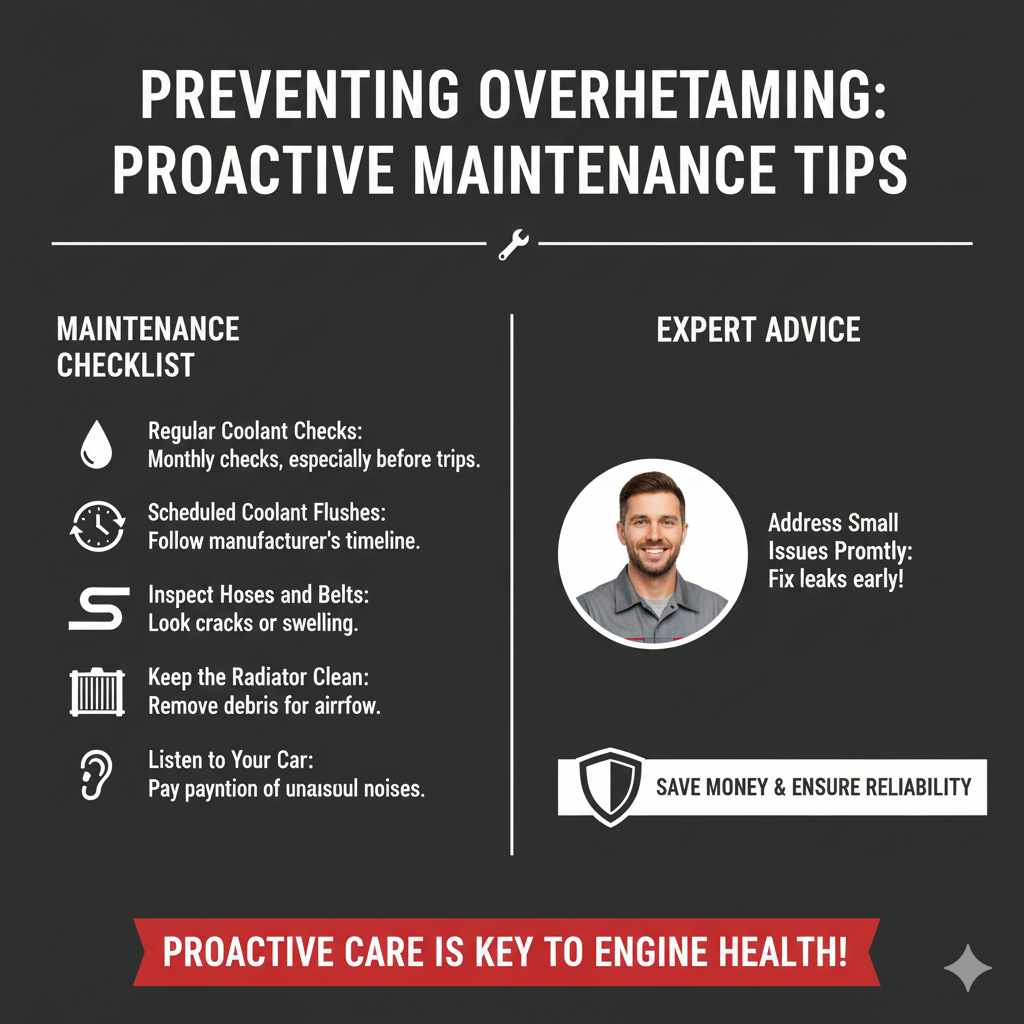
Preventing Overheating: Proactive Maintenance Tips
The best way to deal with your temperature warning light is to prevent it from coming on in the first place! Regular maintenance is your best friend here. Think of it like maintaining your tools to ensure they always work when you need them.
- Regular Coolant Checks: Make it a habit to check your coolant level at least once a month, especially before long trips or during hot weather.
- Scheduled Coolant Flushes: Follow your car manufacturer’s recommendations for flushing and replacing the coolant. This removes old, degraded coolant and any sediment that might have built up.
- Inspect Hoses and Belts: Periodically look at your radiator hoses and other coolant hoses for any signs of cracking, swelling, or softness. Also, check the drive belts that power some cooling fans and water pumps.
- Keep the Radiator Clean: Gently clean the exterior of your radiator with a hose to remove debris that can block airflow.
- Listen to Your Car: Pay attention to any unusual noises or changes in how your car drives. Sometimes, a failing water pump might make a whining noise.
- Address Small Issues Promptly: If you notice a small coolant leak or a hose that looks a bit worn, get it fixed before it becomes a bigger problem.
By being proactive with your car’s cooling system, you’re not only saving yourself potential headaches and expensive repairs but also ensuring your vehicle is safe and reliable for all your journeys. It’s a small investment of time that pays off big in the long run.
Frequently Asked Questions (FAQ)
Q1: Is it safe to drive with the temperature warning light on?
A: No, it is generally not safe to drive with the temperature warning light illuminated. Driving an overheating engine can cause severe damage, leading to very expensive repairs. It’s best to pull over as soon as it’s safe to do so and turn off the engine.
Q2: How long does it take for an engine to cool down?
A: It can take anywhere from 30 minutes to over an hour for an engine to cool down enough to safely check the coolant level or open the radiator cap. The time depends on how hot the engine got and the ambient temperature. Always err on the side of caution and wait until the engine is cool to the touch.
Q3: Can I just add water to my coolant if it’s low?
A: In an emergency, you can add plain water to top off your coolant if the level is low. However, this dilutes the antifreeze and reduces its boiling and freezing protection. It’s crucial to have the system flushed and refilled with the correct coolant mixture as soon as possible, and to identify why the coolant was low in the first place.
Q4: What does it mean if my car is overheating but the temperature gauge isn’t high?
A: This can happen if the temperature sensor itself is faulty, or if there’s an issue with the gauge or its wiring. If the warning light comes on, it’s a strong indicator of overheating, even if the gauge seems normal. It’s still best to pull over and investigate.
Q5: My car is losing coolant, but I don’t see any puddles under it. What could be wrong?
A: Coolant can leak in ways that aren’t immediately obvious. Small leaks might evaporate before hitting the ground, or the coolant could be leaking internally into the engine (e.g., a blown head gasket) or into the exhaust system. A mechanic can perform a pressure test to find these hidden leaks.
Q6: How often should I have my cooling system serviced?
A: It’s recommended to have your cooling system inspected as part of your regular vehicle maintenance schedule, typically during oil changes or according to your car manufacturer’s service intervals. A coolant flush and refill is usually recommended every 30,000 to 60,000 miles, or every 2-5 years, depending on the coolant type and vehicle. Always check your owner’s manual for specific recommendations.
Conclusion
The temperature warning light on your dashboard is a critical alert from your vehicle, indicating that your engine is running hotter than it should. While it might seem daunting, understanding what this light means is the first step toward a simple solution. By knowing the common causes – from low coolant and faulty thermostats to fan issues – and by following the safety-first steps of pulling over and letting your engine cool, you can often manage the immediate situation. Remember, checking coolant levels and inspecting for obvious leaks are manageable DIY tasks that can give you valuable insight. However, never hesitate to call a professional mechanic if the problem persists, if you’re unsure, or if you suspect a more serious issue. Regular maintenance of your cooling system is your best defense against overheating, ensuring your car remains a reliable companion on all your journeys. With a little knowledge and proactive care, you can confidently handle this common dashboard warning and keep your engine running at the perfect temperature.