
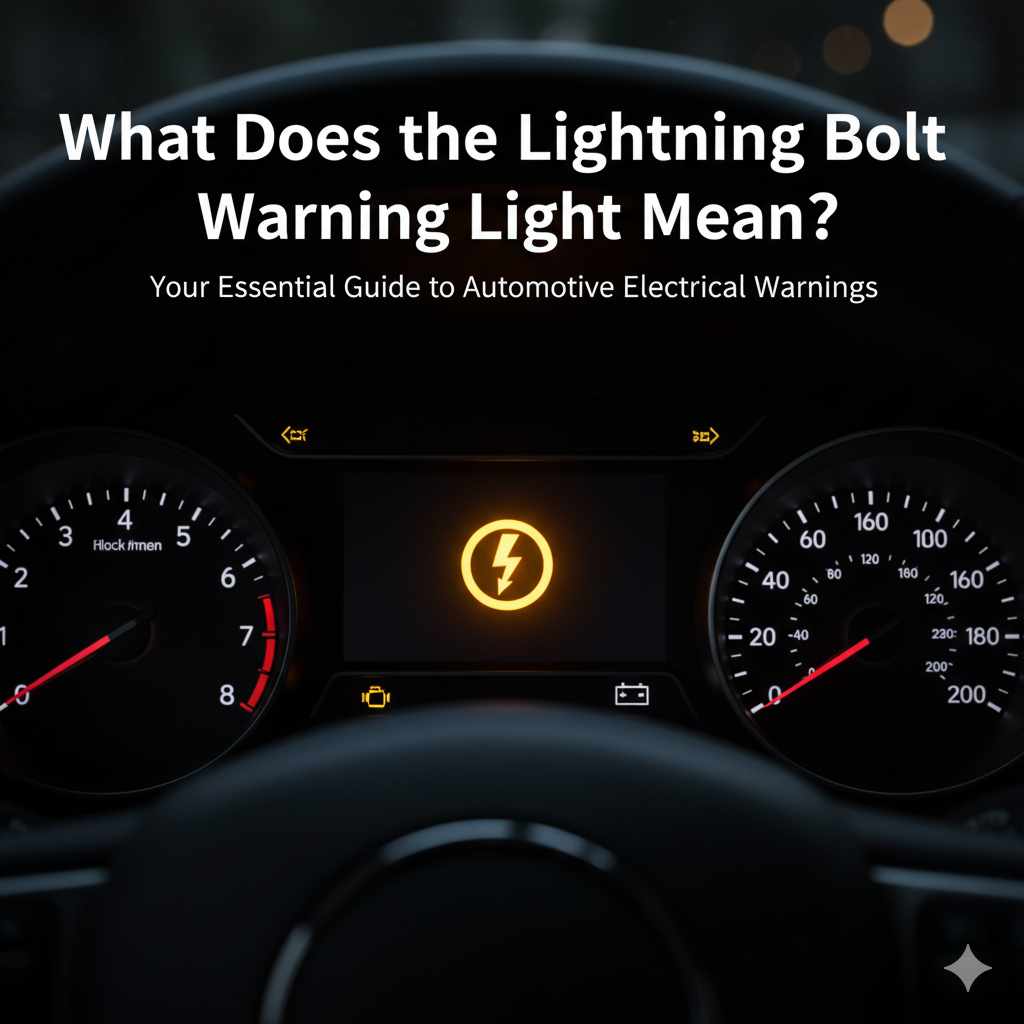
The lightning bolt warning light on your dashboard usually means there’s an issue with your car’s electronic throttle control system. It’s often related to reduced engine power and can be caused by simple things like a dirty throttle body or a more serious sensor problem. Don’t panic; this guide will help you understand it and what to do next.
Seeing a strange light pop up on your car’s dashboard can be a bit unnerving, especially when it looks like a little lightning bolt! If that symbol has appeared, you’re likely wondering, “What does the lightning bolt warning light mean?” It’s a common concern, and thankfully, it’s usually something we can figure out together. This little lightning bolt is your car’s way of telling you that its electronic throttle control (ETC) system might be having a moment.
This system is super important because it controls how much power your engine gets. When the lightning bolt light comes on, it often means your car has gone into “limp mode,” which is a safety feature to prevent further damage. This usually means less power for acceleration. It can be a bit frustrating, but understanding what it means is the first step to getting it sorted. We’ll break down what this light signifies, common causes, and what you can do to get back to smooth driving.
Understanding the Electronic Throttle Control (ETC) System
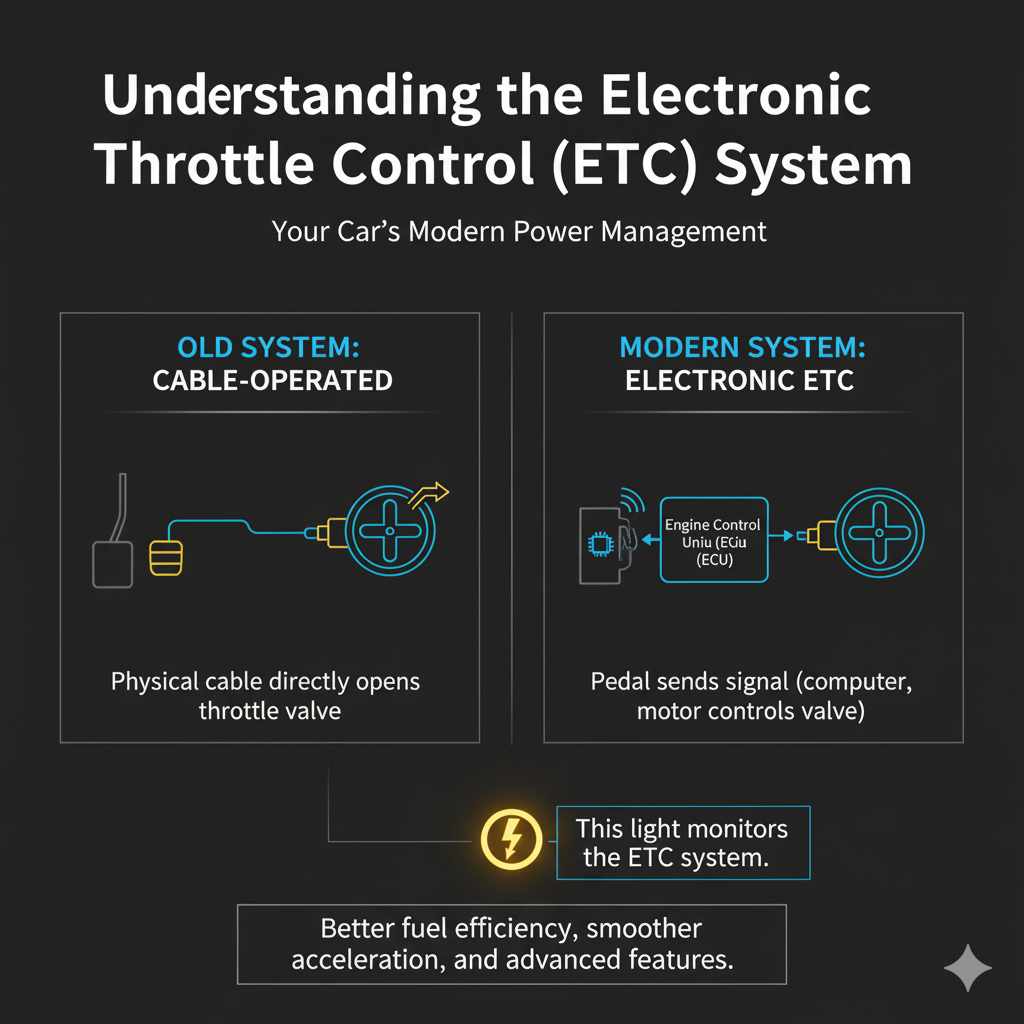
Before we dive into what the lightning bolt means, let’s chat a bit about your car’s Electronic Throttle Control, or ETC, system. Think of it as the modern, smart way your car manages the engine’s power. In older cars, there was a physical cable connecting your gas pedal to the engine’s throttle valve. When you pressed the pedal, the cable pulled the valve open, letting more air into the engine for more power.
Today, most cars use ETC. This means when you press the gas pedal, you’re not directly controlling the throttle valve. Instead, you’re sending a signal to a computer. This computer then tells an electric motor to open or close the throttle valve precisely. This system allows for better fuel efficiency, smoother acceleration, and helps with features like cruise control and traction control. The lightning bolt warning light is specifically tied to this sophisticated system.
What Does the Lightning Bolt Warning Light Actually Mean?
When that little lightning bolt symbol illuminates on your dashboard, it’s a signal that the car’s computer has detected an issue within the Electronic Throttle Control (ETC) system. It’s not necessarily a catastrophic failure, but it’s your car’s way of saying, “Hey, something’s not quite right here, and I’m going to limit my performance to protect myself.”
This often translates to a noticeable reduction in engine power. You might find that your car accelerates much slower than usual, or it might feel sluggish even when you press the gas pedal firmly. This is what’s commonly known as “limp mode” or “failsafe mode.” The car is intentionally reducing its capabilities to prevent potential damage to the engine or other critical components while you seek service.
Common Scenarios When the Lightning Bolt Light Appears
The lightning bolt light can pop up under various circumstances. Sometimes, it might appear after a specific event, while other times it can seem to come out of nowhere. Understanding these common scenarios can help you pinpoint the potential cause:
- Starting the Car: Occasionally, the light might briefly flash on when you start the engine, especially if there was a minor glitch during the startup sequence. If it goes off after a few seconds, it’s usually not a cause for major concern.
- After Filling Up Gas: While not directly related to the ETC, a loose gas cap can sometimes trigger various warning lights, and in some complex systems, it might indirectly affect sensors that the ETC relies on.
- During Heavy Acceleration: If the light comes on when you’re trying to accelerate quickly, it suggests the ETC system is struggling to meet the demand for power.
- In Inclement Weather: Extreme temperatures or moisture can sometimes affect sensitive electronic components, leading to temporary issues with the ETC.
- After a Battery Disconnect: If the car battery has been recently disconnected and reconnected, the ETC system might need to relearn its parameters, and the light could appear until it recalibrates.
Key Components of the ETC System
The ETC system is a network of sensors and actuators that work together. When the lightning bolt light comes on, it’s usually because one of these components isn’t performing as expected:
- Throttle Position Sensor (TPS): This sensor tells the car’s computer how far you’ve pressed the gas pedal.
- Accelerator Pedal Position Sensor (APPS): Similar to the TPS, this sensor measures the position of the accelerator pedal itself.
- Throttle Actuator Control (TAC) Module: This is the “brain” of the ETC system. It receives signals from the pedal sensors and tells the throttle body motor what to do.
- Throttle Body: This is the physical component that controls the amount of air entering the engine. It has a valve (or “butterfly valve”) that opens and closes.
- Powertrain Control Module (PCM) / Engine Control Unit (ECU): This is the main computer for the engine. It monitors all the ETC components and makes decisions based on their readings.
When any of these parts malfunction or send incorrect information, the PCM will likely illuminate the lightning bolt warning light.
Common Causes for the Lightning Bolt Warning Light
It’s helpful to know what typically triggers this warning. Many of these are common issues that can be addressed with some basic maintenance or a visit to a mechanic. Here are some of the most frequent culprits:
1. Dirty Throttle Body
Over time, carbon deposits and gunk can build up around the throttle plate inside the throttle body. This buildup can prevent the plate from opening and closing smoothly, interfering with the ETC system’s ability to control airflow accurately. This is a very common cause and often the easiest to fix.
Symptoms: Sluggish acceleration, rough idling, and the lightning bolt light. In some cases, you might also notice the check engine light coming on.
Fix: Cleaning the throttle body can often resolve this. This can be done with a specialized throttle body cleaner spray and a clean cloth. For safety and proper procedure, it’s recommended to consult your car’s manual or a professional. Some modern cars have electronic throttle bodies that require specific cleaning methods to avoid damage. For instance, on many models, you might need to disable the electronic throttle control system before cleaning.
DIY Potential: Moderate. It requires some mechanical aptitude and the right tools/cleaners. If you’re not comfortable, a mechanic can do it quickly.
2. Faulty Throttle Position Sensor (TPS) or Accelerator Pedal Position Sensor (APPS)
These sensors are crucial for the ETC system. If they start sending inaccurate signals to the PCM, or stop sending signals altogether, the computer won’t know how much throttle you’re requesting. This can lead to erratic acceleration or the car entering limp mode.
Symptoms: Inconsistent acceleration, stalling, cruise control not working, and the lightning bolt light. Sometimes, other dashboard lights might also illuminate.
Fix: These sensors usually need to be replaced if they fail. They are electronic components and can’t typically be repaired. The replacement process involves locating the sensor, disconnecting it, and installing a new one.
DIY Potential: Moderate to High. Depending on the car model, these sensors can be relatively accessible. However, proper diagnosis is key to ensure the sensor is indeed the faulty part.
3. Issues with the Throttle Actuator Control (TAC) Module
The TAC module is essentially the motor that physically moves the throttle plate. If this motor is failing, or if the wiring to it is damaged, the ETC system won’t be able to adjust the throttle opening correctly. This can cause the system to report a fault and trigger the lightning bolt light.
Symptoms: Stuttering acceleration, the car not responding to the gas pedal, and the warning light. You might also hear clicking or grinding noises from the throttle body area.
Fix: The TAC module is often integrated into the throttle body assembly and may require replacing the entire throttle body unit. In some cases, the module might be a separate component that can be replaced on its own.
DIY Potential: Moderate. Replacing a throttle body assembly can be more involved than just cleaning it. It often requires disconnecting coolant hoses and electrical connectors, and sometimes the car may need to be reprogrammed afterward.
4. Wiring Harness Problems
Like any electronic system, the ETC relies on a network of wires to transmit signals. If the wiring harness connecting the sensors, the throttle body, and the PCM is damaged, frayed, or has loose connections, it can disrupt communication and cause the lightning bolt light to appear.
Symptoms: Intermittent problems, the light coming on and off, and potentially other electrical gremlins in the vehicle. The specific symptoms can vary widely depending on which wire is affected.
Fix: This requires careful inspection of the wiring harness. Damaged sections may need to be repaired or replaced. Loose connectors need to be cleaned and re-secured.
DIY Potential: Low to Moderate. Identifying and repairing wiring issues can be challenging and requires good diagnostic skills and understanding of automotive electrical systems. A professional mechanic is often best equipped for this.
5. Powertrain Control Module (PCM) Malfunction
While less common, the main engine computer itself (PCM or ECU) could be the source of the problem. If the PCM is faulty, it might misinterpret sensor data or fail to send the correct commands to the ETC system, leading to the warning light.
Symptoms: A wide range of engine performance issues, not just related to the throttle. The lightning bolt light might be accompanied by other warning lights or unusual engine behavior.
Fix: A faulty PCM usually needs to be replaced and then programmed to your specific vehicle. This is a complex and expensive repair.
DIY Potential: Very Low. PCM replacement and programming are highly specialized tasks that should only be performed by experienced technicians with the correct diagnostic tools.
6. Other Sensor Issues
Beyond the specific TPS and APPS, other sensors connected to the engine’s performance can sometimes indirectly influence the ETC system. For example, a faulty mass airflow sensor (MAF) or oxygen sensor could provide incorrect data that causes the PCM to adjust engine parameters in a way that triggers the ETC warning light.
Symptoms: Can vary greatly depending on the sensor. Often includes poor fuel economy, rough running, and the check engine light in addition to the lightning bolt.
Fix: Diagnosis is key here. Once the faulty sensor is identified, it needs to be replaced.
DIY Potential: Moderate. Many sensors are relatively easy to access and replace, but accurate diagnosis is crucial to avoid replacing the wrong part.
What to Do When You See the Lightning Bolt Light
Seeing the lightning bolt light can be concerning, but don’t let it cause too much stress. Here’s a practical, step-by-step approach to handle the situation:
- Don’t Panic: The light is a warning, not necessarily an immediate emergency. Your car is likely in limp mode to protect itself.
- Check Your Owner’s Manual: Your car’s manual is the best first resource. It will show you the exact symbol and may offer specific advice for your make and model.
- Assess Performance: Notice how the car is driving. Is it significantly down on power? Is it running roughly? Is it making any strange noises? This information will be helpful for diagnosis.
- Consider Recent Events: Did the light come on after a specific driving event, like hitting a bump, driving through water, or performing maintenance?
- Check for Other Warning Lights: Is the check engine light also on? This can provide additional clues.
- Safe to Drive (Usually): In most cases, you can continue driving the vehicle to a mechanic. However, avoid hard acceleration or high speeds, especially if power is severely reduced.
- Schedule a Diagnostic Check: The most reliable way to find out the exact cause is to have a qualified mechanic scan your car’s onboard computer for diagnostic trouble codes (DTCs). This will point them towards the specific component or system that’s reporting a fault. You can find more information on OBD-II scanning at EPA.gov.
DIY vs. Professional Repair
Deciding whether to tackle a repair yourself or take it to a professional depends on your comfort level, the complexity of the issue, and the tools you have available. Here’s a breakdown to help you decide:
When DIY Might Be an Option:
- Cleaning the Throttle Body: If you’re comfortable working around the engine bay and have the correct cleaner, this is often a manageable DIY task.
- Replacing Accessible Sensors: Some sensors, like certain pedal position sensors, might be relatively easy to locate and replace if you’re confident with basic automotive repairs.
When to Call a Professional:
- Diagnosis is Unclear: If you’re not sure what’s causing the light, a professional has advanced diagnostic tools to pinpoint the problem accurately.
- Complex Repairs: Replacing throttle bodies, wiring harnesses, or PCM modules are typically jobs best left to experienced mechanics.
- Specialized Tools Required: Some repairs might need specific diagnostic software or tools that most DIYers don’t have.
- Safety Concerns: If you’re unsure about any step or the potential risks involved, it’s always safer to let a professional handle it.
A good starting point for DIYers is to research your specific vehicle model and the lightning bolt warning light. Online forums and YouTube tutorials can be incredibly helpful. For example, resources like AutoZone’s repair guides offer a wealth of information for various car makes and models.
Understanding Diagnostic Trouble Codes (DTCs)
When your car’s computer detects a problem with the ETC system, it stores a Diagnostic Trouble Code (DTC) in its memory. Mechanics use a special scanner to read these codes. These codes are like error messages that help them identify the source of the problem. For the lightning bolt light, you might see codes starting with “P0” or “P2,” often related to throttle position, pedal position, or throttle actuator control.
For example, a code like P2135 might indicate a problem with the Throttle Position Sensor/Accelerator Pedal Position Sensor “A”/”B” Voltage Correlation. Another, like P2110, could mean the Throttle Actuator Control System – Forced Limited Power. Reading these codes is the crucial first step in diagnosing the issue accurately.
While you can purchase your own OBD-II scanner to read these codes, interpreting them and determining the exact cause often requires experience. Some auto parts stores offer free code reading services, which can give you a starting point before you decide on a repair.
Preventative Maintenance Tips
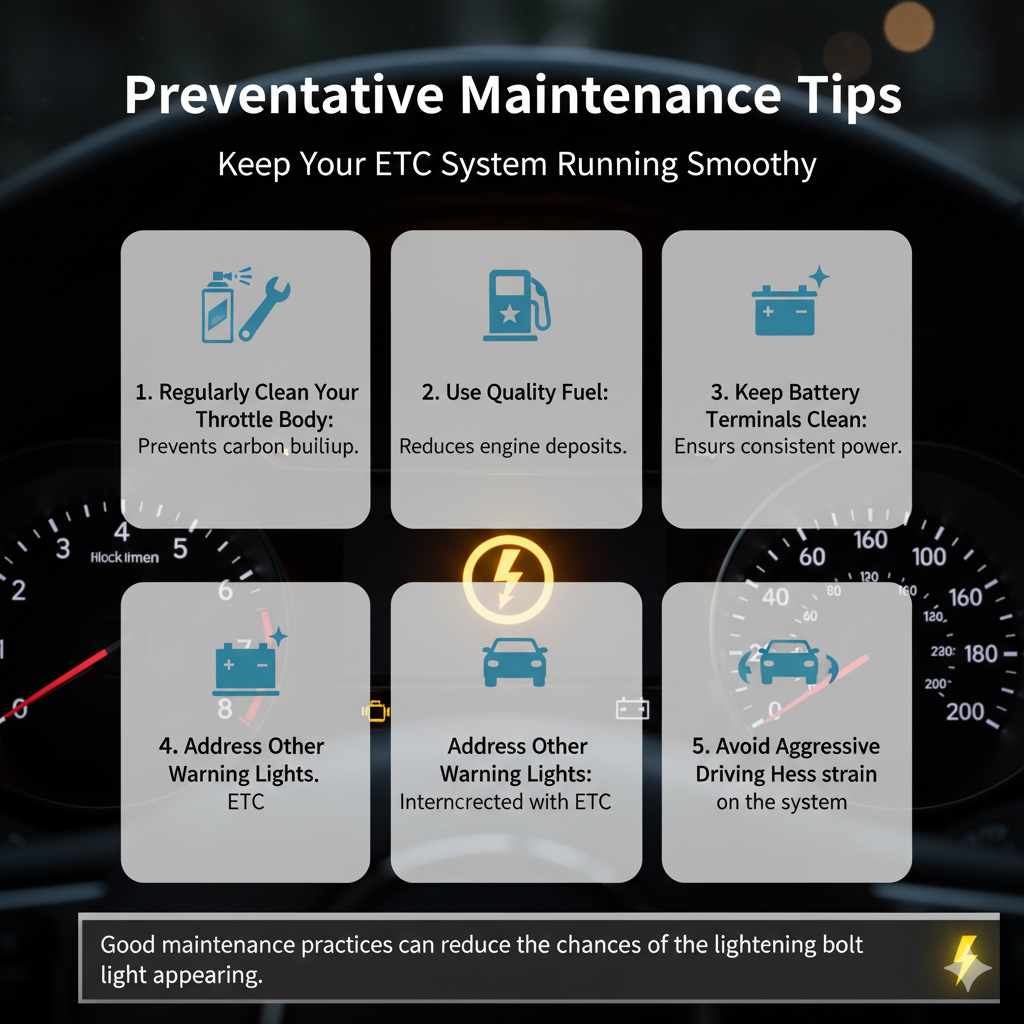
While not all issues can be prevented, good maintenance practices can certainly help keep your ETC system running smoothly and reduce the chances of the lightning bolt light appearing:
- Regularly Clean Your Throttle Body: Follow your car’s maintenance schedule. If you notice any signs of sluggishness, consider a throttle body cleaning sooner rather than later.
- Use Quality Fuel: Using reputable, high-quality fuel can help prevent excessive carbon buildup in your engine and throttle system.
- Keep Battery Terminals Clean: A clean and secure battery connection ensures consistent power delivery to all electronic systems, including the ETC.
- Address Other Warning Lights Promptly: Don’t ignore other warning lights, like the check engine light, as they can sometimes be interconnected with the ETC system.
- Avoid Aggressive Driving Habits: While your car is built to be driven, extremely aggressive acceleration and braking can put more strain on the ETC system over time.
Frequently Asked Questions (FAQ)
Q1: Can I drive my car with the lightning bolt warning light on?
A: In most cases, yes, you can drive your car, but it will likely be in a reduced power mode (limp mode). It’s advisable to drive gently and get it checked by a mechanic as soon as possible to prevent potential further damage.
Q2: How much does it cost to fix the lightning bolt warning light?
A: The cost can vary significantly. Cleaning a dirty throttle body might cost $100-$200. Replacing a sensor could range from $150-$400. Replacing the entire throttle body assembly can be $400-$800 or more. A PCM replacement is usually the most expensive, potentially costing over $1000.
Q3: Will the lightning bolt light go away on its own?
A: Sometimes, if the issue was a temporary glitch or related to a specific condition (like extreme weather), the light might turn off after the car is restarted or after a few driving cycles. However, if there’s a genuine fault, it will likely stay on until the problem is diagnosed and repaired.
Q4: Is the lightning bolt light the same as the check engine light?
A: No, they are different, although they can sometimes illuminate together. The lightning bolt specifically relates to the Electronic Throttle Control (ETC) system. The check engine light is a more general indicator of various engine or emissions-related problems.
Q5: What happens if I ignore the lightning bolt warning light?
A: Ignoring the light could lead to further damage to the ETC system or other engine components. It could also result in the car becoming undrivable or experiencing more severe performance issues. It’s best to address it promptly.
Q6: Can a loose gas cap cause the lightning bolt light to come on?
A: While a loose gas cap typically triggers the check engine light, some vehicles have complex integrated systems. In rare cases, it might indirectly influence other systems. However, the lightning bolt light is primarily associated with ETC issues.
Conclusion
Encountering the lightning bolt warning light on your dashboard is a clear signal that your car’s Electronic Throttle Control system needs attention. While it might seem daunting, remember that this light is designed to protect your vehicle. By understanding what the ETC system does, the common causes for this warning, and the steps you can take, you’re well-equipped to handle the situation.
Whether it’s a simple fix like cleaning the throttle body or a more complex sensor replacement, the key is prompt diagnosis. Don’t hesitate to consult your owner’s manual and, when in doubt, trust a qualified mechanic. With the right knowledge and approach, you can get your car back in optimal working condition, ensuring safer and more enjoyable drives ahead. Keep an eye on your dashboard, perform regular maintenance, and you’ll be well on your way to confidently managing your vehicle’s health.