
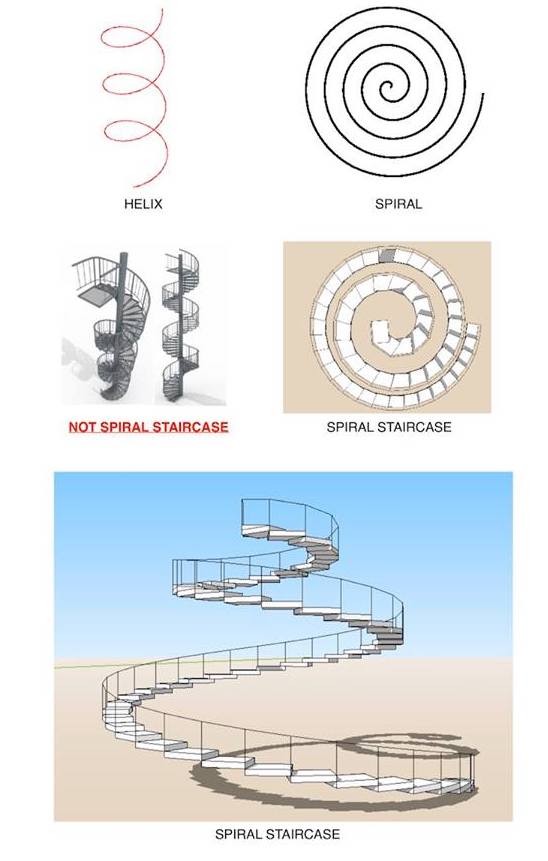
Have you ever wondered about the difference between spiral and helical shapes? These intriguing forms appear everywhere, from nature to architecture.
Understanding their distinctions can unlock new perspectives in design and functionality. As you delve into this article, you’ll discover how each shape offers unique advantages and applications. Whether you’re curious about their roles in everyday objects or their impact on larger structures, this exploration will satisfy your curiosity.
Get ready to uncover the secrets behind these fascinating geometries, and learn how they can enhance your understanding of the world around you.
Understanding Spiral And Helical Forms
A spiralis a curve that winds around a point. It starts small, then gets bigger. Think of a snail shell. It has a center, and the shape grows outward. Spirals are common in nature. You see them in plants and galaxies. They are smooth and continuous. No sharp turns. Spirals can be flat or 3D. Many designs use spirals for beauty.
A helicalform is like a spiral but in 3D. It twists around an axis, like a spring. Helical shapes are found in DNA and stairs. They have a regular pattern. Twisting and turning evenly. They are sturdy and strong. Used in many machines. Helical gears are common in cars. They help parts move smoothly. Helical forms are functional and neat.
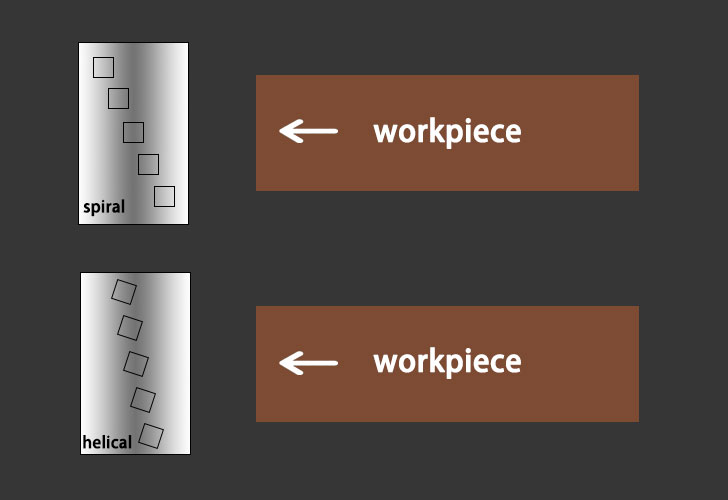
Credit: www.konetool.com
Geometric Characteristics
Spirals and helices look different. Spirals are flat and wind outward. They grow bigger like a snail’s shell. Helices twist around a central line. They look like springs or DNA strands. Both have curves, but their shapes are not the same. Spirals stay on a plane, while helices rise or fall.
| Attribute | Spiral | Helical |
|---|---|---|
| Dimension | 2D | 3D |
| Growth | Outward | Upward or Downward |
| Path | Flat | Curved |
Applications In Nature
Many plants and animals use spiral shapes. Shells of snails are a good example. They curve round and round. Leaves on stems often make a spiral too. This helps them get more sunlight. The Golden Ratio is seen in sunflower seeds. They grow in a perfect spiral.
Helical shapes are also common. DNA is the most famous one. It looks like a twisted ladder. Many proteins have helical shapes too. These shapes help them do important jobs. Some viruses look like tiny helices. This shape helps them move.
Engineering And Design Uses
Spirals have a special place in architecture. They create a sense of movement and elegance. Many famous buildings use spiral designs. They can be seen in stairs or roofs. These designs are often both functional and artistic. They can make small spaces feel larger. Spirals help in guiding the eye upwards. This can make buildings appear taller. Architects love using spirals for these reasons.
Helices are important in mechanical design. They are used in screws and springs. These shapes can hold things together tightly. Helices can also store energy. This is useful in many machines. Car engines use helices for smooth functioning. Helices help in reducing friction. They make machines work better and last longer. Their shape allows for efficient movement. This makes them a popular choice in engineering.
Mathematical Foundations
The equationsfor spirals are simple. A basic spiral can be described using polar coordinates. The formula is r = aθ, where ris the distance from the center. ais a constant, and θis the angle. Spirals grow as the angle increases. Archimedean spiralsare one type. They have equal distance between turns.
Helices are different. They are like springs. A common formula for a helix is x = r cos(θ), y = r sin(θ), z = bθ. Here, ris the radius. bshows how tall the helix is. Helices are 3Dshapes. They twist around a cylinder. DNA is a famous helix.

Credit: www.youtube.com
Cultural And Symbolic Meanings
Spirals are seen in many artworks. They often mean growth or change. In some cultures, spirals show the circle of life. Artists use spirals to show movement. Many people feel calm when they see spirals. They can be found in nature too, like in snail shells and tornadoes. Spirals often have a mystical feel. They can make people think of time and space. In art, spirals bring a sense of balance. They can show the flow of energy. Many cultures use spirals in decoration and design.
Helices are seen in science. DNA is a famous helix. It shows life and genetics. Helical shapes mean strength and stability. They are often used in architecture. Engineers like helical forms for support. Helices can be found in nature, like in seashells. They often mean progress and growth. In culture, helices can show development. They are used in technology too. Helical shapes are seen in machines. They provide efficiency and movement. People use helices in design for their beauty.
Common Misconceptions
Many confuse spiral and helical shapes. Both look similar but are different. Spirals have a flat shape and expand outward. Helical forms twist around a central axis, like a spring. They are used in different fields.
Spirals are often found in art and nature. They can be seen in snail shells and galaxies. Helical structures are common in engineering and biology. DNA is a famous example of a helical structure.
Understanding the difference helps in learning. Spirals grow in a flat way. Helicals grow in a twisting way. Recognizing these forms solves confusion.
Many people mix them up. Knowing the difference is important. It helps in science and art.
Choosing The Right Form
Spiralshapes are often found in nature. They look like a coiled spring. Helical shapes are more like a twisted ladder. Both have special uses. Picking the right one depends on the job. Space is a big factor. Spiral forms save space in small areas. Helical forms are good for long stretches.
Strength is important too. Spiral shapes handle big weights well. Helical shapes are strong over long distances. Cost can influence the choice. Spiral forms are usually cheaper. Helical forms might cost more but last longer. Think about these factors when choosing. Safety is key. Make sure the shape meets safety needs.
Materials are a big consideration. Some materials bend easier than others. Maintenance is another factor. Spiral forms need less care. Helical forms might need more attention. Installation time is important. Spiral shapes are quick to set up. Helical shapes take a bit longer.
Environment matters too. Some shapes work better in certain climates. Aesthetics can also play a role. Spiral forms can be pleasing to the eye. Helical forms offer a different look. Think about what fits best. Every project is unique. Choose wisely.
Frequently Asked Questions
What Is A Spiral Shape?
A spiral shape is a curve that winds around a central point. It progressively moves away from the center. Spirals are commonly found in nature, art, and architecture. They can be flat or three-dimensional. Spirals are often associated with growth and expansion.
What Defines A Helical Structure?
A helical structure is a three-dimensional shape resembling a coil. It features a consistent radius and pitch. Helices are seen in DNA and springs. They are crucial in mechanical and biological systems. Helical structures can be right-handed or left-handed.
How Do Spirals Differ From Helices?
Spirals are flat, winding curves, while helices are 3D coils. Spirals expand from a central point, helices maintain a consistent radius. Spirals are often decorative, helices have functional uses in machinery and biology. Both shapes are prevalent in various fields.
Where Are Spirals Used In Design?
Spirals are popular in design for their aesthetic appeal. They symbolize growth and infinity. Spirals are often used in logos, patterns, and architecture. Their dynamic form adds visual interest. They can be seen in staircases and garden layouts.
Conclusion
Choosing between spiral and helical designs can impact projects greatly. Spirals offer simplicity and elegance. Helicals bring strength and flexibility. Each serves unique functions in engineering and design. Consider project needs, budget, and constraints. Think about the environment and materials.
Spiral designs fit artistic projects well. Helical designs suit structural needs better. Balance aesthetics with functionality. Both designs have pros and cons. Make informed decisions for effective results. Understand your project’s goals and requirements. The right choice enhances efficiency and success.
With careful planning, select the design that best meets your objectives.