
Quick Summary:
Yes, red light can appear harder to see at night compared to other colors. Our eyes are less sensitive to red wavelengths in low light conditions, a phenomenon well-understood in vision science. This guide explains why and how it affects our perception.
Have you ever noticed how some lights seem to fade into the darkness more than others when the sun goes down? It’s a common experience, especially when you’re trying to navigate in dim conditions. You might be wondering if a specific color, like red, plays a role in this. This guide will clear things up, explaining why red light can seem less visible at night and what you can do about it. We’ll break down the science in simple terms and give you practical tips so you can understand and work with light better, no matter the time of day.
Understanding How We See Color at Night
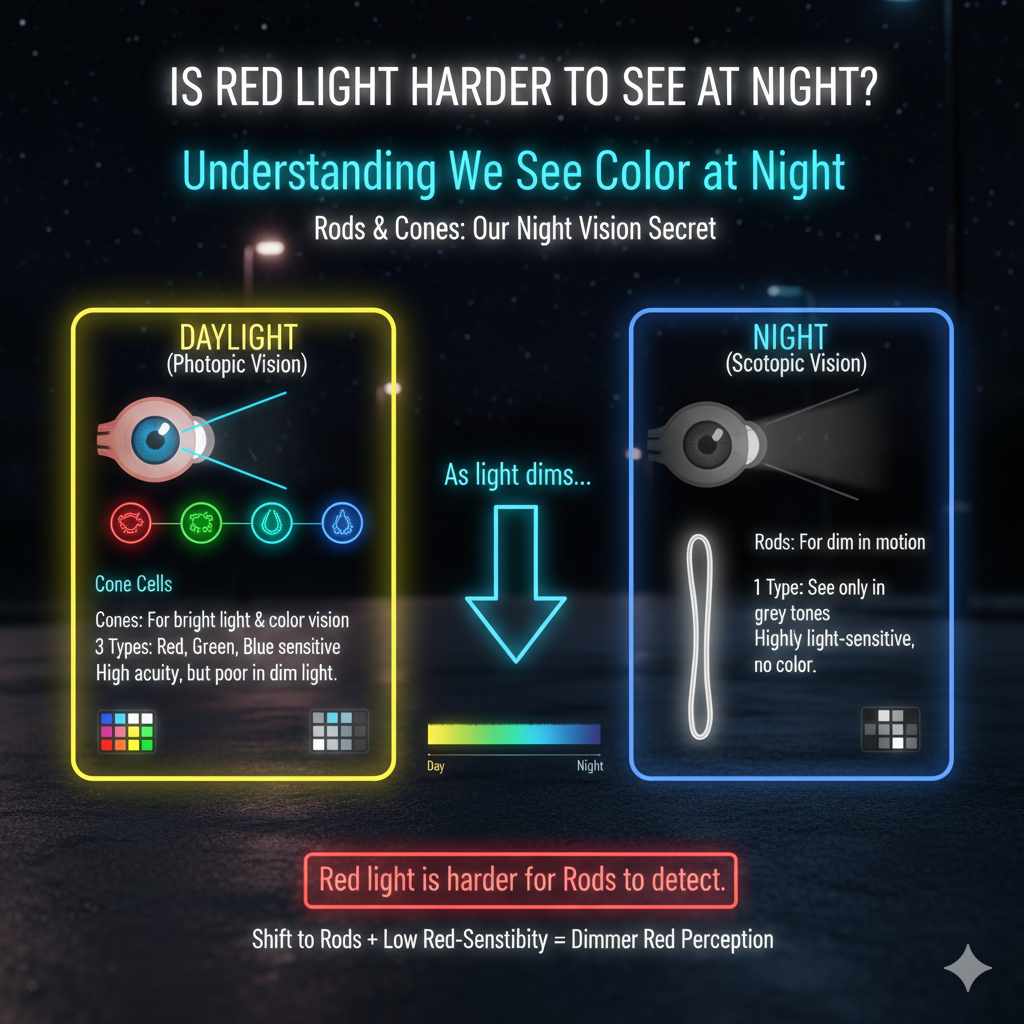
Our ability to see color is pretty amazing, but it changes a lot depending on how much light is around. During the day, when light is bright, our eyes use special cells called cones. These cones are responsible for seeing all the vibrant colors we love. There are three types of cones, each sensitive to different wavelengths of light: red, green, and blue. This is why we can distinguish a bright red stop sign from a green traffic light.
However, when it gets dark, our cones don’t work as well. Instead, our eyes rely more on another type of cell called rods. Rods are incredibly sensitive to light, which is great for seeing in dim conditions, but they don’t detect color. They mainly see in shades of gray. This shift from cone vision (photopic vision) to rod vision (scotopic vision) is the main reason why our perception of colors, including red, changes at night.
Why Red Light Seems Dimmer in Low Light
The key to understanding why red light is harder to see at night lies in how our cones are sensitive to different colors. Our red-sensitive cones are the least numerous and the least sensitive to very low levels of light compared to our green and blue-sensitive cones. When light levels drop significantly, our eyes switch over to using primarily rod cells, which are not equipped to detect color at all. This means that the red wavelengths, which are already less effectively detected by our cones in dim light, are essentially “invisible” to the rods.
Think of it like this: during the day, your eyes have a full palette of colors to work with. As it gets dark, the palette shrinks, and red is one of the first colors to become difficult to distinguish. This is why emergency lights on vehicles, for instance, often use red, but it’s often paired with blue or white to ensure visibility in all conditions. The science behind this is related to the spectral sensitivity of our photoreceptor cells.
The human eye’s sensitivity peaks in the green-yellow spectrum under daylight conditions. As light intensity decreases, the peak sensitivity of our vision shifts towards the blue-green spectrum. Red light, being at the longer wavelength end of the visible spectrum, falls outside this peak sensitivity range for both cones in dim light and rods in very low light. This is a well-documented aspect of human visual physiology.
The Science Behind Low-Light Vision
Our eyes have two main types of light-sensitive cells: rods and cones. These cells are located in the retina at the back of your eye.
- Cones: These cells work best in bright light and are responsible for our color vision. We have three types of cones, each sensitive to different colors: red, green, and blue.
- Rods: These cells are much more sensitive to light than cones and work well in dim light. However, they cannot detect color; they only see in shades of gray.
As daylight fades, our eyes transition from using cones to rods. This transition is known as the Purkinje effect. During this shift, our perception of colors changes. Colors with shorter wavelengths (like blue and green) become relatively brighter than colors with longer wavelengths (like red and orange). This is because our rods are more sensitive to the blue-green end of the spectrum.
This phenomenon explains why a red object that is easily visible in sunlight might seem to disappear into the shadows at dusk or night. The rods, which are taking over our vision, simply aren’t picking up the red wavelengths. This is a fundamental aspect of how human vision adapts to varying light conditions.
Photopic vs. Scotopic Vision
To really understand why red light seems harder to see at night, it’s helpful to know about two types of vision:
- Photopic Vision: This is the vision we use in bright light. It’s mediated by our cone cells and allows us to see a full spectrum of colors with great detail. During photopic vision, our sensitivity to red light is quite good, which is why red objects pop out in daylight.
- Scotopic Vision: This is the vision we use in very low light conditions, like at night. It’s mediated by our rod cells. Rods are extremely sensitive to light, allowing us to see shapes and movement in near darkness. However, they are not sensitive to color. They perceive everything in shades of gray.
The transition between these two types of vision happens gradually as light levels change. In twilight or dim conditions, we experience a mix of both, but as it gets darker, scotopic vision becomes dominant. Since rods don’t detect red, the perceived brightness of red light decreases significantly.
The Role of Wavelengths
Light is made up of different wavelengths. We see these wavelengths as different colors. Red light has longer wavelengths (around 620-750 nanometers), while blue light has shorter wavelengths (around 450-495 nanometers) and green light falls in between (around 495-570 nanometers). Our cone cells are tuned to respond best to specific ranges of these wavelengths.
Under bright light (photopic conditions), our red cones are quite effective at detecting red wavelengths. However, under dim light (scotopic conditions), our rods take over. Rods are most sensitive to wavelengths around 500 nanometers, which is in the blue-green part of the spectrum. They have very little sensitivity to the longer wavelengths of red light.
This difference in sensitivity is precisely why red lights can appear less bright or even disappear in very dark environments. It’s not that the light source is weaker; it’s that our eyes are less equipped to detect it under those specific conditions.
Practical Implications of Red Light Visibility at Night
Understanding that red light is harder to see at night has several real-world applications and implications. Knowing this can help you make safer choices and be more aware of your surroundings.
Safety and Visibility
In situations where visibility is critical, especially at night, relying solely on red lights can be problematic. For example, warning lights on construction sites or emergency vehicles often use red, but it’s frequently paired with other colors like blue or amber. This is because red might be harder to spot from a distance in low light compared to colors that fall within the peak sensitivity range of our rod cells.
When you’re working on a project outdoors at dusk or in dimly lit areas, consider the color of your safety markers or lights. If red is your only option, you might need to use more of them or place them in more visible positions. This is also why many car taillights are red – it signals a stop or slowing down, but drivers need to be extra attentive to spot them in poor visibility.
For DIYers, this means if you’re setting up temporary lighting for a pathway or marking a hazard, think about using brighter, more easily perceived colors like white or green if possible, or ensure your red markers are illuminated with sufficient intensity and contrast against the background.
Think about road signs. While stop signs are red, they are large and reflective, designed for daytime visibility and aided by headlights at night. Other critical nighttime signage, like exit signs or emergency exit markings in buildings, often use bright white or green lettering on a dark background, which is more easily perceived by our eyes in low light.
If you’re involved in any home improvement projects that involve signage, especially for safety or wayfinding in areas with low light, consider using high-contrast colors that are more visible to the rod-dominant vision we use at night. This could include using reflective materials or choosing colors like white, yellow, or bright green.
Specialized Applications (e.g., Astronomy, Photography)
In fields like astronomy, red lights are often used in observatories and for stargazing. This is because red light is believed to disrupt night vision less than other colors. While our eyes are less sensitive to red, it doesn’t “wash out” our dark adaptation as much as brighter, bluer lights. This allows astronomers to read charts or adjust equipment without losing the sensitivity their eyes have built up for viewing faint celestial objects.
Similarly, in photography and film, red lights are sometimes used on equipment to allow for setup in dark environments without affecting the light-sensitive film or sensors. This is a deliberate use of red light’s lower visibility to preserve night vision or prevent unwanted exposure.
Tips for Working with Red Light at Night
Since red light can be harder to see in the dark, here are some practical tips if you find yourself working with it or needing to be visible at night:
1. Increase Intensity: If you must use red lights for visibility, make them brighter. A brighter red light will have a better chance of being detected by your eyes, even if they are less sensitive to that color.
2. Use Contrast: Place red lights or markers against a contrasting background. A red object on a dark, uniform surface will be harder to see than a red object on a light or textured surface. Consider the environment where the red light will be used.
3. Combine Colors: If possible, pair red lights with other colors that are more visible in low light, such as white, blue, or green. This ensures a broader spectrum of light is available for detection by your eyes.
4. Use Reflective Materials: Red reflective tape or markers can significantly enhance visibility at night when illuminated by an external light source, like headlights or a flashlight. The reflective material bounces light back towards the source, making the object appear much brighter.
5. Consider Red Light Therapy Devices: If you’re using red light therapy devices, remember that while beneficial for skin and muscle, their visibility in a completely dark room might be subtle. Ensure you are positioned correctly and aware of the device’s location.
6. Be Aware of Your Surroundings: When navigating in low light, especially if red lights are present (like taillights), be extra vigilant. Don’t assume you’ll see them as easily as you would in daylight.
7. Use Dedicated Night Vision Tools: For critical tasks requiring high visibility in darkness, consider specialized equipment like night vision goggles or high-lumen flashlights that emit white light, which is more readily perceived by the human eye.
When Red Light is an Advantage
While red light can be harder to see, this characteristic can actually be an advantage in specific situations. This is often related to preserving our night vision, which is crucial for activities that require us to see in very low light conditions.
Preserving Night Vision
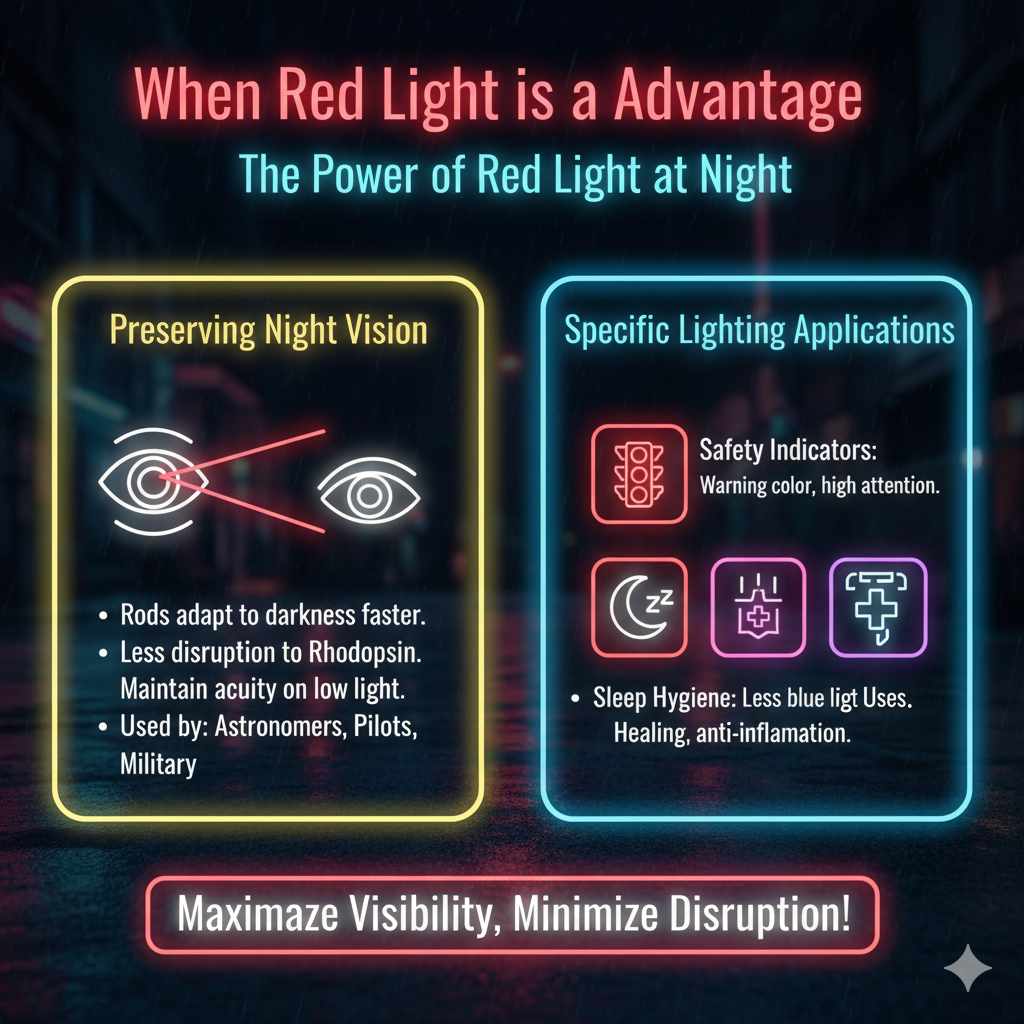
As we’ve discussed, our eyes use rods for vision in dim light. These rods are highly sensitive, but they take time to adapt to the darkness. This adaptation process is called “dark adaptation.” Exposure to bright light, especially blue or white light, can “bleach” the rhodopsin in the rods, requiring our eyes to re-adapt. Red light, due to its longer wavelength and the fact that our rods are less sensitive to it, causes less disruption to this dark adaptation process.
This is why astronomers, pilots, and even soldiers often use red lights. By using red lights, they can maintain their acquired night vision while still having a light source to read maps, adjust equipment, or perform necessary tasks. The perceived dimness of red light is actually a benefit in these scenarios because it minimizes the negative impact on our eyes’ ability to see in the dark.
Specific Lighting Applications
Beyond preserving general night vision, red light has specific applications where its properties are useful:
- Safety Indicators: While sometimes harder to see, red is universally recognized as a warning color (e.g., stop signs, brake lights). Its association with caution makes it effective for signaling important information, even if it requires more attention from the observer at night.
- Sleep Hygiene: Exposure to blue light in the evening can suppress melatonin production, interfering with sleep. Red light, on the other hand, has a less disruptive effect on our circadian rhythms. Many modern alarm clocks and bedside lamps offer red light options for this reason.
- Therapeutic Uses: Red light therapy, also known as photobiomodulation, uses specific wavelengths of red and near-infrared light to promote healing, reduce inflammation, and improve skin health. The visibility of these devices is usually secondary to their therapeutic effects.
Comparing Visibility of Different Colors at Night
To get a clearer picture of why red light behaves the way it does, let’s compare its visibility to other colors in low-light conditions. This comparison highlights the spectral sensitivity of our eyes.
The table below illustrates how our perception of different colors changes as light levels decrease. Notice how colors closer to the blue-green end of the spectrum tend to remain more visible than red.
| Color | Wavelength (approx. nm) | Visibility in Bright Light (Daytime) | Visibility in Low Light (Night) | Reason |
|---|---|---|---|---|
| Blue | 450-495 | Good | Relatively High | Rods are most sensitive to this range. |
| Green | 495-570 | Highest | Highest | Peak sensitivity for both cones and rods. |
| Yellow | 570-590 | High | Moderate | Sensitivity drops off from peak. |
| Orange | 590-620 | Good | Low | Moving towards longer wavelengths, less rod sensitivity. |
| Red | 620-750 | Good | Very Low | Rods have minimal sensitivity to long wavelengths. |
As you can see, green light is the most visible color to the human eye in both bright and dim conditions because it aligns with the peak sensitivity of both our cone and rod cells. Blue light remains relatively visible at night because of rod sensitivity. Red and orange light, with their longer wavelengths, become significantly less visible as our eyes switch to rod-dominant vision.
This information is crucial for anyone working with lighting for safety, signaling, or even just setting an ambiance. For instance, when choosing outdoor lighting for your workshop or garden, understanding these principles can help you select bulbs that provide adequate illumination and visibility where you need it most.
Factors Affecting Perceived Brightness
While the science of our eyes is a primary factor, several other elements can influence how bright a red light appears at night:
- Intensity (Luminance): A very bright red light can still be visible even if our eyes are less sensitive to its color. The sheer amount of light can overcome the reduced sensitivity.
- Duration of Exposure: How long your eyes have been in the dark matters. If you’ve just stepped outside, your eyes won’t be fully dark-adapted, and red lights might seem more visible than after an hour in darkness.
- Background Contrast: A red light against a black background is much harder to see than a red light against a white or gray surface.
- Atmospheric Conditions: Fog, rain, or snow can scatter light, making all colors harder to perceive, but potentially impacting red light more due to its longer wavelength.
- Individual Vision Differences: Just like with any aspect of vision, there can be slight variations from person to person in their sensitivity to different colors and light levels.
Frequently Asked Questions (FAQs)
Q1: Why does red light seem dimmer than white light at night?
A1: At night, our eyes rely on rod cells, which are highly sensitive to light but don’t detect color. Rods are most sensitive to blue-green light and have very little sensitivity to red light. White light contains a mix of all colors, including those our rods can detect well, making it appear brighter.
Q2: Does this mean red lights are useless at night?
A2: No, red lights are not useless. They are still visible to some extent, especially if they are bright or if our eyes are not fully dark-adapted. Their key advantage at night is that they disrupt our night vision less than other colors, which is useful for activities like stargazing or reading maps.
Q3: If I’m working outdoors at dusk, should I avoid red lights for safety?
A3: It’s wise to be cautious. If red is your only option for safety markers, use them with increased intensity, ensure good contrast with the background, or supplement them with white or yellow lights. Brighter red lights or reflective red materials will be more effective.
Q4: Why are some car brake lights red?
A4: Red is universally understood as a warning color, signaling danger or a need to stop. While it might be less visible in certain low-light conditions than other colors, its strong association with caution and its effectiveness in daylight make it the standard. Modern brake lights are also very bright to compensate.
Q5: What is the best color for visibility at night?
A5: Generally, colors in the blue-green spectrum, like green and yellow-green, are the most visible at night because they align with the peak sensitivity of our rod cells. Bright white light, containing all visible wavelengths, is also highly visible.
Q6: How can I improve my vision in the dark?
A6: Allow your eyes time to adapt to the dark (about 20-30 minutes). Avoid looking at bright lights, especially blue or white ones. If you need light, use a dim red light source. Taking Vitamin A supplements can also support overall eye health and night vision.
Conclusion
So, is red light harder to see at night? The answer is a definite yes, and now you know precisely why. It all comes down to how our eyes work, particularly the shift from color-seeing cone cells in bright light to light-sensitive rod cells in dim conditions. Our rods are simply not very good at picking up red wavelengths.
While this might seem like a disadvantage, understanding it is incredibly useful. It helps explain why certain safety lights are designed the way they are, why astronomers use red lamps, and how you can make better choices for visibility and safety in your own projects and activities around the house. By considering the principles of light perception and visibility, you can ensure you’re seen when you need to be and that you can see clearly, no matter how dark it gets.
Remember, whether you’re working in your garage after sunset, setting up outdoor lighting, or just trying to navigate your home at night, a little knowledge about how light affects our vision can go a long way. Keep these tips in mind, and you’ll be able to handle any lighting situation with confidence. Happy building and improving!