
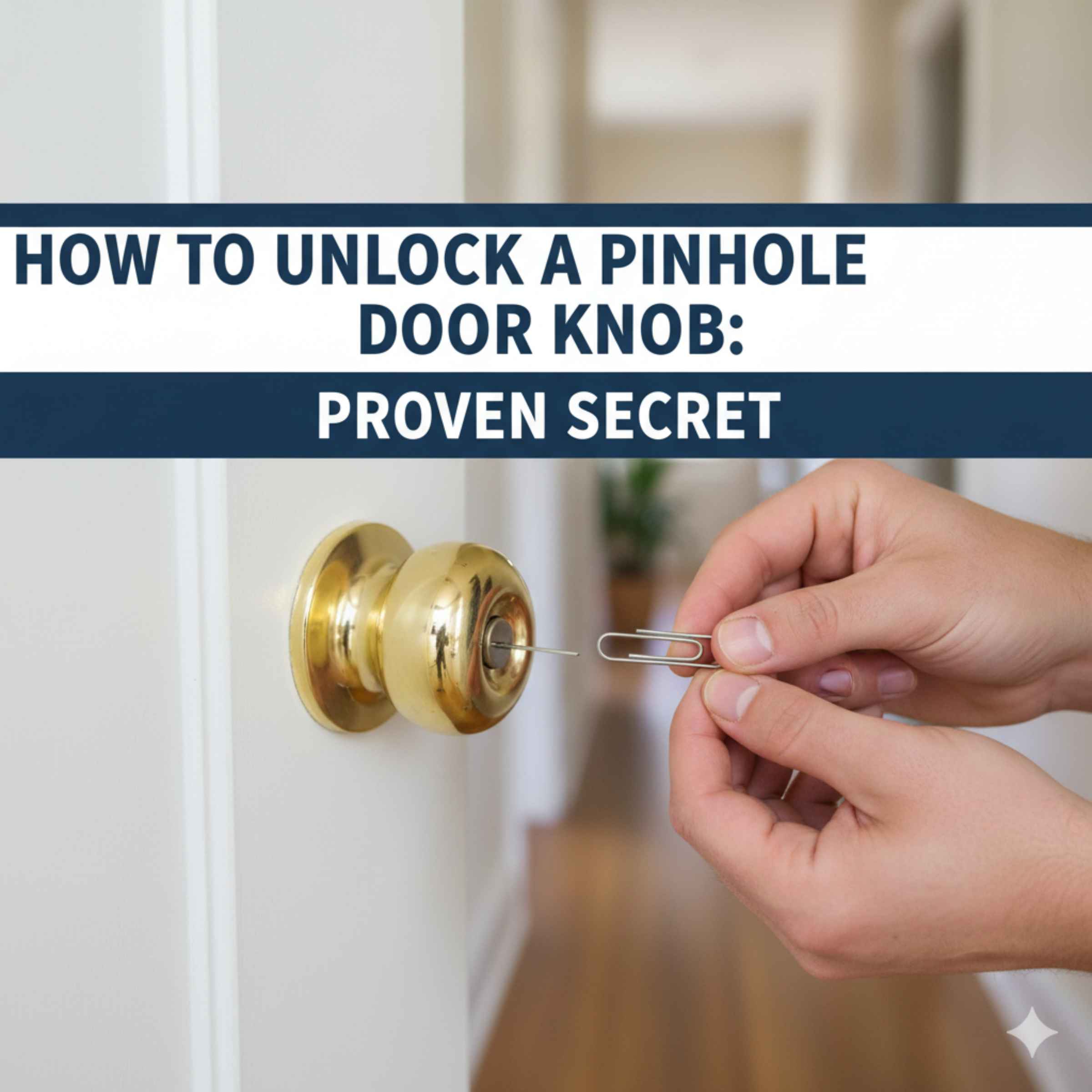
Quick Summary: To unlock a standard privacy or bedroom door knob with a small hole, insert a thin, stiff object—like a paperclip or small screwdriver—into the hole, push straight in until you feel a click, and the lock will release instantly. This simple method avoids drilling or damage.**
How To Unlock A Pinhole Door Knob: Proven Secret
Have you ever been locked out of a bathroom or bedroom by a simple knob lock? It happens to everyone! These interior doors often use a privacy lock, which has a tiny hole instead of a traditional keyhole. It can feel frustrating when you just need to get in quickly. Don’t worry; unlocking these is surprisingly easy. You don’t need special tools or a locksmith. With a few common household items and my straightforward steps, you’ll have that door open in seconds. Let’s turn that little hole into your secret unlock button!
Understanding the Pinhole Door Knob Lock
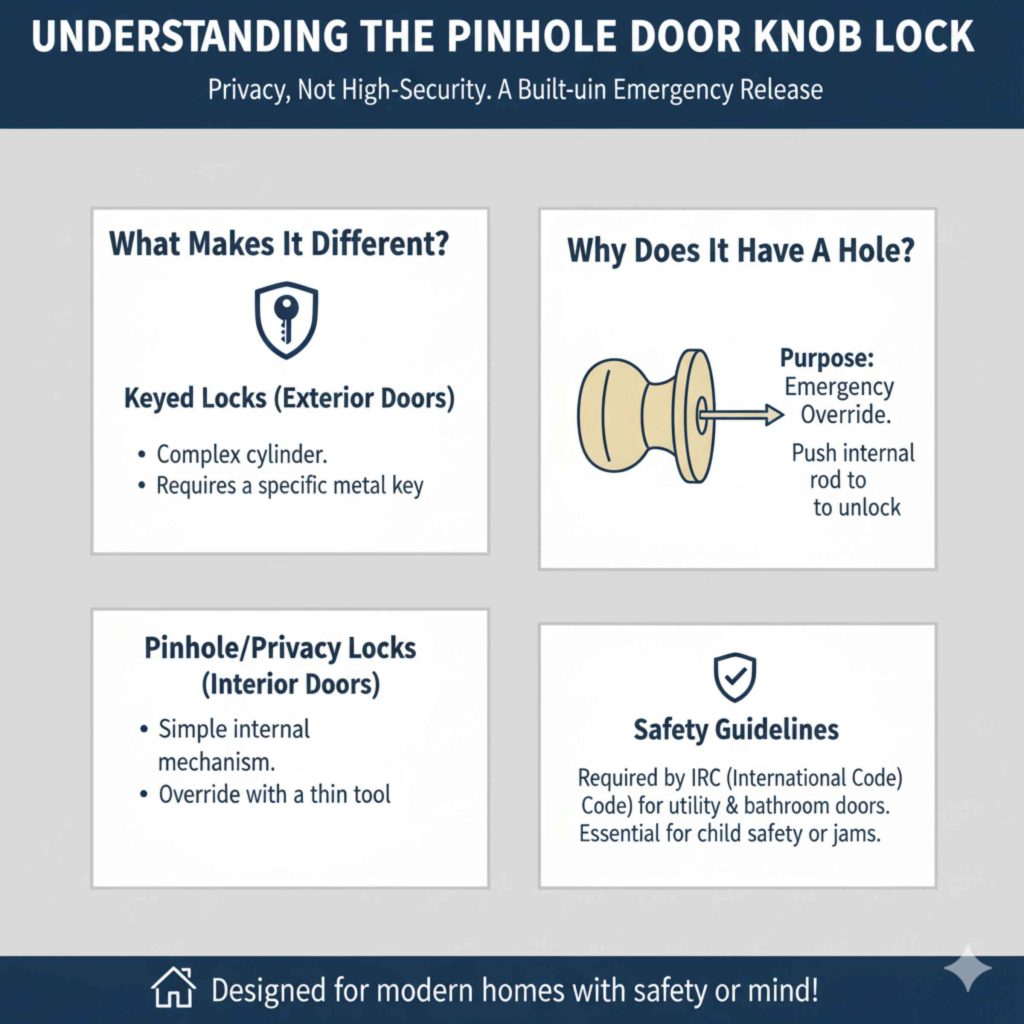
Before we start poking things into holes, let’s quickly understand what we are dealing with. This isn’t a high-security lock; it’s designed for privacy, usually in bathrooms, bedrooms, or home offices.
What Makes It Different From a Regular Lock?
Most exterior doors use a keyed lock (like a deadbolt) that requires a metal key. Pinhole locks, often called “privacy locks,” work differently.
Instead of a complex cylinder that turns with a key, these locks use a simple locking mechanism inside the knob assembly. When you turn the little button or lever on the inside, it pushes a small rod or cam into place, blocking the mechanism. The hole on the outside is simply a way to access that internal mechanism to push the rod back out.
Why Does It Have a Hole?
The hole’s purpose is purely functional: it allows you to override the lock from the outside in an emergency. Think of it as a built-in emergency release. This is crucial if a child locks themselves in, or if the knob jams while locked.
According to safety guidelines from organizations like the International Residential Code (IRC), interior doors, especially those leading to utility spaces or bathrooms, must have an accessible emergency release mechanism, which is why this pinhole design is so common in modern homes.
Gather Your Tools: What You Need to Unlock It
The beauty of unlocking a pinhole door knob is that you likely already own everything required. Forget expensive gadgets; we are using everyday items.
Essential Items for Unlocking
You need something long, thin, and rigid enough to push against that internal release mechanism.
- A Straightened Paperclip: This is the classic, go-to item. Make sure it’s a standard size, not the tiny plastic-coated ones.
- Small Flathead Screwdriver: One of the smallest ones you have (often called a jeweler’s screwdriver).
- Bobby Pin: Unfold it so it’s straight, or use the straight end if you unfold it partially.
- Small Allen Wrench (Hex Key): If you have a set for furniture assembly, the smallest size often works perfectly.
- Toothpick (Use with Caution): Only use this if the hole is very shallow, as it can easily snap off inside.
Safety First: A Quick Word of Advice
While this process is very safe, we must be gentle. The goal is to push the mechanism, not damage the inside of the knob.
Never force anything into the hole. If you feel significant resistance, stop, check your tool, and try again gently. Forcing it can bend the internal parts, potentially requiring you to replace the entire doorknob.
The Step-by-Step Secret to Unlocking the Knob
This method is the “proven secret” because it relies on knowing exactly where the release mechanism is located inside the knob. Follow these steps exactly, and you will succeed.
Step 1: Identify the Knob Type
First, look closely at the doorknob. Most pinhole locks fall into one of two categories:
- Push-Through Hole: The hole is completely open, and you push something straight in.
- Small Cross/Slot Hole: The hole has a small slot or cross shape inside, meaning you need to turn your tool slightly once inserted.
The procedure below works for the most common type: the straight push-through hole.
Step 2: Prepare Your Tool
Take your chosen tool—let’s use the straightened paperclip as our example.
Unfold the paperclip completely so you have a straight piece of wire about 2 to 3 inches long. If the wire is too flimsy, try folding it in half for extra rigidity, but ensure the end going into the hole is still thin enough.
Step 3: Locate the Locking Mechanism
This is the most critical part. You need to insert the tool into the hole until it meets resistance, which is the locking cam or rod.
Insert the tip of your tool into the center of the pinhole. Push slowly and steadily. You will feel it go in a short distance—maybe half an inch—and then you will feel a slight stop or resistance. This stop is usually the locking pin.
Step 4: Apply the Unlocking Pressure
Once you feel that initial resistance, you need to apply pressure in the correct direction.
Push Straight In: With firm, steady pressure, push the tool straight inward, directly toward the center of the door. You are trying to push that internal mechanism back to its unlocked position.
You should hear or feel a distinct click or thud as the lock releases. This sound confirms that the cam has moved out of the way.
Step 5: Turn the Knob and Open the Door
As soon as you feel or hear the click:
- Keep the unlocking tool inserted (or have a helper hold it if you are alone).
- With your free hand, turn the exterior doorknob as you normally would to open the door.
- The door should now swing open easily.
If the door doesn’t open, pull the tool out slightly, reinsert it, and try pushing again with a bit more conviction (but still gently!). Sometimes the alignment needs a second try.
Troubleshooting: When the Simple Push Doesn’t Work
Occasionally, the lock mechanism is stiff, or you might have a slightly different style of privacy lock. Here are solutions for common hiccups.
Scenario A: The Slot/Cross-Style Knob
If your pinhole looks like a tiny plus sign (+) or a flat slot, you need to use a small flathead screwdriver or the unfolded end of a bobby pin.
| Hole Type | Best Tool | Action Required |
|---|---|---|
| Round/Open Hole | Paperclip, Allen Wrench | Push straight in until click. |
| Slot/Cross Hole | Small Flathead Screwdriver | Insert tool and rotate 90 degrees to unlock. |
For the slot style, insert the screwdriver and turn it about a quarter turn (90 degrees) until you feel it catch and release the lock. Then, turn the knob to open.
Scenario B: The Tool Keeps Bending or Snapping
If you are using a paperclip and it keeps bending, your internal mechanism might be slightly misaligned or require more force than the thin wire can handle.
Switch to a sturdier tool, like a small jeweler’s screwdriver or a stiff piece of metal wire. If you must use a toothpick, try dipping it in water first to make it slightly more rigid, but remember this is a last resort, as broken wood inside the mechanism can cause permanent damage.
Scenario C: The Knob Won’t Turn After Clicking
If you hear the click but the door remains stubbornly locked, the latch mechanism itself might be stuck due to wear or humidity.
- Try wiggling the door slightly inward or outward while turning the knob.
- Lubricate the latch bolt (the part that slides into the door frame) with a quick spray of graphite or silicone lubricant (avoid WD-40 if possible, as it attracts dust over time, though it works in a pinch).
Preventing Future Lockouts: Maintenance and Replacement
Once you’ve successfully opened the door, it’s a good idea to ensure this doesn’t become a recurring problem. A little preventative care goes a long way.
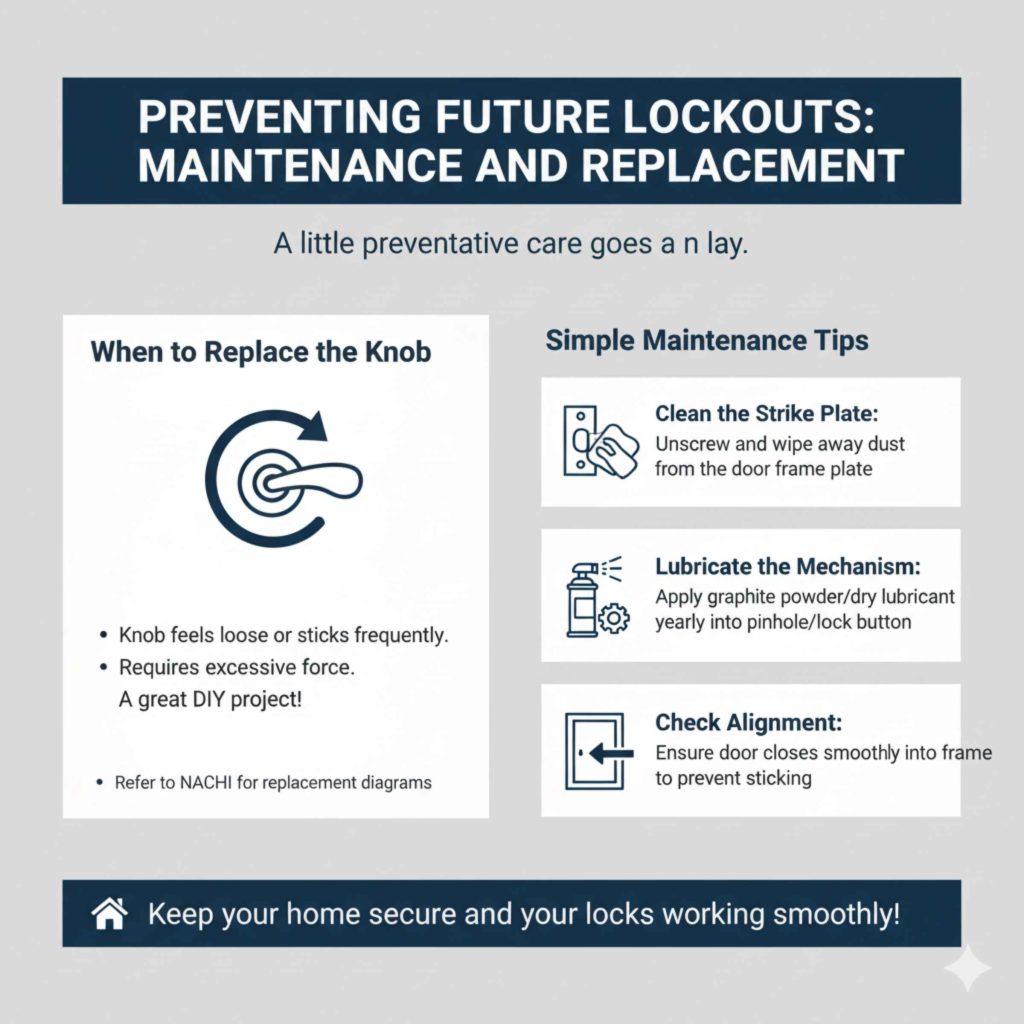
When to Replace the Knob
If the knob feels very loose, sticks frequently, or requires excessive force to lock/unlock from the inside, it might be time for a replacement. Replacing a simple interior knob is a fantastic DIY project!
For guidance on standard door hardware replacement, resources from organizations like the National Association of Certified Home Inspectors (NACHI) often provide clear diagrams on how door hardware functions.
Simple Maintenance Tips
Keep your locks working smoothly with these easy actions:
- Clean the Strike Plate: The metal plate on the door frame where the latch slides in can get dusty. Unscrew it occasionally and wipe away any debris.
- Lubricate the Mechanism: Every year or so, spray a small amount of dry lubricant (like graphite powder) directly into the keyhole/pinhole and into the interior locking button. Work the lock several times to distribute the lubricant.
- Check Alignment: Make sure the door closes fully without scraping the frame. If the door sags, the latch bolt won’t retract smoothly into the strike plate hole, causing sticking.
Comparing Privacy Locks vs. Keyed Entry Knobs
Understanding the differences helps you choose the right hardware for the right room in the future.
| Feature | Pinhole Privacy Lock | Keyed Entry Lock |
|---|---|---|
| Primary Use | Bathrooms, Bedrooms (Interior) | Exterior Doors, Offices needing security |
| Security Level | Low (Emergency Override exists) | Medium to High |
| Unlocking Method | Push rod/Turn tool | Metal Key |
| Cost | Generally lower | Higher |
Frequently Asked Questions (FAQ) About Pinhole Knobs
Here are quick answers to the most common questions homeowners have about these tricky little locks.
Q1: Can I permanently disable the pinhole lock?
A: Yes, you can usually replace the entire knob with a standard passage knob (one with no locking mechanism at all). If you want to keep the knob but disable the pinhole, you would need to disassemble the knob and remove the locking cam, which is generally not recommended unless you plan to replace the whole unit.
Q2: What happens if I break the paperclip off inside the hole?
A: If a piece of metal breaks off inside, the lock will be permanently jammed until you remove the obstruction. You might need to carefully try to pull the piece out with needle-nose pliers or tweezers. If you cannot reach it, you may need to remove the entire knob assembly to access the interior mechanism.
Q3: Do I need to turn the knob when unlocking?
A: Yes, for the standard push-through lock, unlocking the mechanism (the click) only disengages the lock. You still need to turn the knob handle itself to retract the latch bolt and open the door.
Q4: Are pinhole locks safe for children’s rooms?
A: Privacy locks are generally safe for children because they can be easily opened from the outside in an emergency. For higher security, such as an office where you store valuables, you should use a keyed entry knob or a deadbolt.
Q5: Can I use a small nail instead of a paperclip?
A: A small nail can work, but be very careful. Nails often have pointed ends that can scratch or damage the plastic or metal components inside the lock housing. A straightened paperclip or a thin Allen wrench provides a smoother, blunter surface for pushing the mechanism.
Q6: How deep is the hole usually?
A: Most standard interior privacy knobs have a mechanism depth of between 1/2 inch to 1 inch. A standard paperclip is usually long enough to reach the required spot.
Conclusion: Confidence in Your DIY Skills
Unlocking a door with a pinhole knob is one of those simple home victories that builds real DIY confidence. You now know the secret: it’s not about brute force; it’s about knowing where to push and using the right simple tool. Whether you used a bent paperclip or a tiny screwdriver, you successfully navigated a common household hurdle without calling a professional. Remember these steps—they are easy to recall next time you find yourself locked out of the linen closet! Keep practicing these simple fixes, and you’ll find that tackling home maintenance and minor repairs is not just achievable, but genuinely satisfying.