
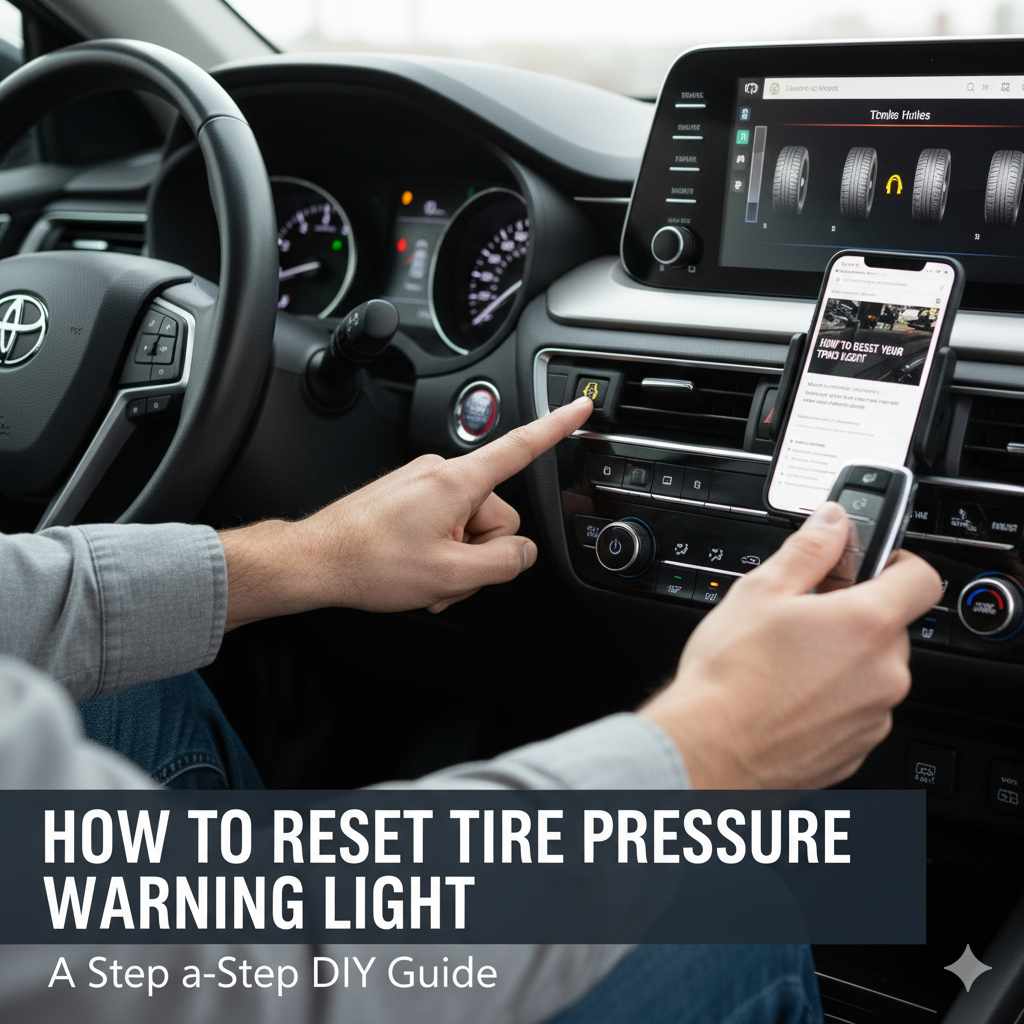
Quick Summary: To reset your tire pressure warning light, you typically need to adjust your tire pressure to the recommended PSI and then press and hold a reset button or navigate through your car’s menu. This guide will walk you through the common methods to safely turn off that pesky light.
Ever notice that little orange light on your dashboard shaped like a flat tire? That’s your Tire Pressure Monitoring System (TPMS) warning light, and it can be a bit of a puzzle. Seeing it can make you wonder if you have a slow leak, if your tires are just a little low, or if something more serious is going on. Don’t worry, this is a common sight for many car owners, and often, it’s a simple fix! We’ll guide you through understanding what this light means and how to confidently reset it yourself, saving you a trip to the mechanic.
This guide is designed to be your go-to resource. We’ll break down the steps in a way that’s easy to follow, even if you’re new to car maintenance. You’ll learn why the light comes on, how to check your tire pressure accurately, and the most common ways to reset the TPMS light. By the end, you’ll feel empowered to handle this common car issue with confidence!
Understanding Your TPMS Light
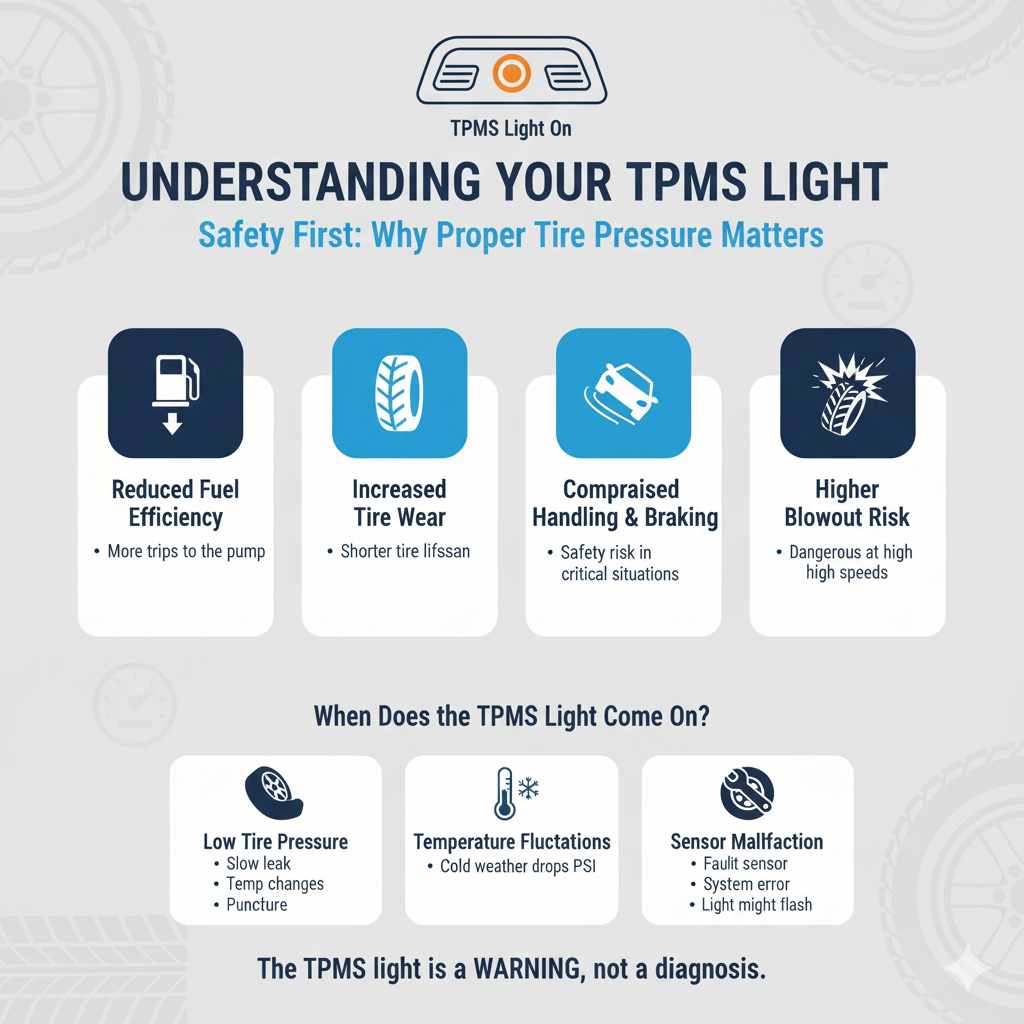
Your car’s Tire Pressure Monitoring System, or TPMS, is a safety feature designed to alert you when one or more of your tires are significantly under-inflated. This is crucial because properly inflated tires are essential for safe driving. Under-inflated tires can:
- Reduce fuel efficiency, meaning you’ll be visiting the gas station more often.
- Increase tire wear, leading to premature replacement and extra costs.
- Compromise handling and braking, which can be dangerous in critical situations.
- Increase the risk of a tire blowout, especially at higher speeds.
The TPMS light usually illuminates when the pressure in a tire drops by 25% or more below the recommended level. Once the pressure is corrected, the light should turn off on its own. However, sometimes it needs a little nudge to reset. We’ll cover how to do that shortly.
When Does the TPMS Light Come On?
The TPMS light can appear for a few common reasons:
- Low Tire Pressure: This is the most frequent cause. It could be due to gradual air loss, temperature changes (cold weather can decrease tire pressure), or a slow puncture.
- Temperature Fluctuations: As the outside temperature drops, the air inside your tires contracts, leading to lower pressure. This can trigger the TPMS light.
- Recent Tire Inflation or Rotation: Sometimes, after inflating tires or having them rotated, the system might not immediately recognize the new pressure.
- TPMS Sensor Malfunction: Less commonly, the sensor itself or the TPMS system in your car might be malfunctioning. In this case, the light might stay on even after you’ve adjusted tire pressure, or it might flash when you start your car.
It’s important to remember that the TPMS light is a warning, not a diagnosis. It tells you there’s a pressure issue, but it doesn’t specify which tire or the exact cause. That’s why checking all your tires is the first step.
Step-by-Step Guide: How to Reset Tire Pressure Warning Light
Resetting your TPMS light is usually a straightforward process. It often involves ensuring your tires are properly inflated and then performing a reset procedure. Here’s a general guide:
Step 1: Find Your Vehicle’s Recommended Tire Pressure
Before you do anything, you need to know the correct tire pressure for your specific vehicle. This information is crucial for both safety and proper TPMS function. You can find it in a few places:
- Driver’s Side Doorjamb: Most cars have a sticker on the inside of the driver’s door that lists the recommended tire pressure for the front and rear tires, as well as the spare tire.
- Owner’s Manual: Your car’s owner’s manual will also contain this information, usually in a section about tires or maintenance.
- Glove Compartment: Some vehicles might have the sticker inside the glove compartment door.
Important Note: Do NOT use the tire pressure listed on the tire sidewall itself. That number is the maximum pressure the tire can hold, not the recommended operating pressure for your vehicle.
Step 2: Check and Adjust Tire Pressure
Now it’s time to check the air pressure in each of your tires. You’ll need a reliable tire pressure gauge for this. You can find these at auto parts stores, department stores, or even some gas stations.
Here’s how to check and adjust:
- Remove the Valve Cap: Unscrew the small cap from the valve stem of one tire.
- Insert the Gauge: Firmly press the tire pressure gauge onto the valve stem. You might hear a slight hiss of air, which is normal.
- Read the Pressure: The gauge will display the current tire pressure.
- Compare to Recommended Pressure: Check this reading against the recommended PSI you found on your doorjamb sticker or in your owner’s manual.
- Add Air (If Needed): If the pressure is low, you’ll need to add air. Most gas stations have air pumps. Connect the air hose to the valve stem and add air in short bursts, checking the pressure frequently with your gauge.
- Release Air (If Needed): If the pressure is too high, most gauges have a small nub or button you can press to release air. Again, do this in short bursts and re-check until you reach the correct PSI.
- Replace the Valve Cap: Once the pressure is correct, screw the valve cap back on tightly.
- Repeat for All Tires: Do this for all four tires, and don’t forget to check your spare tire if your vehicle has one and it’s accessible.
Getting the tire pressure just right is key. For a more in-depth look at tire maintenance, you can check out resources from the National Highway Traffic Safety Administration (NHTSA), which provides valuable information on tire safety and maintenance.
Step 3: Resetting the TPMS Light
Once all your tires are at the correct pressure, the TPMS light should ideally turn off by itself after a short drive (usually a few miles). However, if it remains illuminated, you’ll need to perform a manual reset. The exact procedure varies significantly by vehicle make and model. Here are the most common methods:
Method 1: Using the TPMS Reset Button
Many vehicles, especially older models, have a dedicated TPMS reset button. This button is often located:
- Under the dashboard on the driver’s side.
- Inside the glove compartment.
- On the center console.
Procedure:
- Turn the Ignition On: With the car off, turn the ignition key to the “ON” position (the position where all the dashboard lights come on, but the engine is not running).
- Press and Hold the Button: Locate the TPMS reset button and press and hold it for several seconds (usually 3-10 seconds) until the TPMS light blinks or turns off.
- Turn Ignition Off and On: Turn the ignition off, then start the engine. Check if the light has gone off.
If you can’t find this button, consult your owner’s manual. It will tell you exactly where it is and how to use it.
Method 2: Through the Vehicle’s Infotainment System/Menu
Newer vehicles often integrate the TPMS reset function into their infotainment system or dashboard menus. You’ll typically navigate through a series of menus using buttons on your steering wheel or the dashboard.
Procedure:
- Turn the Ignition On: Turn the ignition key to the “ON” position (engine off).
- Access Vehicle Settings: Use your steering wheel controls or dashboard buttons to navigate to the “Settings,” “Vehicle,” “Setup,” or “TPMS” menu on your display screen.
- Find the TPMS Option: Look for an option like “Reset Tire Pressure,” “Set Tire Pressure,” or “TPMS Calibration.”
- Select and Confirm: Select the option and confirm the reset. The system may prompt you to ensure tire pressures are correct before proceeding.
- Start the Engine: Turn the ignition off, then start the engine and check if the light has disappeared.
Again, your owner’s manual is your best friend here. It will provide the precise steps for your car’s make and model.
Method 3: Driving to Reset
Some vehicles are designed to automatically reset the TPMS after driving a certain distance (often 10-15 miles) at speeds above 15-20 mph. This allows the system to re-read the tire pressures and recalibrate itself. If you’ve adjusted your tire pressure and the light is still on, try driving for about 15-20 minutes to see if it turns off.
Method 4: For Vehicles with Direct TPMS and Manual Reset Procedures (Specific Models)
Some cars, particularly those with direct TPMS (where each wheel has its own sensor), might have a slightly different manual reset procedure that involves a specific sequence of ignition cycles and button presses. This is less common but can be found in certain models. Always refer to your owner’s manual for the exact procedure for your car.
What If the Light Stays On After Resetting?
If you’ve followed all the steps, ensured your tire pressure is correct, and the TPMS light still won’t turn off, it might indicate a more significant issue. Here are a few possibilities:
- TPMS Sensor Issue: One or more of your TPMS sensors might be damaged, have a dead battery (they typically last 5-10 years), or be malfunctioning.
- System Malfunction: There could be a problem with the TPMS receiver or control module in your car.
- Incorrect Spare Tire Pressure: If you have a spare tire that’s also low on pressure and your system monitors it, this could keep the light on.
- Incorrect Reset Procedure: You might be using the wrong reset method for your specific vehicle.
In these cases, it’s best to consult a qualified mechanic. They have the specialized tools and knowledge to diagnose TPMS problems accurately. They can scan the system for error codes and identify any faulty sensors or components.
Tools You Might Need
While resetting the TPMS light is often a simple process, having the right tools makes it easier and more accurate. Here’s what you might need:
- Tire Pressure Gauge: Essential for accurately checking and adjusting tire pressure. Digital gauges are often very precise and easy to read.
- Air Compressor or Pump: If your tires need air, you’ll need a way to add it. This could be a portable 12V compressor, a floor pump, or access to a gas station air pump.
- Vehicle Owner’s Manual: This is your most important tool, as it contains specific information for your car.
For more information on essential car maintenance tools, you can explore guides from reputable automotive resources like Edmunds, which offers practical advice for car owners.
When to Seek Professional Help
While most TPMS light issues can be resolved by the owner, there are times when professional assistance is necessary. You should consider visiting a mechanic if:
- The TPMS light flashes continuously when you start your car. This often indicates a system malfunction rather than just low pressure.
- The TPMS light remains on after you’ve corrected tire pressure and attempted the reset procedure multiple times.
- You suspect a TPMS sensor is faulty (e.g., the light comes on and off intermittently, or a specific sensor is identified as an issue).
- You’re uncomfortable performing any of the steps yourself.
Mechanics have advanced diagnostic equipment that can read specific fault codes from your car’s TPMS module, helping them pinpoint the exact problem. They can also replace TPMS sensors, which often requires a special tool to remove and reprogram them to your vehicle.
Common TPMS Reset Scenarios and Solutions
Let’s look at some typical situations you might encounter and how to address them:
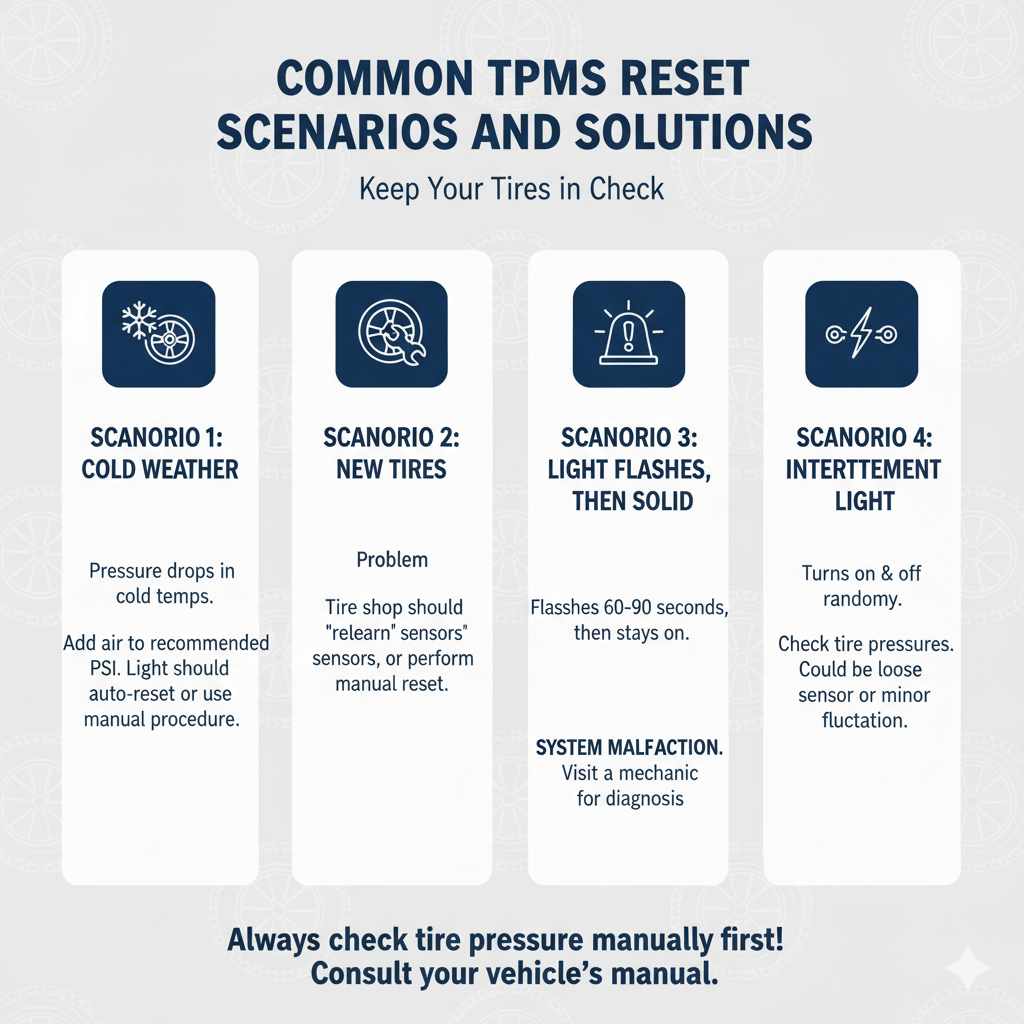
Scenario 1: After a Long Road Trip in Cold Weather
Problem: You notice the TPMS light comes on during a long drive in colder temperatures.
Solution: Cold weather causes tire pressure to drop. Stop at a gas station, check your tire pressure with a gauge, and add air to reach the recommended PSI. Once you’ve driven a bit, the light should reset. If not, try the manual reset procedure for your car.
Scenario 2: After Getting New Tires
Problem: The TPMS light stays on after you’ve had new tires installed.
Solution: Tire shops should always check and set tire pressures correctly. However, sometimes the TPMS sensors need to be relearned or reset after new tires are fitted, especially if the sensors were removed or replaced. Your tire shop can usually handle this, or you may need to perform the manual reset yourself.
Scenario 3: The Light Flashes, Then Stays On
Problem: The TPMS light flashes for about 60-90 seconds when you start your car, and then remains illuminated.
Solution: This is a strong indicator of a system malfunction, not just low tire pressure. It could be a faulty sensor, a problem with the TPMS control module, or a communication issue within the system. You will likely need to take your vehicle to a mechanic for diagnosis.
Scenario 4: The Light Comes On Intermittently
Problem: The TPMS light turns on and off randomly.
Solution: This could be due to a loose connection in one of the TPMS sensors, a sensor that’s starting to fail, or a minor fluctuation in tire pressure that the system is reacting to. Check tire pressures first. If the issue persists, a mechanic can inspect the sensors.
TPMS Technology: Direct vs. Indirect
It’s helpful to know that there are two main types of TPMS systems:
| Type | How it Works | Pros | Cons |
|---|---|---|---|
| Direct TPMS | Each tire has an individual sensor that directly measures air pressure and transmits the data wirelessly to the car’s computer. | Highly accurate, can pinpoint specific tire with low pressure, often shows actual PSI on the dashboard. | Sensors can be expensive to replace, batteries in sensors have a limited lifespan, can be affected by extreme temperatures or damage to the sensor. |
| Indirect TPMS | Uses the car’s Anti-lock Braking System (ABS) wheel speed sensors to detect differences in tire rotation. If one tire is low, it spins faster than the others, alerting the system. | No individual sensors to replace, generally less expensive to maintain. | Less accurate than direct TPMS, requires a manual reset after inflating tires or rotating them, doesn’t show actual PSI, may not detect slow leaks as quickly. |
Most modern vehicles are equipped with Direct TPMS. Understanding which system your car uses can help you troubleshoot more effectively. If you have an indirect system, the reset after inflating tires is almost always mandatory.
Frequently Asked Questions (FAQ)
Q1: How long does it take for the TPMS light to go off after adding air?
A1: For many vehicles, the TPMS light will turn off automatically after driving for a few minutes (typically 10-15 minutes) at speeds above 15-20 mph, allowing the system to recalibrate. If it doesn’t, a manual reset might be needed.
Q2: Can I ignore the TPMS light?
A2: No, it’s not recommended. The TPMS light is a safety warning indicating your tires are significantly under-inflated. Driving on under-inflated tires can be dangerous, reduce fuel economy, and damage your tires. Address the issue promptly.
Q3: What is the difference between the TPMS light and the ABS light?
A3: The TPMS light (often an orange tire with an exclamation mark) warns about low tire pressure. The ABS light (usually “ABS” in a circle) indicates a problem with your Anti-lock Braking System, which is a separate safety system.
Q4: Does checking tire pressure in cold weather require a different PSI?
A4: No, you should always inflate your tires to the manufacturer’s recommended PSI found on the doorjamb sticker, regardless of the weather. However, be aware that cold weather will naturally lower tire pressure, so you might need to add air more frequently in winter.
Q5: Can I reset the TPMS light without a special tool?
A5: Yes, most TPMS resets can be done without special tools, using either a physical button on the car or navigating through the vehicle’s infotainment system menus. Mechanics use special tools for diagnosis and programming, but basic resets are usually driver-friendly.
Q6: My TPMS light came on after driving through a puddle. Is this normal?
A6: It’s unlikely that driving through a puddle would directly cause the TPMS light to come on, unless it somehow damaged a sensor. It’s more probable that the puddle obscured your view, and you didn’t notice a tire was already low. Check your tire pressure as the first step.
Q7: How often should I check my tire pressure?
A7: It’s a good practice to check your tire pressure at least once a month and before any long road trips. Also, check them if you notice a significant change in temperature.
Conclusion
Seeing that TPMS warning light can be a little unnerving, but as you’ve learned, it’s usually a straightforward issue that you can often resolve yourself. By understanding what the light means, knowing how to find and adjust your tire pressure to the correct PSI, and following the simple reset procedures for your vehicle, you can confidently tackle this common automotive task. Remember, maintaining proper tire pressure is not just about turning off a dashboard light; it’s a vital part of ensuring your safety, optimizing your car’s performance, and extending the life of your tires.
Don’t hesitate to refer back to this guide whenever that little orange light appears. And if you ever find yourself unsure or if the problem persists after trying these steps, always remember that a qualified mechanic is there to help. Happy driving, and keep those tires properly inflated!