
Quick Summary:
Resetting your ABS warning light often involves simple fixes like checking tire pressure or a loose sensor. If those don’t work, a scan tool can diagnose and clear the code. For persistent issues, consult a mechanic. This guide walks you through common causes and solutions.
Seeing that orange ABS warning light pop on your dashboard can be a bit unsettling. It’s one of those dashboard symbols that makes you wonder, “Is my car safe to drive?” The Anti-lock Braking System (ABS) is a crucial safety feature, and its light means something isn’t quite right. But don’t panic! Often, the fix is simpler than you might think, and you might even be able to handle it yourself. We’re here to help you understand why that light is on and guide you through the steps to get it turned off, so you can drive with confidence again.
Understanding the ABS Warning Light
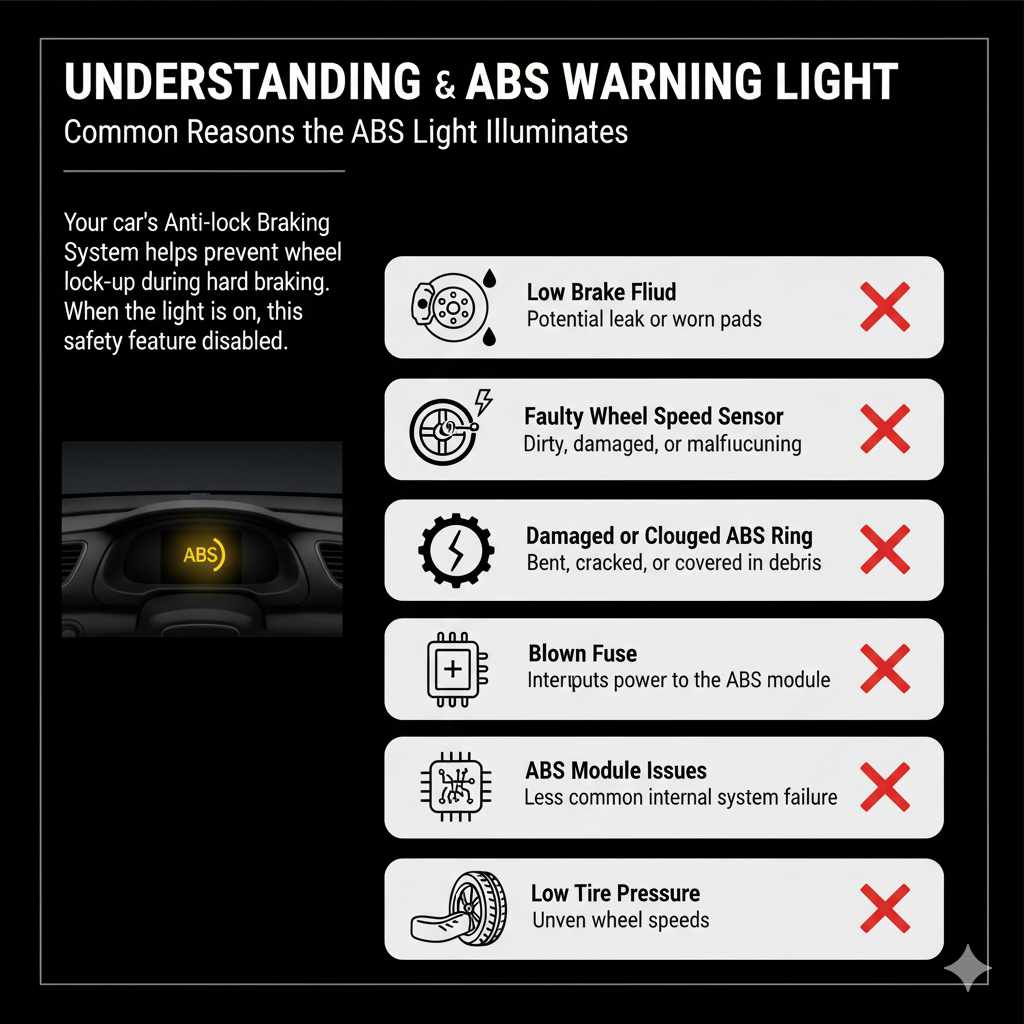
The ABS warning light is your car’s way of telling you that there’s an issue with the Anti-lock Braking System. This system is designed to prevent your wheels from locking up during hard braking, allowing you to maintain steering control. When the light comes on, it usually means the ABS isn’t functioning as it should. This doesn’t necessarily mean your regular brakes have failed, but it does mean the ABS safety feature is disabled. It’s important to address it to ensure your braking system is fully operational.
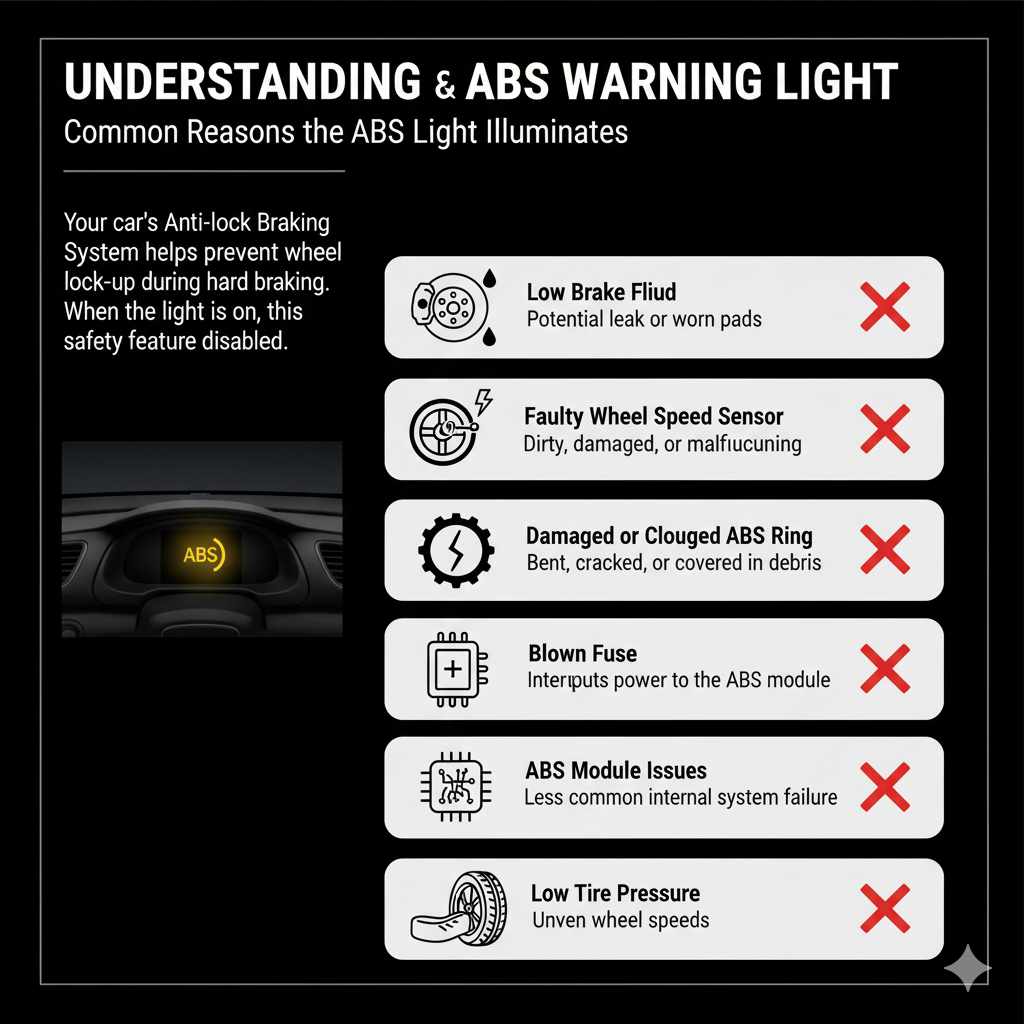
Common Reasons the ABS Light Illuminates
There are several common culprits behind a glowing ABS light. Understanding these can help you pinpoint the problem:
- Low Brake Fluid: While primarily related to your regular brakes, low brake fluid can sometimes trigger the ABS light. It indicates a potential leak or that your brake pads are wearing down significantly.
- Faulty Wheel Speed Sensor: Each wheel has a sensor that monitors its rotation. If one of these sensors is dirty, damaged, or malfunctioning, it can send incorrect data to the ABS module, causing the light to come on.
- Damaged or Clogged ABS Ring: The wheel speed sensor reads a toothed ring (also called a tone ring or ABS ring) attached to the wheel hub. If this ring is bent, cracked, or covered in debris like rust or mud, the sensor can’t get an accurate reading.
- Blown Fuse: Like any electrical system, the ABS has fuses. A blown fuse can interrupt power to the ABS module or related components.
- ABS Module Issues: The ABS module is the brain of the system. While less common, a failure within the module itself can cause the warning light to illuminate.
- Low Tire Pressure: Believe it or not, significantly low tire pressure in one or more tires can sometimes trigger the ABS light. The system relies on consistent wheel speeds, and a deflated tire rotates differently.
- Recent Brake Work: If you’ve recently had your brakes serviced, it’s possible a sensor wasn’t reconnected properly, or a component was disturbed.
DIY Steps to Reset the ABS Warning Light
Before you rush to a mechanic, there are a few things you can check and try yourself. These steps are designed for beginners and focus on the most common and easily fixable issues.
Step 1: Check Your Tire Pressure
This is the simplest place to start. Properly inflated tires are essential for all vehicle systems, including ABS. Uneven or critically low tire pressure can confuse the ABS sensors.
- Locate the recommended tire pressure for your vehicle. This is usually found on a sticker inside the driver’s side doorjamb or in your owner’s manual.
- Use a reliable tire pressure gauge to check the pressure in all four tires.
- Inflate or deflate tires as needed to match the recommended PSI (pounds per square inch).
- Drive your car for a short distance (a few miles) on a clear road. Sometimes, simply correcting tire pressure is enough for the system to reset itself.
Step 2: Inspect Wheel Speed Sensors and ABS Rings
The wheel speed sensors are vital. They can get dirty or damaged, especially if you drive on rough roads or in muddy conditions.
Tools you might need:
- Jack and jack stands (for safely lifting the vehicle)
- Wrench set or socket set
- Wire brush or compressed air
- Safety glasses
- Gloves
- Safety First: Park your car on a level surface and engage the parking brake. Use a jack to lift the vehicle and secure it with jack stands. Never work under a car supported only by a jack.
- Locate the Sensors: The wheel speed sensors are typically found on the back of the steering knuckle or on the brake caliper bracket, near where the brake line connects. You’ll see a wire leading to them.
- Visual Inspection: Carefully examine each sensor for obvious damage, cracks, or a loose connection. Check the wiring for any fraying or breaks.
- Clean the Area: If the sensor looks dirty or has debris around it, gently clean the area. You can use a wire brush to carefully clear debris from the ABS ring (the toothed metal ring near the sensor) and compressed air to blow away dust and dirt from the sensor itself. Be gentle; you don’t want to damage anything.
- Check Connections: Ensure the electrical connector for the sensor is securely plugged in. Sometimes, bumps can dislodge them.
- Reassemble and Test: Once you’ve inspected and cleaned, reassemble anything you may have removed. Lower the vehicle safely. Drive for a few miles to see if the ABS light turns off.
Step 3: Check the ABS Fuses
A blown fuse is a common electrical issue that can affect many car systems.
Tools you might need:
- Your car’s owner’s manual
- Fuse puller (often included in your car’s fuse box) or needle-nose pliers
- Replacement fuses (ensure they are the correct amperage)
- Locate the Fuse Box(es): Your car likely has at least two fuse boxes: one under the dashboard (usually on the driver’s side) and one in the engine compartment. Consult your owner’s manual to find the exact locations and to identify which fuses relate to the ABS system.
- Identify the ABS Fuse: Your manual will have a diagram showing which fuse corresponds to the ABS or related components (like the EBCM – Electronic Brake Control Module).
- Inspect the Fuse: Carefully remove the suspected ABS fuse using a fuse puller or needle-nose pliers. Hold it up to the light and look at the metal filament inside. If the filament is broken or looks burnt, the fuse is blown.
- Replace if Blown: If the fuse is blown, replace it with a new fuse of the exact same amperage rating. Never use a fuse with a higher amperage, as this can cause electrical damage.
- Test Drive: After replacing any blown fuses, start your car and drive for a few miles. See if the ABS light has reset.
Step 4: The Brake Pedal Reset (for some vehicles)
For some car models, a specific sequence of braking and turning the ignition on and off can reset the ABS module. This is a bit of a “trick” that can sometimes work.
- Turn the ignition key to the “ON” position (don’t start the engine) for about 2 seconds, then turn it “OFF.”
- Turn the ignition key to “ON” for about 2 seconds, then “OFF.”
- Repeat this process a few times. Some sources suggest doing this up to 4-5 times.
- On the final “ON” cycle, press the brake pedal firmly and hold it for a few seconds.
- Start the engine.
Note: This method is not guaranteed to work on all vehicles and is more of a common workaround for certain makes and models. Always refer to your owner’s manual or a reliable service manual for your specific car.
Step 5: Using an OBD-II Scanner
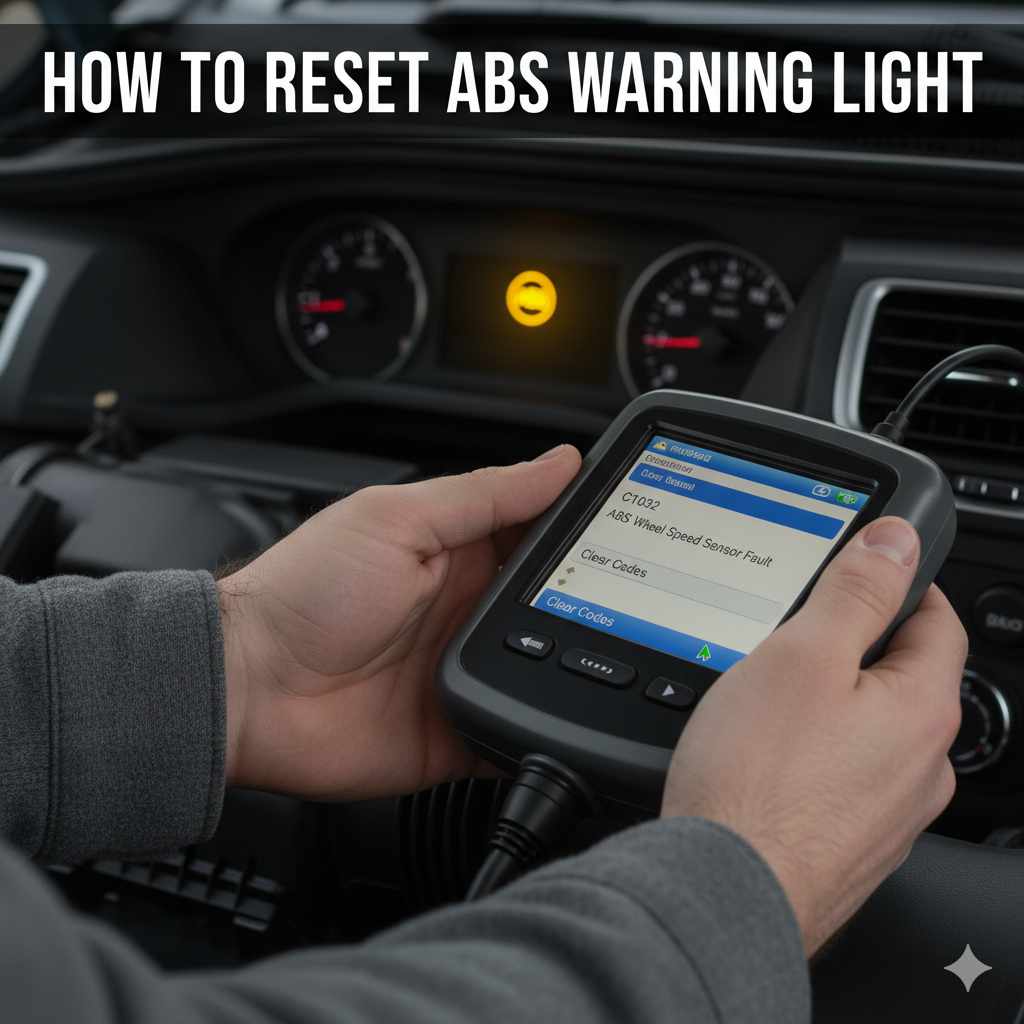
If the simpler methods don’t work, the ABS light is likely on due to a specific fault code stored in your car’s computer. An OBD-II (On-Board Diagnostics) scanner can read these codes and, in some cases, help clear them.
Tools you will need:
- An OBD-II scanner. These range from simple code readers to more advanced diagnostic tools. You can buy one online or at an auto parts store, or many auto parts stores will scan your codes for free.
- Locate the OBD-II Port: This port is usually located under the dashboard on the driver’s side, near the steering column. Your owner’s manual will show you its exact location.
- Connect the Scanner: Plug the OBD-II scanner into the port.
- Turn on Ignition: Turn your car’s ignition key to the “ON” position (do not start the engine).
- Read the Codes: Follow the scanner’s instructions to read the diagnostic trouble codes (DTCs). Look for codes related to the ABS system (often starting with “C” for Chassis, like C00XX).
- Interpret the Codes: The scanner will display a code. You can then look up this code online or in a repair manual to understand the specific problem. For example, a “C0022” might indicate a brake fluid level sensor circuit malfunction.
- Clear the Codes (with caution): If the scanner allows, you can attempt to clear the code. However, it’s crucial to understand that clearing a code without fixing the underlying problem is only a temporary solution. The light will likely come back on. If the issue was a one-time glitch, clearing the code might be sufficient.
- Test Drive: After clearing codes, start your car and drive to see if the ABS light stays off.
Important Note on Clearing Codes: Clearing an ABS code is often a temporary fix if the problem still exists. The system needs to confirm the issue is resolved. For persistent issues, a mechanic will be needed to diagnose and repair the fault.
When to Seek Professional Help
While many ABS light issues can be resolved with basic DIY steps, there are times when you’ll need to call in the professionals. If you’ve tried the steps above and the ABS light remains on, or if you encounter any of the following, it’s time to visit a qualified mechanic:
- Persistent Warning Light: After checking fuses, tire pressure, and sensors, and clearing codes, if the light still reappears, there’s likely a more complex issue.
- Unusual Braking Behavior: If your brakes feel spongy, you hear grinding noises, or the car pulls to one side during braking, these are serious signs that require immediate professional attention.
- Multiple Warning Lights: If the ABS light is on along with other warning lights (like the brake warning light or traction control light), it suggests a more widespread system problem.
- Complex Diagnostic Codes: If your OBD-II scanner reveals codes indicating issues with the ABS module, hydraulic pump, or other intricate components, these often require specialized tools and expertise to diagnose and repair.
- Lack of Confidence or Tools: If you’re not comfortable performing any of the diagnostic steps, or if you lack the necessary tools (especially for lifting the vehicle safely), it’s always best to let a professional handle it.
Mechanics have advanced diagnostic equipment that can communicate directly with your car’s ABS module to pinpoint the exact fault. They can also perform system tests and calibrate components if necessary.
Common Causes and Potential Solutions Table
Here’s a quick overview of common ABS light triggers and what you can do:
| Symptom/Potential Cause | DIY Fixes | When to See a Mechanic |
|---|---|---|
| Low Tire Pressure | Check and inflate tires to recommended PSI. | If light persists after adjusting pressure. |
| Dirty/Damaged Wheel Speed Sensor or Ring | Inspect, clean sensors and rings, check connections. | If sensor is visibly damaged or connections are corroded. |
| Blown ABS Fuse | Locate and replace blown fuse with correct amperage. | If new fuse blows immediately, indicating a short circuit. |
| Low Brake Fluid | Check brake fluid level and top up if necessary. Inspect for leaks. | If fluid level is consistently low, indicating a leak or worn pads. |
| ABS Module Failure | N/A (requires professional diagnosis) | Diagnosis and replacement/repair of the ABS module. |
| ABS Ring Damage | Visual inspection for cracks or bends. | Replacement of the ABS ring. |
Understanding ABS Component Failures
The ABS system is made up of several key components working together. When one of these parts fails, the system can no longer function correctly, leading to the warning light.
- Wheel Speed Sensors: As mentioned, these are critical. They measure the rotational speed of each wheel. If one fails, the ABS module doesn’t get accurate data for that wheel.
- ABS Tone Ring (or Reluctor Ring): This toothed ring rotates with the wheel hub. The wheel speed sensor reads the teeth to determine speed. If it’s damaged, rusted, or has debris, the sensor can’t read it properly. You can often find replacement tone rings for a reasonable price, but installation can sometimes be tricky.
- ABS Hydraulic Unit/Modulator: This unit contains valves and a pump that control brake pressure to individual wheels. If it malfunctions, it can’t properly modulate pressure during braking.
- ABS Control Module (EBCM): This is the computer that processes data from the wheel speed sensors and controls the hydraulic unit. A failure here is usually more serious and expensive to repair.
When diagnosing these components, mechanics often use specialized scan tools that can perform actuator tests on the ABS system. For example, they can command the ABS pump to turn on or test the valves to see if they are responding correctly. This level of testing is beyond most DIY capabilities.
External Resources for ABS Information
For those who want to dive deeper or find specific information for their vehicle, these resources can be invaluable:
- National Highway Traffic Safety Administration (NHTSA): NHTSA provides extensive safety information and recall data. You can search for safety issues related to your vehicle’s braking system. Visit nhtsa.gov for official safety reports and recall information.
- Your Vehicle’s Manufacturer Website: Many manufacturers offer online owner’s manuals and sometimes even diagnostic information or forums specific to their models.
- Reputable Automotive Forums: Online communities dedicated to specific car makes and models can be a treasure trove of information. Experienced owners often share their solutions to common problems.
- Online Repair Manuals: Services like ALLDATA or Mitchell 1 provide professional-level repair information, though they often require a subscription.
Frequently Asked Questions (FAQ)
Q1: Will my car still brake if the ABS light is on?
A: Yes, your regular hydraulic braking system will still work. The ABS light indicates a problem with the Anti-lock Braking System itself, not necessarily your primary brakes. However, you will lose the anti-lock function, meaning your wheels could lock up during hard braking.
Q2: How long can I drive with the ABS light on?
A: While your car is likely still drivable, it’s not recommended to drive for extended periods with the ABS light on. The loss of the ABS safety feature can be critical in emergency situations. It’s best to diagnose and fix the issue as soon as possible.
Q3: Can a bad alternator cause the ABS light to come on?
A: While not a direct cause, a failing alternator can lead to low voltage in the vehicle’s electrical system. The ABS module is sensitive to voltage fluctuations, so an underperforming alternator could indirectly trigger the ABS light or other warning lights.
Q4: Is it safe to reset the ABS light by disconnecting the battery?
A: Disconnecting the battery can sometimes reset warning lights by clearing the car’s temporary memory. However, this is often a temporary fix, and the light will likely return if the underlying problem isn’t resolved. It’s also important to know that disconnecting the battery can reset other vehicle systems, like radio presets or adaptive learning for the engine, which might require re-initialization.
Q5: What is the difference between the ABS light and the brake warning light?
A: The ABS light specifically indicates a fault within the Anti-lock Braking System. The brake warning light (often red) typically indicates a more critical issue, such as low brake fluid, a problem with the brake pedal, or a failure in the main hydraulic braking system. If the brake warning light is on, you should stop driving immediately and have the vehicle inspected.
Q6: Can I reset the ABS light myself with just a wrench?
A: In some very simple cases, like checking tire pressure or ensuring a sensor connection is secure, you might not need much more than a tire pressure gauge and perhaps a basic wrench. However, for most other causes, you’ll likely need an OBD-II scanner to diagnose specific fault codes, or more specialized tools for sensor replacement or other repairs.
Conclusion
Seeing that ABS warning light can be concerning, but as we’ve explored, it’s often a sign of a fixable issue. From simple checks like tire pressure and fuses to slightly more involved inspections of wheel speed sensors, many homeowners can tackle these problems themselves. Remember, safety is always paramount, so if you’re ever unsure or uncomfortable, don’t hesitate to seek professional help. By understanding the potential causes and following these guided steps, you can confidently approach the ABS warning light, save on potential repair costs, and ensure your vehicle’s safety systems are working correctly. Keep these tips handy, and you’ll be well-equipped to handle this common dashboard alert!