
Hey there! If you’ve ever tried to replace a lamp shade and ended up with one that looked all wrong, I feel you. A few years ago, I bought a beautiful new lamp for my living room, but the shade was too small and made it look like it was wearing a tiny hat. That’s when I realized measuring a lamp shade isn’t as simple as grabbing a ruler and hoping for the best. After some trial and error, I’ve learned exactly how to measure a lamp shade to get that perfect fit, whether it’s for a table lamp, floor lamp, or even a vintage find you’re fixing up for your RV.
In this guide, I’m sharing everything I’ve learned to help you choose the right lamp shade for your space. It’s easier than you think, and I’ll walk you through it like we’re chatting in your living room. Let’s get started and make your lamps look amazing!
Why Measuring a Lamp Shade Matters
You might wonder why measuring a lamp shade is such a big deal. Trust me, I learned the hard way. A shade that’s too big can overwhelm your lamp and make it tip over. One that’s too small looks awkward and doesn’t spread light properly. Getting the size right ensures your lamp looks good, works well, and fits your space. Whether you’re sprucing up your home, staging a car showroom, or outfitting an RV for a road trip, the right shade makes all the difference. Plus, it saves you the hassle of returning a shade that doesn’t fit. A quick measurement can save time, money, and frustration.
Understanding Lamp Shade Shapes and Fittings
Before you grab your tape measure, let’s talk about lamp shades. They come in all sorts of shapes—drum, empire, bell, square, and more. I’ve got a drum shade on my bedside lamp and a bell shade on my living room floor lamp, and each needs a different approach to measuring. The shape affects how you measure, so keep that in mind. Also, check the fitting type.
Most shades have a “spider” fitting (a metal frame with a washer that sits on a harp), but some use clip-on or uno fittings. I once bought a shade with the wrong fitting, and it wouldn’t even attach to my lamp. Knowing your shade’s shape and fitting helps you measure accurately and shop smart.
Tools You’ll Need
You don’t need much to measure a lampshade. Here’s what I use:
- Tape measure: A flexible one is best for curved shades.
- Ruler: For straight-edged shades or small measurements.
- Paper and pen: To jot down your numbers.
- Step stool: If your lamp is tall or on a high shelf.
- Camera (optional): I snap a photo of the lamp to reference when shopping.
I keep these tools in a drawer so I’m ready whenever I need to measure a shade. Simple stuff, but it makes the job easy.
Step-by-Step Guide to Measuring a Lamp Shade
Measuring a lamp shade is straightforward once you know what to look for. I’ll walk you through the process I use, step by step, to get it right every time.
Step 1: Remove the Shade
Take the shade off your lamp if you can. I find it easier to measure without the lamp base in the way. If it’s a clip-on or fixed shade, work around it carefully. Set the shade on a flat surface, like a table, to keep it steady. When I measured my floor lamp shade, I removed it to avoid knocking the whole lamp over.
Step 2: Measure the Top Diameter
Use your tape measure to find the diameter of the shade’s top opening. For round shades, measure straight across from one side to the other. For square or rectangular shades, measure the width of one side. I jot this number down as “top diameter.” For my drum shade, the top was 10 inches across, which is typical for a medium-sized table lamp.
Step 3: Measure the Bottom Diameter
Now, measure the bottom opening of the shade. This is often larger than the top, especially for empire or bell shades. Again, measure straight across for round shades or along one side for square ones. My bell shade had a bottom diameter of 16 inches, which gives it that classic flared look. Write this down as “bottom diameter.”
Step 4: Measure the Height
Measure the height of the shade from top to bottom. I run my tape measure along the side of the shade, following its slant for empire or bell shapes. For straight drum shades, it’s just a vertical measurement. My drum shade was 8 inches tall, while my bell shade was 10 inches. Note this as “height.”
Step 5: Measure the Slant (if Applicable)
For shades that taper, like empire or bell shapes, measure the slant height. This is the diagonal distance from the top edge to the bottom edge along the side of the shade. I use a flexible tape measure to follow the curve. My bell shade had a slant of 12 inches, which helps when matching a replacement. If your shade is a drum or square, you can skip this step since the height and slant are the same.
Step 6: Check the Fitter Size
The fitter is the part of the shade that attaches to the lamp. For spider fittings, measure the diameter of the washer or ring at the top. Most are about 1 inch, but some lamps need a specific size. For clip-on or uno fittings, note the type and measure the opening where it attaches. I made the mistake of ignoring the fitter once and ended up with a shade that wouldn’t fit my harp.
Step 7: Measure the Lamp Base (Optional)
To make sure your shade looks proportional, measure your lamp base. I measure the height from the base to the bottom of the bulb socket and the width of the base. A general rule is that the shade’s bottom diameter should be about twice the width of the lamp base, and the shade’s height should be about one-third to one-half the lamp’s height. My table lamp base is 6 inches wide, so a 12-inch bottom diameter shade looks balanced.
Here’s a quick table to summarize the measurements:
| Measurement | What to Measure | How to Do It |
|---|---|---|
| Top Diameter | Width of the top opening | Measure across for round; side for square |
| Bottom Diameter | Width of the bottom opening | Same as top, but for bottom |
| Height | Vertical distance from top to bottom | Measure along the side |
| Slant (if tapered) | Diagonal distance along the side | Follow the curve with a tape measure |
| Fitter Size | Diameter of the fitter (spider, clip-on, etc.) | Measure the attachment point |
Choosing the Right Size Lamp Shade
Once you’ve got your measurements, it’s time to pick a shade that fits your lamp and your style. I’ve learned a few tricks to make sure the shade looks just right.
Proportional Fit
The shade should complement the lamp’s size and shape. For table lamps, I aim for a shade that’s about 40–60% of the lamp’s total height. My 24-inch table lamp looks great with a 10-inch-tall shade. For floor lamps, the shade can be larger, but it shouldn’t overpower the base. I also make sure the bottom diameter is wide enough to spread light, but not so wide that it looks clunky.
Room and Function
Think about where the lamp lives. In my living room, I use a wider shade to spread soft light for reading. In my bedroom, a narrower shade focuses light downward for a cozy vibe. If you’re using the lamp in an RV, go for a smaller, lightweight shade to save space. I learned this when I tried a big shade in my RV—it kept bumping into things on the road.
Style and Aesthetics
The shade’s shape should match your decor. Drum shades give a modern look, while bell or empire shades feel traditional. I swapped out a square shade for a drum shade in my modern office, and it transformed the space. Also, consider the material—fabric shades soften light, while metal or glass ones create a sharper glow.
Common Lamp Shade Types and Their Measurements
Different shade shapes require slightly different measuring approaches. Here’s what I’ve learned about the most common types:
Drum Shades
Drum shades are cylindrical, with equal top and bottom diameters. I have one on my bedside lamp, and it’s super easy to measure—just get the diameter (top and bottom are the same) and height. Mine is 10 inches across and 8 inches tall, perfect for a small lamp.
Empire Shades
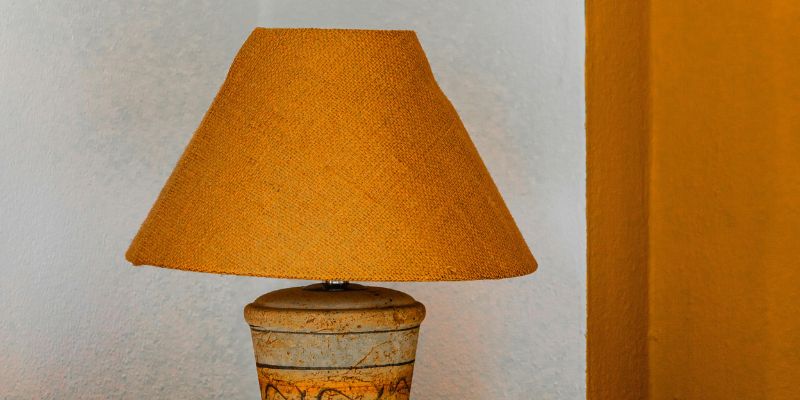
Empire shades taper from a smaller top to a wider bottom. My living room lamp has one, and I measure the top (8 inches), bottom (14 inches), height (9 inches), and slant (11 inches). The taper gives a classic, elegant look.
Bell Shades
Bell shades are similar to empire but have a curved, bell-like shape. My floor lamp has a bell shade with a 6-inch top, 16-inch bottom, 10-inch height, and 12-inch slant. These are great for traditional decor.
Square or Rectangular Shades
Square shades are trickier. I measure each side of the top and bottom (they’re usually equal) and the height. My office lamp has a square shade with 10-inch sides and a 9-inch height. These work well with modern or geometric lamps.
Tips for Measuring Like a Pro
After measuring dozens of shades, I’ve picked up some tricks to make it easier:
- Measure twice: I always double-check my numbers to avoid mistakes.
- Use a flexible tape: It hugs the curves of tapered shades better than a rigid ruler.
- Account for clearance: Make sure the shade clears the bulb by at least an inch to avoid heat damage.
- Snap a photo: I take a picture of the lamp and shade to compare when shopping.
- Check the harp: If your lamp uses a harp, measure its height to ensure the shade sits at the right level.
Common Mistakes to Avoid
I’ve made plenty of blunders measuring lamp shades, so let me save you some trouble. Don’t guess the measurements—eyeballing it led me to buy a shade that was way too big. Don’t forget the fitter type; a spider shade won’t work on a clip-on lamp. Don’t ignore the lamp base size—a shade that’s too small or large throws off the whole look. And don’t measure with the shade still on the lamp if you can avoid it; it’s harder to get accurate numbers.
Measuring for Replacement Shades
If you’re replacing an old shade, measure the existing one as a starting point. I keep my old shade nearby when shopping to compare sizes. If the old shade didn’t fit well, adjust the measurements based on what looked off. For example, my old bedside lamp shade was too short, so I added 2 inches to the height for the new one. Also, check the lamp’s wattage—higher-wattage bulbs need larger shades to dissipate heat.
Measuring for Lamps in Unique Settings
Lamps aren’t just for living rooms. I’ve measured shades for all sorts of places, and each has its quirks:
- RV Camping: In my RV, I use small, lightweight shades to save space. I measure carefully to avoid shades that bump into walls or cabinets. A 6-inch drum shade works great for my RV table lamp.
- Car Showrooms: If you’re lighting up a showroom, go for bold, oversized shades to make a statement. I helped a friend measure for a display lamp, and we chose a 20-inch empire shade to match the sleek vibe.
- Outdoor Lamps: For patio or porch lamps, measure for weather-resistant shades. I use a waterproof drum shade on my deck, measured to fit a 12-inch base.
My Personal Experience: Lessons Learned
When I started decorating my home, I didn’t think much about lamp shades. But after a few mismatches—like a tiny shade on a tall floor lamp—I realized measuring is key. I’ve measured shades for my living room, bedroom, RV, and even a friend’s vintage lamp collection. Each time, I learned something new, like checking the fitter or matching the shade to the room’s vibe. My biggest win was finding a perfect bell shade for my mom’s antique lamp—it made her living room feel like a cozy magazine spread. Measuring might seem tedious, but it’s worth it when your lamp looks just right.
Maintaining Your Lamp Shades
Once you’ve got the perfect shade, keep it looking great. I dust my shades weekly with a soft cloth to prevent buildup. For fabric shades, I use a lint roller for pet hair or dust. If the shade gets stained, I spot-clean with mild soap and water, but I test a small area first. For glass or metal shades, a damp cloth works wonders. I also check the fitter and harp regularly to make sure everything stays secure.
Where to Shop for Lamp Shades
Finding the right shade is easier once you have your measurements. I shop at home decor stores, online retailers, or even thrift shops for unique finds. Big-box stores like Target or Walmart have affordable options, while specialty shops offer custom sizes. Online, I check sites like Amazon or Wayfair, filtering by size and shape. Always double-check the listed dimensions against your measurements to avoid surprises.
Conclusion
Measuring a lamp shade might not sound exciting, but it’s the secret to making your lamps look amazing. From choosing the right size to matching the style of your room, a well-measured shade can transform your space. I’ve shared my journey—from mismatched shades to perfect fits—so you can get it right without the guesswork.
Whether you’re updating your home, RV, or showroom, these steps will help you find a shade that fits like a glove. So, grab your tape measure, jot down those numbers, and pick a shade that makes your lamp shine. Here’s to brighter, better-lit spaces!
Frequently Asked Questions
How do I know if a lamp shade will fit my lamp?
Measure the top and bottom diameter, height, and fitter type. Compare those to your lamp base and harp size. I aim for a shade that’s proportional—about twice the base’s width and one-third its height.
Can I use the same shade for different lamps?
Sometimes, but check the fitter type and size. I’ve swapped shades between lamps with similar harps, but the proportions need to look right for each base.
What if my lampshade is too big?
A too-big shade can look clunky or tip the lamp. I’d measure again and choose a smaller shade, keeping the bottom diameter about twice the base’s width.
Do I need to measure the slant for all shades?
Only for tapered shades like empire or bell. For drum or square shades, the height is enough. I measure the slant to ensure the new shade matches the old one’s shape.
How do I measure a clip-on shade?
Measure the top and bottom diameters, height, and the clip’s opening. I note the clip size to make sure it fits the bulb securely.
Can I measure a shade while it’s on the lamp?
You can, but it’s trickier. I prefer removing the shade for accurate measurements. If it’s fixed, use a flexible tape and be careful not to knock the lamp over.