
Quick Summary:
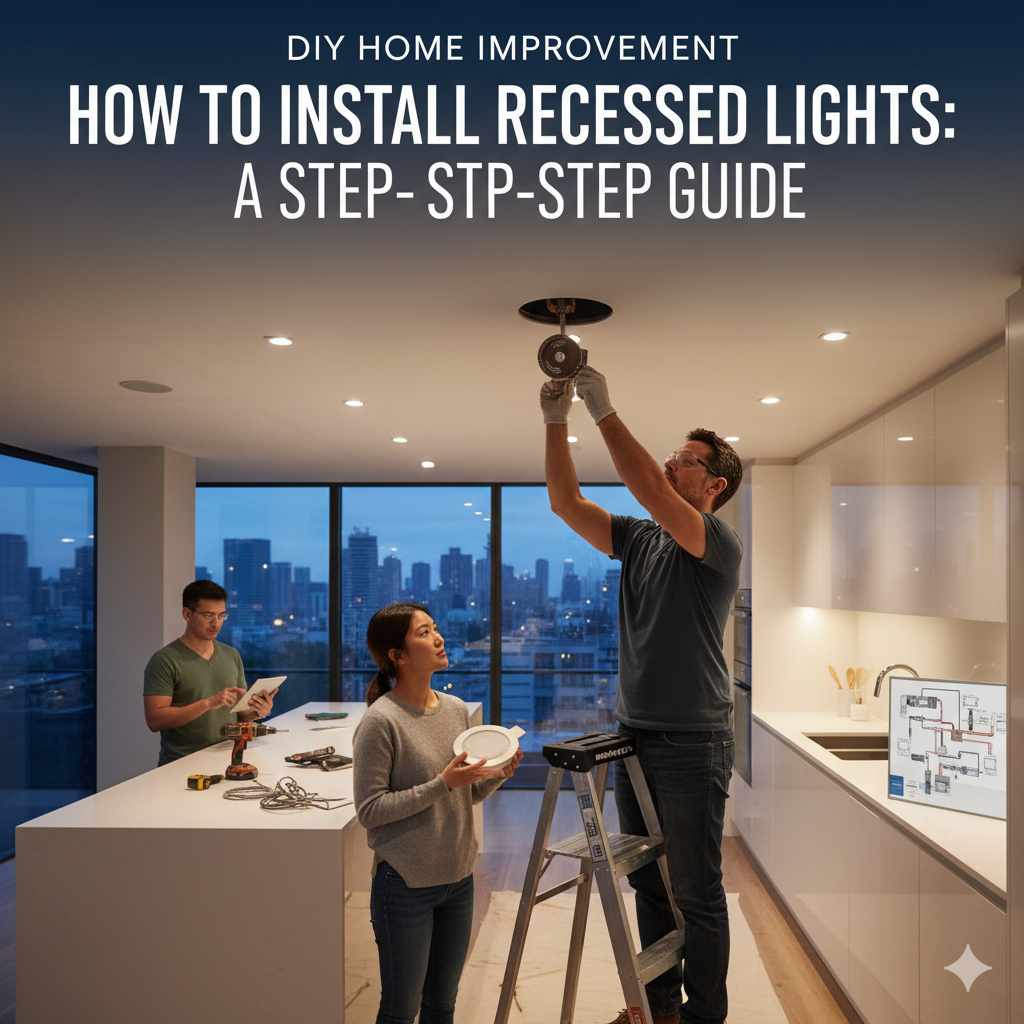
Installing recess lighting is a manageable DIY project that can brighten your home. This guide breaks down the process step-by-step, from choosing the right fixtures to safely connecting the wiring, making it achievable for beginners.
Dreaming of a brighter, more modern home? Recessed lighting, often called can lights or pot lights, can transform any room. But the thought of tackling electrical work can seem daunting. Don’t worry! With the right guidance, even beginners can confidently install recessed lighting and enjoy a professional-looking finish. We’ll walk you through every step, making this home improvement project easy and rewarding.
This guide is designed to be your friendly mentor, breaking down the process into simple, manageable steps. We’ll cover everything you need to know, from safety precautions to the final bulb installation. By the end, you’ll have the knowledge and confidence to light up your home beautifully.
Why Install Recessed Lighting?
Recessed lighting offers a clean, sleek look that can dramatically improve the ambiance and functionality of your home. Unlike surface-mounted fixtures, the lights are hidden within the ceiling, casting a soft, diffused glow. This creates a more open feel and reduces glare.
Here are some key benefits:
- Aesthetic Appeal: Creates a modern, uncluttered look.
- Improved Lighting: Provides even illumination and can highlight specific areas.
- Space Saving: Doesn’t take up visual or physical space like pendant lights or chandeliers.
- Increased Home Value: A popular feature that can enhance your home’s appeal to buyers.

Planning Your Recessed Lighting Project
Before you grab your tools, a little planning goes a long way. This phase is crucial for a successful installation and ensures you get the lighting effect you desire.
1. Determine Light Placement
Where you place your lights depends on the room’s purpose and size. Consider these factors:
- General Lighting: For overall illumination, space lights evenly. A common rule is to place them 5 to 8 feet apart. You can calculate the spacing by measuring the room’s length and dividing by the number of lights along that length, then subtracting 2 feet (e.g., a 12-foot wall with 3 lights would have lights spaced about 12 / 3 – 2 = 2 feet apart from each other, but adjust for wall distance).
- Task Lighting: Over kitchen countertops, desks, or reading areas, place lights closer to the edge of the task surface (about 18-24 inches from the wall).
- Accent Lighting: To highlight artwork or architectural features, aim lights directly at the object from about 3 feet away.
- Room Size and Ceiling Height: Higher ceilings may require more lights or higher wattage bulbs for adequate illumination.
A helpful online tool for planning light placement can be found on many lighting manufacturer websites or through home improvement resources. For example, the U.S. Department of Energy offers great insights into efficient lighting choices.
2. Choose Your Recessed Light Fixtures
There are several types of recessed lighting fixtures, each suited for different needs:
- New Construction Housings: These are installed before drywall. They are robust and designed to be permanently part of the home’s structure.
- Remodel Housings: Designed for existing ceilings, these are easier to install from below and often feature clips to secure them to the drywall. This is what most DIYers will use.
- IC-Rated vs. Non-IC-Rated:
- IC-Rated (Insulation Contact): These can be installed directly against ceiling insulation. This is essential if your attic has insulation that will touch the fixture.
- Non-IC-Rated: Require a clearance of at least 3 inches between the fixture and any insulation.
- Air-Tight Fixtures: These help prevent air leakage, which can save on heating and cooling costs.
3. Select the Right Trim
The trim is the visible part of the fixture once installed. It affects the light’s appearance and function:
- Baffle Trim: Has ridges to reduce glare, great for general lighting.
- Reflector Trim: Offers a more reflective surface, providing brighter light.
- Gimbal Trim: Allows you to aim the light in a specific direction, perfect for accent lighting.
- Opal Diffuser Trim: Frosted or diffused lens, provides a softer, more even light spread.
4. Consider Bulb Type
Most recessed lights use LED bulbs today due to their energy efficiency and long lifespan. When choosing bulbs, look for:
- Wattage: Equivalent to old incandescent bulbs (e.g., 60W equivalent LED uses about 9W).
- Brightness (Lumens): Higher lumens mean brighter light.
- Color Temperature (Kelvin):
- 2700K-3000K: Warm, yellowish light (similar to incandescent bulbs).
- 3500K-4000K: Neutral white light.
- 5000K-6500K: Cool, bluish-white light.
- Beam Angle: A wider angle (e.g., 90-120 degrees) is good for general lighting, while a narrower angle is for accent lighting.
Tools and Materials You’ll Need
Gathering your supplies beforehand makes the installation process smoother and safer. Here’s a comprehensive list:
Essential Tools:
- Safety Glasses
- Work Gloves
- Non-Contact Voltage Tester
- Wire Strippers/Cutters
- Screwdrivers (Phillips and Flathead)
- Utility Knife
- Pencil
- Tape Measure
- Stud Finder
- Drywall Saw or Oscillating Multi-Tool
- Ladder
- Wire Nuts
- Electrical Tape
- Circuit Breaker Finder (optional, but very helpful)
Materials:
- Recessed Light Fixture Kits (choose remodel type for existing ceilings)
- Recessed Light Trims
- LED Bulbs
- Electrical Wire (if extending circuits or running new ones – typically 14/2 or 12/2 NM-B wire)
- Junction Boxes (if needed)
- Ceiling Box Hanger Bars (if you can’t find a joist to attach to)
Safety First! Essential Precautions
Working with electricity requires utmost caution. Always prioritize safety to prevent shocks or fires.
- Turn Off Power: This is the most critical step. Locate the circuit breaker that controls the lights you’ll be working on and switch it OFF. If you’re unsure which breaker it is, turn off the main breaker for the entire house.
- Verify Power is Off: Use your non-contact voltage tester at the existing light fixture (if any) or at the junction box where you’ll be connecting. Ensure there is no power before touching any wires.
- Wear Safety Gear: Always wear safety glasses to protect your eyes from falling debris or sparks. Work gloves can protect your hands.
- Use Insulated Tools: Whenever possible, use tools with insulated handles.
- Follow Local Codes: Electrical work must comply with local building codes. If you’re unsure, consult with a qualified electrician. The National Electrical Code (NEC) provides comprehensive safety standards.
- Don’t Overload Circuits: Ensure your new lights won’t overload the existing circuit. A typical 15-amp circuit can handle about 1,440 watts (15 amps x 120 volts x 80% load factor). Recessed LEDs are very energy efficient, so this is usually not an issue unless you’re adding many fixtures.
Step-by-Step Installation Guide
Now that you’re prepared and safety is covered, let’s get to the installation. This guide assumes you are installing remodel-style recessed lights into an existing ceiling.
Step 1: Mark Your Locations
Using your measuring tape, pencil, and stud finder, mark the exact center points for each recessed light fixture. Double-check your measurements to ensure even spacing. Make sure your marks don’t conflict with ceiling joists, pipes, or existing wiring. A stud finder with AC wire detection can be very helpful here.
Step 2: Cut the Holes
Once your locations are marked, it’s time to cut the openings. Most remodel recessed light cans come with a template. If not, measure the diameter of the can (usually 4-inch or 6-inch) and draw a circle on the ceiling at your marked center point. Carefully cut along the line using a drywall saw or an oscillating multi-tool. Be gentle to avoid damaging surrounding drywall.
Tip: If you’re cutting multiple holes, consider using a drywall compass or a template for consistent sizes.
Step 3: Run the Wiring (If Necessary)
This step depends on your existing electrical setup. You’ll need to connect your new lights to a power source. This typically involves tapping into an existing junction box or a nearby light fixture’s wiring. You’ll need to run electrical cable (e.g., 14/2 NM-B wire) from the power source to each new light location.
- For a Series of Lights: You’ll run wire from the power source to the first light, then from the first light to the second, and so on.
- Using Junction Boxes: If you’re installing new wiring, you might need to install junction boxes in accessible locations (like an attic) to make connections.
Important: If you’re not comfortable running new wires or tapping into existing circuits, it’s best to hire an electrician for this part. Improper wiring is a fire hazard.
Step 4: Connect the Wiring to the Fixture
Each recessed light housing typically has a built-in junction box. Open the cover of this junction box. You’ll connect the wires from your power source to the wires inside the fixture’s junction box:
- Black Wire (Hot): Connects to the black wire of the fixture.
- White Wire (Neutral): Connects to the white wire of the fixture.
- Bare Copper or Green Wire (Ground): Connects to the green screw or grounding wire in the fixture’s junction box.
Use wire nuts to secure the connections. Twist the wire nuts clockwise until they are tight. Gently tug on each wire to ensure it’s secure. Wrap the wire nuts with electrical tape for added security. Close the junction box cover.
Note: If you are replacing an existing fixture, you’ll be connecting to the wires that were previously powering that fixture.
Step 5: Install the Recessed Light Housing
For remodel housings, you’ll insert the can into the hole you cut. The remodel housing has clips that you’ll use to secure it to the drywall. Push the housing up into the hole, and then use a screwdriver to swing down the clips, pressing them firmly against the backside of the drywall. This will hold the can securely in place.
If your fixture isn’t IC-rated and you have insulation, ensure there’s at least 3 inches of clearance around the housing. If you don’t have joists to attach to or need to span a gap, you might use ceiling box hanger bars, which are adjustable metal bars that brace between joists.
Step 6: Install the Trim and Bulb
Once the housing is secure, it’s time for the trim. Most trims have springs or clips. Insert the trim into the housing. The springs will engage and pull the trim snugly against the ceiling. Refer to your specific fixture’s instructions, as trim installation can vary slightly.
Finally, screw in your chosen LED bulb. Make sure the bulb wattage doesn’t exceed the fixture’s maximum recommended wattage.
Step 7: Restore Power and Test
Go back to your breaker box and turn the power back ON. Test each new light fixture to ensure it works correctly. If a light doesn’t turn on, turn the power OFF again and recheck your wiring connections and ensure the bulb is screwed in properly.
Common Recessed Lighting Installation Scenarios
Understanding how to connect your new lights is key. Here are a couple of common scenarios:
Scenario 1: Tapping into an Existing Overhead Light Fixture
If you’re replacing an existing ceiling light fixture (like a flush-mount or a pendant light) with recessed lights, you can often use that fixture’s existing wiring and junction box.
Steps:
- Turn off power at the breaker.
- Remove the old fixture.
- Inside the junction box, you’ll find wires (usually black, white, and ground).
- Run a new cable from this junction box to your first recessed light location.
- Connect the wires from the new cable to the existing wires in the junction box using wire nuts. (Black to black, white to white, ground to ground).
- Install your recessed light housing and connect its wires as described in Step 4.
- If you’re adding more lights, run a cable from the first recessed light’s junction box to the second, and so on.
Scenario 2: Adding Lights to a New Area (Requires Running New Cable)
If you’re adding recessed lights to a room that doesn’t have existing overhead lighting in the desired location, you’ll need to run a new circuit or tap into an existing one further back (e.g., from a switch box or another outlet). This is a more involved process.
Steps:
- Turn off power at the breaker.
- Locate a suitable power source. This might be a switch box where you can add a new cable, or an attic space where you can tap into a circuit.
- Run a new electrical cable (e.g., 14/2 NM-B) from the power source to the location of your first recessed light. This may involve drilling through studs or joists.
- Install the first recessed light and connect its wiring.
- If adding multiple lights, run cable from the first light to the second, and so on.
- Ensure all connections are made within approved junction boxes and that the circuit is not overloaded.
Consider a Dimmer Switch: For added control and ambiance, consider installing a dimmer switch. This requires a compatible dimmer and wiring it into the circuit, usually at the switch location.

Troubleshooting Common Issues
Even with careful planning, you might encounter a hiccup. Here are some common problems and their solutions:
| Problem | Possible Cause | Solution |
|---|---|---|
| Light flickers or doesn’t turn on. | Loose wire connection. | Turn off power, recheck all wire nut connections. Ensure wires are stripped to the correct length. |
| Light doesn’t turn on. | Faulty bulb. | Try a new bulb. Ensure it’s screwed in properly. |
| Light doesn’t turn on. | Power not restored. | Double-check that the circuit breaker is fully in the ON position. |
| Housing won’t stay secure. | Incorrect installation of remodel clips. | Ensure clips are fully extended and firmly gripping the drywall. Check if the hole size is correct for the housing. |
| Tripped breaker after installation. | Overloaded circuit. | Turn off power. Calculate the total wattage of all devices on the circuit. If it exceeds 80% of the breaker’s rating, you’ll need to split the load onto a new circuit. |
| Humming noise from fixture. | Loose housing or fixture component. | Turn off power and check if any part of the housing or trim is loose. |
Frequently Asked Questions (FAQ)
Q1: How many recessed lights do I need for a room?
A: For general lighting, a good rule of thumb is to space lights 5-8 feet apart. You can also calculate based on the room’s square footage and desired brightness (lumens per square foot). For example, a living room might need 10-20 lumens per square foot.
Q2: Can I install recessed lighting in a damp or wet area like a bathroom or shower?
A: Yes, but you must use fixtures specifically rated for damp or wet locations, often called “shower-rated” or “ICR” (Insulation Contact Rated). Ensure the trim is sealed to prevent moisture from entering the ceiling cavity.
Q3: Do I need an electrician to install recessed lighting?
A: For basic installations where you’re connecting to an existing fixture’s wiring, many DIYers can do it safely. However, if you need to run new circuits, tap into complex wiring, or are uncomfortable with electrical work, it’s always best to hire a licensed electrician.
Q4: What’s the difference between 4-inch and 6-inch recessed lights?
A: The size refers to the diameter of the housing can that fits into the ceiling. 6-inch lights are more common and generally provide more light, suitable for larger rooms or general illumination. 4-inch lights are more discreet and can be used for accent lighting, smaller spaces, or when you want a less intrusive look.
Q5: How close can recessed lights be to walls?
A: For general lighting, lights are usually placed 3-5 feet from walls. For task lighting (like over countertops), they should be closer, about 18-24 inches from the wall, so the light shines directly onto the work surface.
Q6: Can I install recessed lighting in a popcorn ceiling?
A: Yes, you can install recessed lighting in popcorn ceilings. The process is the same, but be aware that cutting into a popcorn ceiling can be messy, and you might want to consider covering the new drywall edges with a texture spray to match the existing ceiling. It’s also wise to test for asbestos in older popcorn ceilings before disturbing them.
Conclusion
You’ve done it! By following these steps, you’ve learned how to install recessed lighting, transforming your home with beautiful, functional light. Remember, safety is paramount, so always turn off the power and double-check your work. With a little patience and the right tools, you’ve successfully upgraded your home’s lighting and gained valuable DIY skills. Enjoy the enhanced ambiance and the satisfaction of a job well done!