
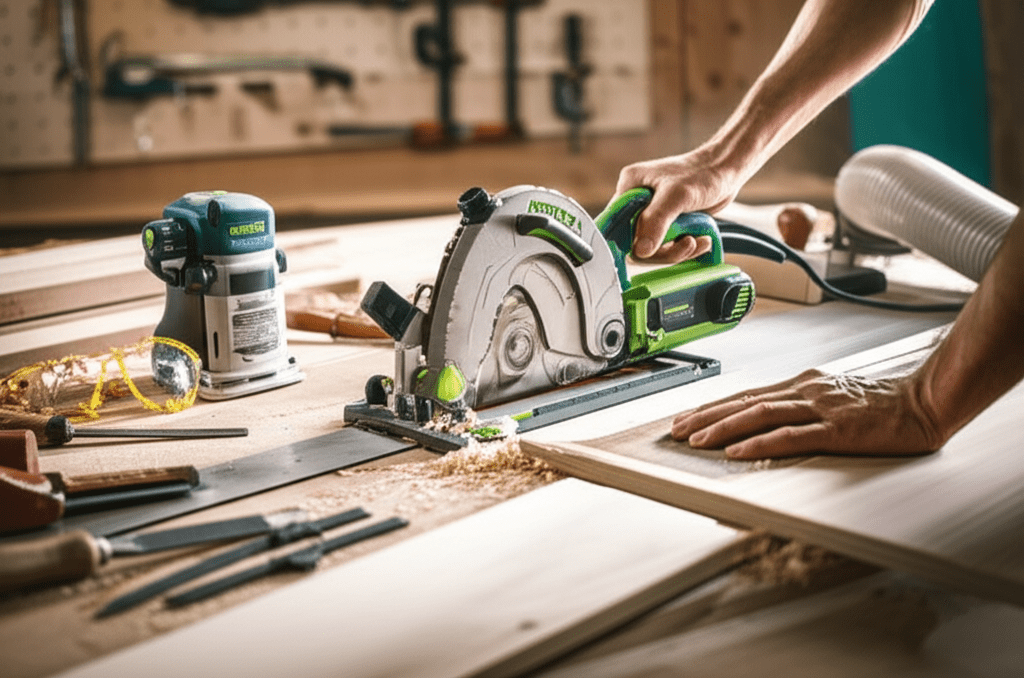
Choosing the right Festool track saw can feel overwhelming, but this guide simplifies it. We’ll break down the key differences between popular Festool track saw models, helping beginners and DIYers make an informed decision for cleaner cuts and a smoother woodworking experience. Get ready to find the perfect Festool track saw for your projects!
Hey there, fellow woodworkers! Ashraf here. Ever stared at a sheet of plywood or a long piece of lumber and thought, “There has to be a better way to cut this straight?” I get it. For years, trying to get a perfectly straight cut with a circular saw and a guide clamped to the wood was a wrestling match. It was frustrating, time-consuming, and often, the results just weren’t quite what I envisioned.
That’s where the magic of a track saw comes in, and when we talk about track saws, Festool is often the name that comes up. But with a few different models, how do you know which one is right for you? Don’t worry, we’ll walk through it together, making sure you feel confident about your choice.
Why a Track Saw is a Game Changer for Beginners
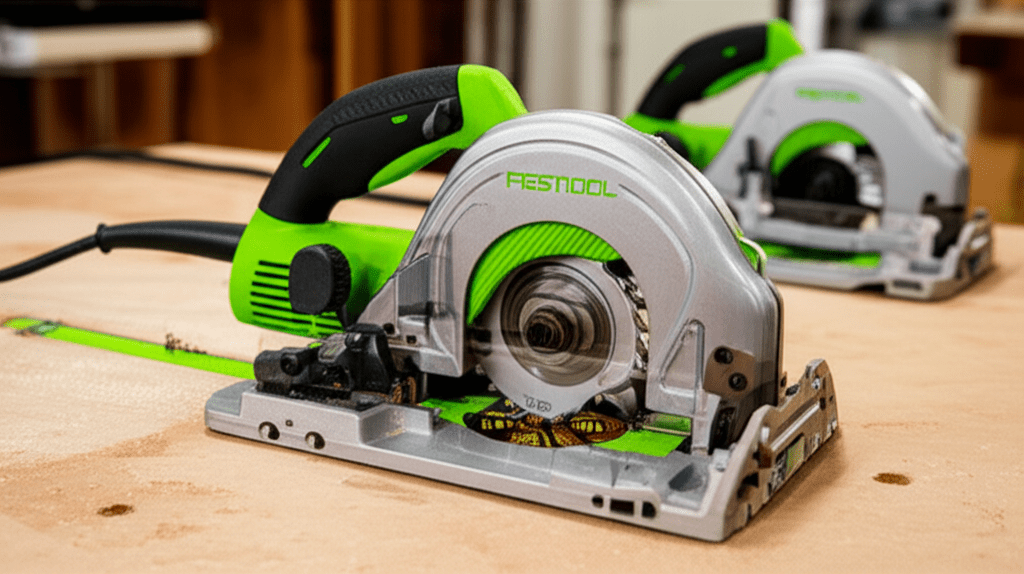
Imagine cutting a massive sheet of expensive plywood with confidence, knowing your cut will be perfectly straight, splinter-free, and exactly where you want it. That’s the promise of a track saw. Unlike a standard circular saw that relies on your steady hand and a clamped guide, a track saw uses a guide rail system. The saw rides on this rail, ensuring unparalleled accuracy and control. This means:
- Perfectly Straight Cuts: No more wavy lines or wobbly edges.
- Chip-Free Edges: Say goodbye to frustrating tear-out, especially on delicate materials like veneered plywood.
- Ease of Use: Once set up, it’s remarkably intuitive, even for beginners.
- Portability: Many systems are designed for easy setup and transport, making them great for job sites or smaller workshops.
For anyone serious about woodworking, from home renovators to hobbyists, a track saw is an investment that pays off in quality and saved frustration. Now, let’s dive into the Festool lineup.
Understanding Festool’s Track Saw Family
Festool offers a few core track saw models, each with its strengths. The main players you’ll likely encounter are the:
- Festool TS 55 REQ
- Festool TSC 55 K Cordless Track Saw
- Festool TS 75 EQ
While they all share the core Festool quality and precision, their power sources, cutting depths, and specific features cater to different needs and preferences. We’ll explore each one in detail.
Festool TS 55 REQ: The Versatile Workhorse
The Festool TS 55 REQ is arguably the most popular and often recommended model, especially for those new to track saws. It’s a corded electric saw, meaning it’s always ready to go when you have power access.
Key Features of the TS 55 REQ:
- Power: 1200W motor.
- Cutting Depth: Up to 55mm (about 2 3/16 inches) with the blade. This is perfect for most standard plywood and lumber thicknesses.
- Speed Control: Variable speed allows you to match the cutting speed to the material.
- Kickback Stop: A crucial safety feature that prevents the saw from kicking back if the blade binds.
- Dust Collection: Excellent integrated dust extraction when used with a Festool dust extractor.
- Guide Rail System: Designed to work seamlessly with Festool’s guide rails for perfectly straight cuts.
Pros of the TS 55 REQ:
- Excellent Balance: Lightweight and easy to handle.
- Precision: Delivers exceptionally clean and accurate cuts.
- Versatility: Suitable for a wide range of materials and tasks, from sheet goods to solid wood.
- Durability: Built to last with Festool’s renowned quality.
- Relatively Affordable: Compared to other Festool track saws, it’s often the entry point.
Cons of the TS 55 REQ:
- Corded: Requires access to a power outlet, which can be limiting on some job sites.
- Cutting Depth Limit: 55mm might not be enough for very thick timbers.
The TS 55 REQ is a fantastic all-around choice. If you primarily work in a shop environment or have easy power access and don’t regularly cut material thicker than 2 inches, this is likely your sweet spot.
Festool TSC 55 K Cordless Track Saw: Power and Freedom
For those who need ultimate portability and don’t want to be tethered by a cord, the Festool TSC 55 K Cordless Track Saw is the answer. It runs on Festool’s powerful 18V battery system, offering the same precision as the TS 55 REQ but with the freedom of cordless operation.
Key Features of the TSC 55 K:
- Power: Dual 18V battery system (36V total) for ample power.
- Cutting Depth: Also offers up to 55mm cutting depth.
- Brushless Motor: For increased efficiency, power, and tool life.
- Kickback Stop: Safety feature included.
- Dust Collection: Same excellent dust extraction capabilities.
- Variable Speed: Allows for material-specific adjustments.
- Systainer System: Comes in a convenient Systainer case for storage and transport.
Pros of the TSC 55 K:
- Cordless Freedom: No cords to manage, ideal for job sites or moving around large workpieces.
- Powerful: The dual battery system provides plenty of power for most tasks.
- Precision: Maintains Festool’s legendary cutting accuracy.
- Quiet Operation: Generally quieter than corded saws.
- Part of the Festool Battery System: Batteries can be used with other Festool 18V tools.
Cons of the TSC 55 K:
- Battery Dependent: You need charged batteries, and runtime can be a factor for very long jobs.
- Higher Cost: Typically more expensive than the corded TS 55 REQ.
- Cutting Depth Limit: Same 55mm limit as the TS 55 REQ.
The TSC 55 K is the choice for mobile woodworkers, those who value untethered operation, or anyone already invested in the Festool 18V battery ecosystem. It offers convenience without compromising performance.

Festool TS 75 EQ: For Deeper Cuts
When your projects involve thicker materials, like large timbers, beams, or multiple layers of material, the Festool TS 75 EQ is the track saw you need. It’s a corded saw designed for maximum cutting depth.
Key Features of the TS 75 EQ:
- Power: 1600W motor.
- Cutting Depth: Up to 75mm (approximately 2 15/16 inches). This is its standout feature.
- Speed Control: Variable speed for material adaptation.
- Kickback Stop: Essential safety feature.
- Dust Collection: Superior dust extraction.
- Guide Rail System: Compatible with all Festool guide rails.
Pros of the TS 75 EQ:
- Maximum Cutting Depth: Can handle significantly thicker materials than the 55mm models.
- Powerful Motor: Easily powers through tougher materials.
- Precision: Still offers the signature Festool accuracy.
- Robust Build: Designed for heavy-duty use.
Cons of the TS 75 EQ:
- Heavier and Larger: Due to its increased capacity, it’s heavier than the TS 55 REQ.
- Corded: Requires power access.
- Higher Cost: Generally more expensive than the TS 55 REQ.
- Potentially Overkill: If you rarely cut material over 2 inches, the extra depth and weight might not be necessary.
The TS 75 EQ is the specialist for thicker stock. If your work regularly involves cutting large beams, solid wood pieces thicker than 2 inches, or if you plan to do any demolition or heavy-duty site work where thicker materials are common, this is the saw for you.
Festool Track Saw Comparison Table
To help you visualize the differences, here’s a quick comparison table:
| Feature | Festool TS 55 REQ | Festool TSC 55 K Cordless | Festool TS 75 EQ |
|---|---|---|---|
| Power Source | Corded Electric | Cordless (Dual 18V Battery) | Corded Electric |
| Motor Type | Brushed | Brushless | Brushed |
| Max Cutting Depth | 55 mm (2 3/16 in) | 55 mm (2 3/16 in) | 75 mm (2 15/16 in) |
| Weight (Saw Only) | Approx. 4.7 kg (10.36 lbs) | Approx. 4.6 kg (10.14 lbs) without batteries | Approx. 5.2 kg (11.46 lbs) |
| Ideal For | General woodworking, sheet goods, smaller workshops, corded users | Mobile users, job sites, Festool battery users, convenience | Thicker timbers, beams, heavy-duty cutting, professional use |
| Price Point | $$ | $$$ | $$$ |
(Note: Prices are relative and can vary based on kits and retailers.)
The Essential Companion: Festool Guide Rails
No Festool track saw is complete without a Festool guide rail. These rails are the key to achieving those perfect, straight cuts. They have a unique anti-splinter edge and a glide strip that the saw moves smoothly along.
You’ll need to choose a rail length that suits your typical work. Common lengths include:
- 1400mm (approx. 55 inches): Good for cutting standard 4×8 sheets in half or smaller projects.
- 1900mm (approx. 75 inches): A very versatile length, allowing you to cut a full 4×8 sheet in one pass.
- 3100mm (approx. 122 inches): For very large panels or long cuts.
You can also connect multiple rails together using a connector for even longer cuts. For most beginners working with sheet goods, a 1400mm or 1900mm rail is a great starting point. You can find more detailed information on guide rail selection and usage on the Festool USA website.
Making the Choice: Which Festool Track Saw is for You?
Here’s a simple way to think about it:
- Are you mostly working in your garage or workshop where power is readily available?
- Do you typically cut materials up to 2 inches thick? -> Festool TS 55 REQ is likely your best bet. It’s the most popular for a reason.
- Do you often cut materials thicker than 2 inches? -> Consider the Festool TS 75 EQ.
- Do you need the flexibility to work anywhere, without being tied to a power outlet?
- And do you typically cut materials up to 2 inches thick? -> The Festool TSC 55 K Cordless is your ideal companion.
Don’t forget to factor in the cost of a guide rail and clamps, as these are essential accessories and add to the overall investment. Many kits include a saw, a guide rail, a splinter guard, and a Systainer, which is a great way to get started.
Tips for Beginners Using a Festool Track Saw
Once you have your Festool track saw, here are a few tips to get you started and ensure you’re using it safely and effectively:
- Read the Manual: Seriously, it’s the best resource for your specific saw model.
- Practice on Scrap: Before cutting into your project material, make a few test cuts on scrap wood to get a feel for the saw and the guide rail.
- Secure Your Material: Ensure your workpiece is stable and won’t move during the cut. Clamps are your best friend here.
- Align the Guide Rail: Festool guide rails have a scribe line that you align with your desired cut line. For the most accurate cuts, especially on sheet goods, you’ll need to account for the blade’s kerf (the width of the cut) and the offset of the saw’s guide shoe. The manual explains this, or you can find many helpful videos online. Popular Mechanics also offers some great introductory tips.
- Use the Splinter Guard: Attach the clear plastic splinter guard to the guide rail and the saw. This is crucial for chip-free edges on the top surface.
- Connect Your Dust Extractor: For the cleanest cuts and a healthier workshop, always connect a vacuum. Festool extractors are designed to work perfectly with their saws.
- Maintain Your Blades: A sharp blade makes all the difference. Keep your blades clean and replace them when they start to dull.

Frequently Asked Questions (FAQ)
What is the main difference between the Festool TS 55 REQ and TSC 55 K?
The primary difference is the power source: the TS 55 REQ is corded electric, while the TSC 55 K is a cordless battery-powered saw. The TSC 55 K also features a brushless motor for potentially longer runtimes and increased efficiency.
Can I use Festool guide rails with other brands of track saws?
Generally, no. Festool guide rails are designed specifically to work with Festool track saws. While some other manufacturers might have compatible rails, it’s best to stick with the system designed for your saw to ensure accuracy and safety.
Is a Festool track saw worth the investment for a beginner?
For many beginners who are serious about woodworking and want to achieve professional-quality cuts, yes, it can be a worthwhile investment. The precision, ease of use, and chip-free results can save frustration and improve project outcomes significantly. However, it is a premium tool with a premium price tag, so consider your budget and project needs.
What is the maximum thickness of wood I can cut with a Festool TS 55 REQ?
The Festool TS 55 REQ can cut materials up to 55mm (approximately 2 3/16 inches) thick. This is sufficient for most standard sheet goods like plywood and MDF, as well as common lumber sizes.
Do I need a special blade for cutting different materials with a Festool track saw?
Yes, using the correct blade for your material is crucial for both cut quality and safety. Festool offers a range of saw blades designed for different applications, such as general wood, plywood, laminates, and even non-ferrous metals. Always check the blade specifications to match them to your material.
How do I prevent tear-out when cutting melamine or veneer with a track saw?
Using the Festool guide rail and its integrated splinter guard is the primary way to prevent tear-out. Ensure the splinter guard is snug against the blade. Also, using a fine-tooth blade specifically designed for delicate materials and ensuring the saw is cutting at the appropriate speed will further minimize tear-out. For very delicate materials, scoring the cut line with a utility knife before cutting can also help.
Conclusion
Navigating the world of Festool track saws doesn’t have to be complicated. Whether you choose the versatile corded TS 55 REQ, the freedom-focused TSC 55 K Cordless, or the heavy-duty TS 75 EQ, you’re investing in precision, quality, and a significantly improved woodworking experience. For beginners, the TS 55 REQ often hits the sweet spot for capability and value. If mobility is key, the TSC 55 K offers that cordless advantage. And if you’re consistently working with thicker materials, the TS 75 EQ is your power player.
Remember to pair your chosen saw with the appropriate Festool guide rail and essential accessories like clamps and a dust extractor. By understanding your needs and the capabilities of each model, you can confidently select the Festool track saw that will help you make cleaner, straighter cuts and elevate your DIY projects to a professional level. Happy cutting!