
Engineered wood is generally the superior choice over particle board for most woodworking projects due to its enhanced durability, moisture resistance, and stability. While particle board is budget-friendly, engineered wood offers better structural integrity and a longer lifespan for your creations.
Hey there, fellow woodworkers! Are you standing in the lumber aisle, scratching your head, trying to figure out which wood product is right for your next project? It’s a common puzzle, especially when you’re just starting out. You see “engineered wood” and “particle board” and wonder, “What’s the real difference, and which one won’t let me down?” It can feel a bit overwhelming, but don’t worry! I’m here to guide you through it, step-by-step, so you can make a confident choice and build something you’ll be proud of. We’ll break down exactly what each material is, what it’s good for, and how to pick the best one for your needs. Let’s get building!
What Exactly Are Engineered Wood and Particle Board?
Before we dive into the “vs.,” let’s get to know our contenders. Think of them as cousins in the wood family, but with very different personalities and strengths.
Engineered Wood: The Strong, Stable Family Member
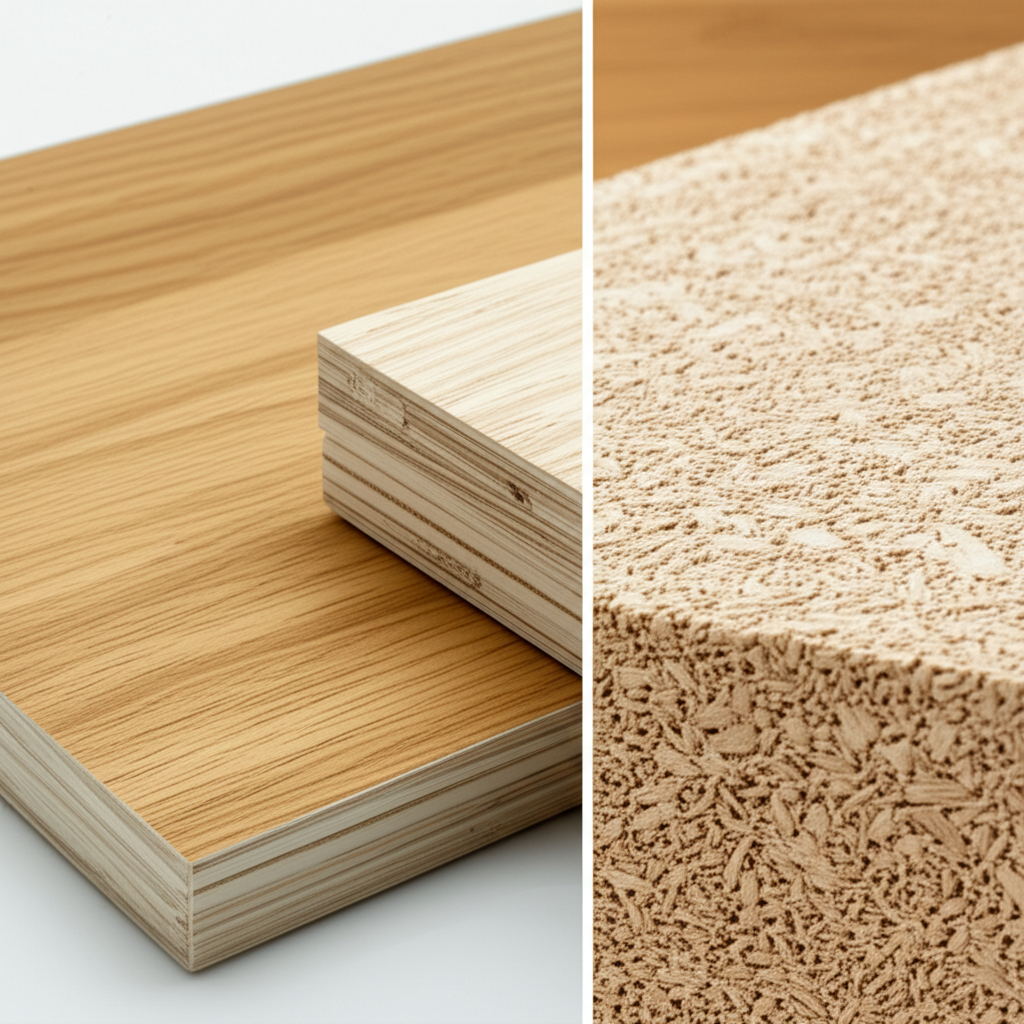
Engineered wood isn’t just one thing; it’s a whole family of wood products made by binding or fixing wood strands, particles, fibers, or veneers together with adhesives or other methods to form a composite material. This process often makes them stronger, more stable, and more versatile than solid wood in certain applications. It’s like taking the best parts of wood and making them even better!
Some common types of engineered wood you’ll likely encounter include:
- Plywood: Made by layering thin sheets of wood veneer (called plies) glued together with adjacent layers having their wood grain rotated up to 90 degrees to one another. This cross-graining construction gives plywood excellent strength and stability.
- Medium-Density Fiberboard (MDF): Created by breaking down hardwood or softwood into wood fibers, often in a defibrator, combining them with wax and a resin binder, and forming panels by applying high temperature and pressure. MDF is known for its smooth surface, making it great for painting and finishing.
- Oriented Strand Board (OSB): Made from cross-oriented layers, similar to plywood, but composed of rectangular structural-engineered strands (flakes) of wood arranged in cross-oriented layers. OSB is a popular choice for construction sheathing due to its strength and cost-effectiveness.
- Particle Board (also known as Chipboard): While technically a type of engineered wood, it’s often discussed separately because of its unique composition. It’s made from wood particles, such as wood chips, shavings, sawdust, and wood flour, bonded together with a synthetic resin or binder under heat and pressure.
- Laminated Veneer Lumber (LVL): This is a type of engineered wood product made by removing the natural defects from rotary-cut veneers, joining them with adhesives, and then curing them under heat and pressure. It’s incredibly strong and used for structural applications like beams and headers.
The manufacturing process for engineered wood allows manufacturers to create materials with specific properties, like increased resistance to warping, shrinking, and swelling compared to solid lumber. This makes them incredibly reliable for a wide range of projects.
Particle Board: The Budget-Friendly, Less Robust Cousin
As mentioned, particle board is a type of engineered wood, but it’s made from much smaller wood particles – think wood chips, sawdust, and shavings. These particles are mixed with a synthetic resin or binder and then pressed into sheets under heat and pressure.
The key difference lies in the size and type of wood material used. Particle board is essentially a compressed mixture of wood waste products. While this makes it an economical option, the larger particle size and less dense structure mean it’s not as strong or durable as other engineered wood products like plywood or MDF.
Because it’s made from loose particles, particle board has a tendency to crumble or break if it gets wet or if screws are driven in and out too many times. It also doesn’t hold screws as well as other wood products.
Engineered Wood vs. Particle Board: A Direct Comparison
Let’s break down how these two materials stack up against each other in key areas. This will help you see where each one shines and where it might fall short for your specific needs.
Strength and Durability
When it comes to sheer strength and how well a material will hold up over time, engineered wood products generally have the edge. Plywood, for instance, with its cross-grained layers, is remarkably strong and resistant to bending and breaking. MDF, while not as strong as plywood in terms of sheer load-bearing capacity, is very dense and offers a smooth, stable surface.
Particle board, on the other hand, is the least strong of the group. Its composition of loosely bound wood particles means it can be prone to cracking, chipping, and crumbling, especially around edges or where fasteners are inserted. It’s also susceptible to breaking under significant weight or stress.
Moisture Resistance
Moisture is the enemy of many wood products, and particle board is particularly vulnerable. When particle board gets wet, the wood particles swell, and the resin binder can break down, causing the material to disintegrate. It’s definitely not suitable for areas with high humidity or where spills are likely.
Engineered wood products vary in their moisture resistance. Plywood, especially exterior-grade plywood, is much more resistant to moisture than particle board. MDF can also absorb moisture and swell, though its density means it might hold its shape a bit better initially before degrading. For the best moisture resistance, you’d look at specialized marine-grade plywood or exterior-rated engineered panels.
Screw Holding and Machinability
How well a material holds screws is crucial for furniture building and cabinetry. Plywood generally offers excellent screw-holding power because the wood fibers in the plies grip the screw threads. MDF also has good screw-holding ability, especially when screws are inserted into the face of the board, though it can be prone to stripping if over-tightened.
Particle board’s Achilles’ heel is its screw-holding capacity. The loose particles don’t provide much grip, so screws can easily strip out. This means joints can become loose over time, compromising the integrity of your project. It’s often recommended to use longer screws or specialized fasteners when working with particle board, and pre-drilling is essential.
In terms of machining, MDF is known for its smooth cutting and easy routing, producing clean edges without splintering. Plywood can sometimes splinter along the grain, especially on the face veneers, requiring careful technique or scoring. Particle board can be machined, but it tends to produce a lot of dust and can chip if not cut with sharp blades and careful handling.
Cost
When budget is a primary concern, particle board is often the most attractive option. It’s typically the cheapest wood panel product available. This makes it a popular choice for very low-cost furniture, temporary structures, or projects where durability and longevity are not the main focus.
Plywood and MDF are generally more expensive than particle board, but they offer a significant increase in performance and longevity. The price difference is often justified by the enhanced strength, stability, and better screw-holding capabilities they provide. The cost of LVL and other specialized engineered woods can be significantly higher, reflecting their engineered performance.
Weight
Weight can be a factor, especially for larger projects or when you need to move pieces around. Particle board is generally lighter than plywood of the same thickness because of its less dense composition. MDF is typically denser and heavier than both particle board and plywood.
Applications and Best Uses
Understanding where each material excels will help you make the right choice:
- Plywood: Excellent for structural applications like subflooring, roof sheathing, wall panels, cabinetry, furniture carcasses, and any project requiring good strength and stability. It’s also a good choice for shelves that will hold a lot of weight.
- MDF: Ideal for painted furniture, cabinetry doors, decorative molding, speaker enclosures, and craft projects where a smooth, paintable surface is desired. It’s also good for shelving in dry environments.
- Particle Board: Best suited for very budget-conscious projects like inexpensive shelving, temporary furniture, or as a core material for laminate-covered surfaces where the laminate provides protection and strength. It’s also commonly used in the construction of flat-pack furniture.
Here’s a quick summary table to help visualize the differences:
| Feature | Engineered Wood (General – Plywood/MDF focus) | Particle Board |
|---|---|---|
| Strength | High (Plywood), Moderate-High (MDF) | Low to Moderate |
| Durability | Good to Excellent | Fair, prone to damage |
| Moisture Resistance | Moderate (Plywood), Low (MDF) | Very Low |
| Screw Holding | Good to Excellent | Poor to Fair |
| Machinability | Good (MDF smooth), Fair (Plywood can splinter) | Fair, dusty, can chip |
| Cost | Moderate to High | Low |
| Weight | Moderate (Plywood), High (MDF) | Low to Moderate |
| Best For | Cabinetry, furniture, structural elements, shelves | Budget furniture, temporary use, laminate substrates |
When to Choose Engineered Wood (and Why It’s Often the Proven Choice)
For most DIYers, especially those building furniture, cabinetry, or anything that needs to last, engineered wood is the way to go. Here’s why it’s often the proven choice:
- Longevity: Projects built with plywood or MDF will generally last much longer and withstand more use than those made with particle board. The better structural integrity means your shelves won’t sag, and your cabinet joints won’t loosen easily.
- Stability: Engineered wood products are less prone to warping, twisting, or expanding and contracting with changes in humidity compared to solid wood, and often much more so than particle board. This means your projects maintain their shape and integrity.
- Reliability: You can trust engineered wood to hold fasteners well, providing secure and durable joints. This is essential for anything that will be moved or used frequently.
- Versatility: Whether you need a strong, structural panel (plywood) or a smooth surface for painting (MDF), there’s an engineered wood product suited for the job.
Consider your local building codes and standards, too. For structural elements in construction, engineered wood products like plywood and OSB are often specified by engineers and architects due to their predictable performance characteristics, as discussed by organizations like the APA – The Engineered Wood Association. This adherence to standards translates to reliable performance in your DIY projects.
When Particle Board Might Be Okay
There are a few niche situations where particle board might be a reasonable choice, primarily driven by budget and specific project requirements:
- Extremely Tight Budget: If you absolutely cannot afford plywood or MDF, and your project is very simple and won’t experience much stress or moisture, particle board might be your only option.
- Temporary Structures: For something you know you’ll only use for a short time, like a display stand for a single event, particle board can be a cost-effective solution.
- As a Core Material for Laminates: Particle board is often used as the substrate for laminate flooring, countertops, and some furniture. In these cases, the laminate itself provides the wear surface and a degree of moisture protection. The particle board acts as a stable, inexpensive core.
- When Covered and Protected: If you plan to cover the particle board completely with laminate, veneer, or thick paint and seal it thoroughly, and keep it in a dry environment, it can perform acceptably for certain applications like the back panel of a cabinet or a temporary shelf.
However, even in these cases, it’s worth considering if the slight extra cost of plywood or MDF would provide a significantly better and longer-lasting result. Often, the small price difference saves you headaches down the line.
Tips for Working with Engineered Wood and Particle Board
No matter which material you choose, a few tips will make your woodworking experience smoother and your projects better.
Working with Engineered Wood
- Use Sharp Blades: Plywood and MDF cut best with sharp, carbide-tipped blades. For MDF, a triple-chip grind blade is excellent for clean cuts.
- Score and Cut: For plywood, especially veneer-ply, scoring the cut line with a utility knife before sawing can help prevent tear-out.
- Dust Collection: MDF produces very fine dust that can be harmful if inhaled. Always use a good dust mask or a dust collection system when cutting or sanding MDF.
- Sanding: MDF sands beautifully to a smooth finish, perfect for painting. Plywood can be sanded to smooth out any rough spots or edges.
- Fastening: Use appropriate screws and consider wood glue for stronger joints. For load-bearing shelves, ensure adequate support and consider thicker panels.
Working with Particle Board
If you do opt for particle board, keep these in mind:
- Pre-Drill and Countersink: Always pre-drill pilot holes for screws to prevent the particle board from splitting. Countersink the holes so the screw heads sit flush.
- Use Longer Screws (Carefully): Longer screws can sometimes get a better grip in the denser core of the board, but be careful not to overtighten, which will strip the holes.
- Edge Banding: Apply edge banding to exposed edges to improve appearance, protect against minor bumps, and prevent moisture ingress.
- Avoid Moisture: Keep particle board projects away from water, high humidity, and potential spills.
- Support: Provide ample support for shelves made from particle board to prevent sagging. Consider adding a front edge support or using thicker material.
Frequently Asked Questions (FAQ)
Here are some common questions beginner woodworkers have about engineered wood and particle board:
Q1: Is plywood stronger than particle board?
A1: Yes, generally speaking, plywood is significantly stronger and more durable than particle board. This is due to its construction of layered wood veneers glued at alternating angles, which creates a more stable and robust panel.
Q2: Can I use particle board for kitchen cabinets?
A2: While particle board is sometimes used for cabinet carcasses in very budget-friendly options, it’s generally not recommended for long-term durability, especially in a kitchen environment where moisture and heavy use are common. Plywood or MDF are much better choices for cabinet construction.
Q3: Which is better for painting: MDF or plywood?
A3: MDF is typically considered better for painting than plywood. It has a uniformly smooth surface with no grain pattern, which allows for a very smooth, furniture-quality finish when primed and painted. Plywood can sometimes show the grain through thinner paint, or the face veneers might splinter if not prepped properly.
Q4: Will particle board hold screws if I take them out and put them back in?
A4: Particle board has very poor screw-holding power, especially after a screw has been inserted and removed. The wood particles can crumble, stripping the hole. It’s best to avoid removing and reinserting screws in particle board if possible, or use wood glue and ensure screws are snug but not overtightened.
Q5: Is engineered wood always better than solid wood?
A5: Not necessarily. Solid wood has its own unique advantages, like the natural beauty of its grain, ease of repair, and often greater strength in specific applications. Engineered wood excels in stability, resistance to warping, and cost-effectiveness for large panels. The “better” choice depends entirely on the project’s needs and desired aesthetic.
Q6: What is the difference between MDF and particle board?
A6: The main difference is the size of the wood particles used. MDF is made from very fine wood fibers, creating a dense, smooth, and uniform panel. Particle board is made from larger wood chips, shavings, and sawdust, resulting in a less dense and less uniform material with a rougher texture.
Q7: Can I use particle board for shelves that will hold books?
A7: It’s not ideal. Particle board shelves are prone to sagging under the weight of books. If you must use particle board, ensure the shelves are very short in span and well-supported, or consider a thicker grade of particle board. Plywood shelves will provide much better support and longevity.
Conclusion: Making the Proven Choice for Your Projects
So, there you have it! When you’re standing there, trying to decide between engineered wood and particle board, remember this: for most woodworking projects that you want to be strong, stable, and last for years, engineered wood is the proven, reliable choice. Plywood and MDF offer superior performance in terms of strength, durability, and how well they hold fasteners.
While particle board has its place, especially for extremely budget-conscious or temporary applications, its limitations in strength and moisture resistance often make it a material that can lead to frustration and premature failure in your projects.
By understanding the differences, you can confidently select the right material for your next build, ensuring a successful and satisfying outcome. Happy building, and may your projects be strong and beautiful!