
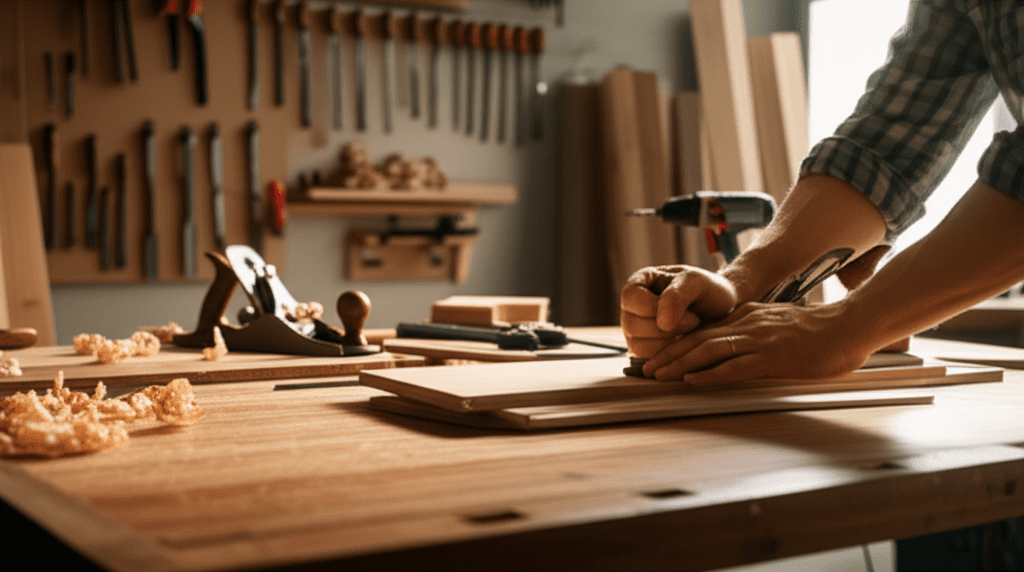
Engineered wood is generally the superior choice over particle board due to its enhanced durability, moisture resistance, and structural integrity, making it ideal for a wider range of woodworking projects.
Choosing the right wood for your projects can feel like a puzzle, especially when you’re just starting out. You’ve probably seen “engineered wood” and “particle board” used in furniture, cabinets, and more, and wondered what the real difference is. Both are wood products, but how they’re made leads to very different strengths and weaknesses. Don’t worry, we’re going to break it down so you can make confident choices for your next build. We’ll explore what makes each material tick and help you decide which one is the proven choice for your needs.
What Exactly is Engineered Wood?
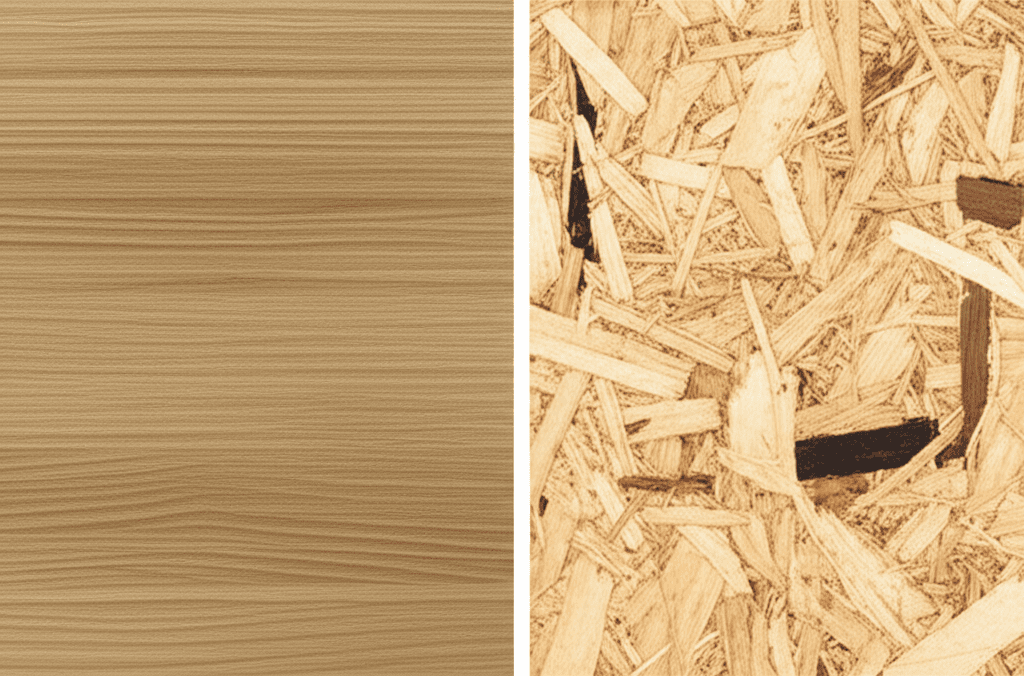
Engineered wood is a fantastic category of wood products made by binding together wood strands, particles, fibers, or veneers with adhesives or other binding agents. Think of it as a team effort where smaller wood pieces are combined to create larger, more stable panels. This process often results in materials that are stronger, more dimensionally stable, and sometimes even more resistant to moisture than solid lumber. Because it’s engineered, manufacturers can control its properties, making it a reliable choice for many applications.
The beauty of engineered wood lies in its versatility. By altering the size and type of wood particles and the binding agents used, you can create materials with specific characteristics. This means engineered wood isn’t just one thing; it’s a family of products, each suited for different jobs. We’ll dive into some of the most common types you’ll encounter.
Common Types of Engineered Wood
When we talk about engineered wood, several familiar names pop up. Understanding these types will give you a clearer picture of what you’re working with and why they’re so popular in woodworking and construction.
- Plywood: This is perhaps the most well-known type of engineered wood. Plywood is made by layering thin sheets of wood veneer, called plies, with their wood grain rotated at right angles to each other. This cross-graining construction gives plywood incredible strength and stability, resisting warping and cracking. It’s a workhorse material, found everywhere from furniture backs to structural sheathing.
- Medium-Density Fiberboard (MDF): MDF is created by breaking down hardwood or softwood into wood fibers, often in a defibrator, combining them with wax and a resin binder, and forming panels by applying high temperature and pressure. MDF is known for its smooth, uniform surface, making it excellent for painting and finishing. It’s dense and stable, but it can be susceptible to moisture damage if not sealed properly.
- Oriented Strand Board (OSB): OSB is made from cross-oriented layers, similar to plywood, but instead of veneers, it uses strands or wafers of wood. These strands are coated with adhesives and then pressed into large mats, which are then cured under heat and pressure. OSB is strong and cost-effective, commonly used in construction for subflooring, wall sheathing, and roof decking.
- Particle Board (Chipboard): While technically a type of engineered wood, particle board is made from wood chips, shavings, sawdust, and other wood particles that are bonded together with a synthetic resin. It’s generally less dense and strong than plywood or MDF and is particularly vulnerable to moisture. It’s often used in less demanding applications like furniture cores or underlayment.
- Glued Laminated Timber (Glulam): Glulam is made by bonding together individual wood laminations with durable, waterproof adhesives. It’s incredibly strong and can be manufactured into large, complex shapes. You’ll often see Glulam used in beams and arches for structural applications in buildings.
What Exactly is Particle Board?
Particle board, also known as chipboard or low-density fiberboard (LDF), is a composite material manufactured from wood particles. These particles can range from fine sawdust to larger wood chips and shavings. These wood bits are mixed with a synthetic resin or binder, such as urea-formaldehyde, and then compressed under heat and pressure to form rigid sheets.
The key characteristic of particle board is its composition: it’s essentially compressed wood scraps. This makes it a relatively inexpensive material to produce. However, the binding agents and the nature of the particles mean it has different properties compared to denser engineered wood products like plywood or MDF. While it has its uses, understanding its limitations is crucial for any DIYer.
Engineered Wood vs Particle Board: The Key Differences
Now that we have a basic understanding of both, let’s get down to the nitty-gritty. When you’re deciding between engineered wood and particle board for your project, it’s all about how they stack up in terms of strength, durability, moisture resistance, and cost. This comparison will help you see why one might be a better fit than the other for your specific needs.
Here’s a breakdown of how these two materials compare across several important factors:
| Feature | Engineered Wood (General, e.g., Plywood, MDF) | Particle Board |
|---|---|---|
| Composition | Wood veneers (plywood), wood fibers (MDF), wood strands (OSB) bonded with adhesives. | Wood chips, shavings, sawdust, and particles bonded with synthetic resin. |
| Strength & Durability | Generally high. Plywood offers excellent shear strength and stability. MDF is dense and smooth. OSB is strong for structural applications. | Lower. Prone to sagging under weight, especially over longer spans. Edges can be brittle and easily damaged. |
| Moisture Resistance | Varies by type. Exterior-grade plywood and some MDF/OSB are treated for moisture resistance. Interior grades can still be affected. | Poor. Highly susceptible to swelling and disintegration when exposed to moisture. Requires sealing. |
| Screw Holding Power | Good to excellent. Plywood holds screws well throughout its thickness. MDF holds screws well in its face but less so in the edges. | Poor to fair. Screws can strip easily, especially when driven into edges or if the board is thin. Often requires special fasteners or pre-drilling. |
| Machining & Finishing | Generally good. Plywood can splinter if not cut carefully. MDF machines smoothly, ideal for intricate details and painting. | Can be challenging. Produces fine dust. Edges can chip or crumble during cutting and routing. Finishing requires careful preparation. |
| Cost | Can range from moderate to high, depending on the type and grade. | Typically the most affordable option among wood composites. |
| Weight | Varies. Plywood is lighter than MDF of the same thickness. OSB is also relatively light. | Can be heavy due to its density, especially MDF, but generally comparable to plywood. |
| Applications | Furniture carcasses, cabinet doors, shelving, subflooring, structural sheathing, decorative panels. | Budget furniture, shelving (where load is minimal), underlayment, laminate flooring cores, cabinet bases. |
Pros and Cons of Engineered Wood
Engineered wood, in its various forms, offers a lot of advantages for woodworkers. However, like any material, it’s not without its drawbacks. Understanding these will help you pick the right type for your project.
Pros of Engineered Wood:
- Dimensional Stability: Engineered wood is less prone to expanding and contracting with changes in humidity compared to solid wood. This means your projects are less likely to warp or crack.
- Strength and Durability: Many types, like plywood and OSB, offer excellent structural integrity and can withstand significant loads.
- Versatility: The ability to engineer specific properties means there’s likely an engineered wood product suitable for almost any application, from furniture to framing.
- Cost-Effective Alternatives: Often, engineered wood can be more affordable than solid lumber while providing comparable or even superior performance in certain areas. For example, plywood is often cheaper than solid wood for large panels.
- Smooth Surfaces (MDF): MDF provides an exceptionally smooth surface, perfect for painting or applying veneers without the grain showing through.
- Resource Efficiency: It utilizes wood fibers and by-products, making it a more sustainable choice by reducing waste from lumber production.
Cons of Engineered Wood:
- Moisture Sensitivity (Some Types): While some engineered woods have moisture resistance, many interior-grade products can swell or delaminate if exposed to excessive moisture. Proper sealing is often necessary.
- Edge Finishing: While MDF offers a smooth face, its edges can be porous and require extra attention (filling, sanding) for a clean finish. Plywood edges can sometimes show the plies, which might not be desirable for all aesthetics.
- Weight: Some engineered woods, particularly MDF, can be quite heavy, which can make handling and installation more challenging.
- Potential for Formaldehyde: Some older or lower-quality engineered wood products may contain formaldehyde-based adhesives, which can off-gas. Look for low-VOC (Volatile Organic Compound) or formaldehyde-free options. The U.S. Environmental Protection Agency (EPA) provides valuable information on formaldehyde and health.
- Tool Wear: The adhesives and density of some engineered woods, like MDF, can wear down saw blades and router bits more quickly than solid wood.
Pros and Cons of Particle Board
Particle board is often chosen for its budget-friendly nature. However, its advantages are limited, and its disadvantages are significant for many woodworking applications. Let’s look at both sides.
Pros of Particle Board:
- Affordability: This is the primary advantage. Particle board is usually the cheapest option among wood composite panels, making it attractive for very tight budgets.
- Smooth Surface: It offers a uniform, smooth surface that is consistent throughout the panel, which can be beneficial for laminate or veneer applications where a perfectly flat substrate is needed.
- Easy to Work With (with caution): It cuts relatively easily, though it produces a lot of fine dust.
- Consistent Density: Unlike solid wood, particle board has a consistent density, meaning there are no knots or grain variations to contend with.
Cons of Particle Board:
- Low Strength and Durability: Particle board is not very strong. It can sag under moderate weight, making it unsuitable for long shelves or structural components. It’s also prone to chipping and breaking, especially on the edges.
- Poor Moisture Resistance: This is a major drawback. Particle board readily absorbs moisture, causing it to swell, warp, and lose its structural integrity. It will often disintegrate if it gets significantly wet.
- Weak Screw Holding: Screws don’t hold well in particle board, especially on the edges. The particles can easily strip out, leading to loose joints.
- Dust Production: When cut or sanded, particle board produces very fine dust that can be irritating and requires good dust collection and personal protective equipment (PPE).
- Environmental Concerns: Many particle boards use formaldehyde-based adhesives, which can be a health concern.
- Limited Lifespan: Due to its lower strength and moisture sensitivity, projects made with particle board often have a shorter lifespan compared to those made with better engineered wood or solid wood.
When to Choose Engineered Wood
Engineered wood is a fantastic choice for a wide array of projects, especially when you need reliable performance and durability. Here are some scenarios where engineered wood shines:
- Furniture Construction: For cabinet boxes, shelving, tabletops, and even drawer sides, plywood and MDF are excellent choices. Plywood offers great strength, while MDF provides a smooth surface for painting or veneering.
- Cabinet Doors: MDF is particularly popular for cabinet doors because its smooth surface takes paint beautifully, and it machines well for raised panel or shaker styles.
- Structural Applications: OSB and exterior-grade plywood are standard in construction for subflooring, wall sheathing, and roof decking due to their strength and ability to withstand the elements.
- Projects Requiring Precision Finishing: If you plan to paint a project, MDF is often preferred because it doesn’t have wood grain that can show through the paint.
- Areas with Potential Moisture: While not completely waterproof, exterior-grade plywood or moisture-resistant MDF can handle slightly damp environments better than particle board.
- When Screw Holding is Important: Plywood, in particular, offers good screw-holding power throughout its thickness, making for stronger joinery.
For a deeper dive into wood selection for furniture, resources like Woodworking Network’s wood types guide can be very helpful.
When to Consider Particle Board
Despite its limitations, particle board does have a place in the woodworking world, primarily when budget is the main concern and the application is not demanding. Here’s when you might consider it:
- Very Budget-Conscious Projects: If you need to create something functional but cost is the absolute priority, and the item won’t be subjected to heavy use or moisture.
- Underlayment: It can be used as an underlayment for flooring or as a base for laminates where its primary job is to provide a smooth, flat surface and it won’t be directly exposed.
- Temporary Structures or Jigs: For temporary shop jigs, temporary shelving, or very light-duty furniture that you don’t expect to last for decades.
- Areas Where It Will Be Fully Encapsulated: If you plan to cover it entirely with a thick, durable laminate or veneer and seal all edges meticulously, it might hold up better. However, even then, its inherent weakness to moisture remains a risk.
- Testing Designs: As a very cheap material to prototype a design before committing to more expensive wood.
It’s important to reiterate that even in these applications, you need to be mindful of its limitations. For instance, if building a desk with a laminate top, particle board is often used as the core, but the laminate and edge banding are crucial for protection. If those are compromised, the particle board will likely fail.
Working with Engineered Wood and Particle Board: Tips for Success
Whether you’re using engineered wood or particle board, a few tips can make your woodworking experience smoother and lead to better results. These apply whether you’re building a simple shelf or a complex cabinet.
Tips for Working with Engineered Wood:
- Use the Right Blades: For plywood, use blades designed for cross-cutting to minimize tear-out. For MDF, a carbide-tipped blade with a high tooth count will give you the smoothest cuts and last longer. Popular Mechanics offers great advice on saw blades.
- Support Your Material: When cutting large sheets of plywood or MDF, ensure they are well-supported to prevent sagging and binding, which can lead to inaccurate cuts or dangerous situations.
- Pre-Drill for Screws: While plywood holds screws well, pre-drilling pilot holes will make driving screws easier and prevent splitting, especially near edges.
- Sanding and Finishing: MDF sands very smoothly, but its edges can be porous. Use a good quality primer and multiple coats of paint for a flawless finish. For plywood, you might need to fill the occasional void or sand edges to hide the ply layers if desired.
- Dust Collection is Key: Both materials produce dust, but MDF dust is particularly fine. Always use a dust mask or respirator and ensure your shop has good dust collection.
Tips for Working with Particle Board:
- Use Sharp Blades: Because particle board can chip, use very sharp blades with a high tooth count for cleaner cuts.
- Support Carefully: Support the workpiece on both sides of the cut line to prevent the particle board from breaking.
- Pre-Drill and Countersink: Always pre-drill pilot holes for screws and consider using slightly larger screws that can get a better grip on the particles. Countersinking will help the screw head sit flush.
- Edge Sealing is Crucial: If you must use particle board, sealing the edges with a good quality wood glue, filler, or edge banding is essential to prevent moisture absorption and chipping.
- Avoid Moisture: Keep particle board projects away from damp areas or any place where spills are likely.
- Use Appropriate Adhesives: Ensure the adhesive you use is compatible with particle board and the specific application.
Frequently Asked Questions
Is engineered wood stronger than particle board?
Yes, generally engineered wood products like plywood and OSB are significantly stronger and more durable than particle board. Plywood’s cross-grained construction provides excellent shear strength, while OSB is engineered for structural stability. Particle board is prone to sagging and breaking.
Can I use particle board for shelving?
It’s not recommended for anything requiring significant weight-bearing capacity. Particle board tends to sag over time, especially if the shelf spans are long. For light-duty shelving, like in a closet for sweaters, it might suffice if properly supported, but plywood or solid wood are far better choices for longevity and safety.
Which is better for painting: engineered wood or particle board?
Medium-Density Fiberboard (MDF), a type of engineered wood, is generally considered superior for painting. It offers a very smooth, uniform surface without wood grain, which allows for a flawless painted finish with minimal prep. Particle board can be painted, but its surface is less uniform, and it’s more prone to chipping or swelling if not sealed perfectly.
Is engineered wood waterproof?
Most common engineered woods like standard plywood, MDF, and particle board are not waterproof. However, there are specific types designed for moisture resistance, such as exterior-grade plywood or moisture-resistant MDF, which use special adhesives and treatments. These are water-resistant but not entirely waterproof. Always check the product specifications for moisture performance.
Are there health concerns with engineered wood or particle board?
Some engineered wood and particle board products can release formaldehyde from the adhesives used in their manufacturing. Formaldehyde is a known irritant and potential carcinogen. Look for products labeled as low-VOC or formaldehyde-free. The EPA provides comprehensive information on indoor air quality and formaldehyde.
Can I use engineered wood outdoors?
Generally, standard interior-grade engineered wood is not suitable for outdoor use as it will degrade quickly when exposed to weather. However, exterior-grade plywood is specifically designed for outdoor applications and can withstand moisture and temperature fluctuations much better, though it still benefits from protective finishes.
What is the difference between MDF and plywood?
MDF is made from fine wood fibers bonded together, creating a dense, smooth panel with no grain pattern, ideal for painting. Plywood is made from thin layers of wood veneer glued together with their grains at right angles, offering greater strength, stability, and resistance to warping and splitting. Plywood is generally stronger and holds screws better than MDF.
Conclusion: Your Proven Choice
Navigating the world of wood materials can seem daunting, but understanding the core differences between engineered wood and particle board empowers you to make the best decisions for your woodworking projects. As we’ve explored, engineered wood, with its various forms like plywood and MDF, offers superior strength, stability, and versatility, making it the proven choice for most applications where durability and quality are important.
Particle board, while attractive for its low cost, has significant limitations in strength and moisture resistance that often make it a less reliable option for anything beyond very light-duty or temporary uses.
By considering the specific demands of your project – whether it’s holding weight, resisting moisture, or achieving a flawless finish – you can confidently select the right material. Remember, investing a little more in a quality engineered wood product often means a project that lasts longer, performs better, and brings you more satisfaction. Happy building!