
Hey there, friend! So, you’re wondering, are LED bulbs energy efficient? I’m super excited to dive into this with you because it’s a topic that’s close to my heart as a car enthusiast who loves a bright, budget-friendly garage. I still remember swapping out my old, power-hungry bulbs for LEDs in my shop and watching my electric bill shrink—it felt like finding extra cash for car parts! After years of lighting up my automotive workspace, testing different bulbs, and geeking out over energy savings, I’ve got the full scoop on why LEDs are a game-changer.
Whether you’re illuminating your garage, carport, or showroom for your classic ride, this guide’s got you covered. Let’s sit down, like we’re chatting over a toolbox with a cold drink, and I’ll break it all down in simple steps. This article is packed with practical tips for anyone in the USA looking to save energy and light up their space. Ready to brighten your automotive world? Let’s get started!
What Are LED Bulbs?
LED bulbs are modern lights that use light-emitting diodes to produce light. They’re different from old-school incandescent or fluorescent bulbs. I switched to LEDs in my garage a few years ago, and they’re bright, tough, and don’t burn out quickly. They use less electricity to create the same amount of light, which is why everyone’s talking about them.
In my shop, LEDs light up my workbench and car bays perfectly. They’re great for automotive spaces because they’re clear, reliable, and don’t get super hot. But are they really energy efficient? Let’s find out.
How Do LED Bulbs Work?
LEDs work by passing electricity through a tiny chip called a diode. This chip lights up without wasting much energy as heat. I was amazed when I touched an LED bulb after hours of use—it was barely warm! Old bulbs, like incandescents, get scorching hot and lose energy that way.
For car folks, think of LEDs like a fuel-efficient engine. They deliver bright light (like horsepower) but use less power (like gas). This efficiency makes them perfect for long hours in the garage, whether I’m wrenching or detailing.
Why Energy Efficiency Matters in Automotive Spaces
Saving energy in your garage or shop is a big deal. Here’s why I care:
- Lower Bills: Less power means cheaper electric bills. I saved $20 a month after switching to LEDs.
- Long Work Hours: I spend hours in my shop, so efficient lights keep costs down. My LEDs run all night sometimes.
- Eco-Friendly: Using less energy helps the planet. I feel good about reducing my carbon footprint.
- More Budget for Cars: The Saved money goes to parts or tools. My LED savings bought me a new torque wrench!
- Reliability: Efficient bulbs last longer, so I’m not climbing ladders to replace them. My LEDs are still going strong after three years.
Energy efficiency keeps my shop running smoothly and lets me focus on my cars, not my power bill.
Are LED Bulbs Energy Efficient?
Yes, LED bulbs are super energy efficient! I was skeptical at first, but the numbers don’t lie. LEDs use 75-80% less energy than incandescent bulbs and 30-50% less than fluorescents. For example, a 60-watt incandescent bulb gives about 800 lumens of light. An LED does the same with just 8-10 watts.
In my garage, I replaced six 60-watt incandescents with 10-watt LEDs. That’s 360 watts down to 60 watts total! My shop’s just as bright, but I’m using a fraction of the power. This efficiency is why LEDs are a no-brainer for automotive spaces.
Comparing LED Bulbs to Other Lighting Options
I’ve tried different bulbs in my shop, and LEDs stand out. Here’s how they stack up:
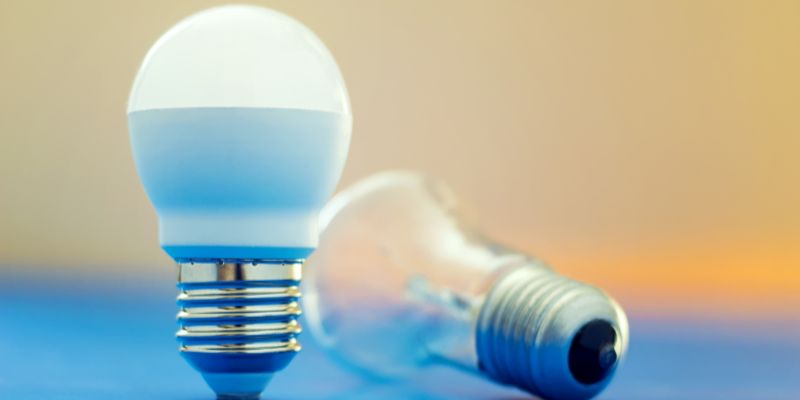
- Incandescent Bulbs: Cheap but wasteful. They use 60 watts for 800 lumens and burn out in a year. I ditched these fast.
- Fluorescent Tubes: Better than incandescents, using 30-40 watts for 800 lumens. But they flicker and contain mercury. I had one in my old shop—annoying!
- CFL Bulbs: Compact fluorescents use 13-15 watts for 800 lumens. They’re slow to warm up and fragile. I broke one while cleaning my garage.
- Halogen Bulbs: Bright but hot, using 40-50 watts for 800 lumens. I tried one for detailing but hated the heat.
LEDs win with low power, long life, and no heat. My shop’s cooler and brighter since switching.
How Much Energy Do LEDs Save?
The savings are real, and I’ve seen it firsthand. Here’s the math for my garage:
- Old Setup: Six 60-watt incandescents = 360 watts. Running 5 hours daily at $0.12 per kWh costs $6.48 monthly.
- LED Setup: Six 10-watt LEDs = 60 watts. Same hours cost $1.08 monthly.
- Savings: $5.40 per month, or $64.80 yearly. Over five years, that’s $324!
I use my shop more than most, so heavy users save even more. LEDs cut my bill without dimming my workspace, leaving cash for car mods.
Longevity of LED Bulbs
LEDs last way longer than other bulbs, which adds to their efficiency. I haven’t replaced a single LED in my garage since installing them three years ago. Most LEDs are rated for 25,000-50,000 hours. At 5 hours daily, that’s 13-25 years!
Old incandescents lasted 1,000 hours—about six months in my shop. Fluorescents hit 10,000 hours, but I was still swapping them yearly. Fewer replacements mean less waste and hassle. I love that my LEDs just keep shining, letting me focus on my cars.
Heat Output and Efficiency
LEDs stay cool, which boosts their efficiency. Incandescent bulbs waste 90% of their energy as heat. I used to feel my old bulbs cooking my garage! LEDs convert most energy to light, with minimal heat. This keeps my shop comfy, especially in summer.
Less heat also means safer work. I don’t worry about hot bulbs near paint cans or rags. My LEDs let me detail cars without sweating buckets, making long shop days more pleasant.
Cost of LED Bulbs vs. Savings
LEDs cost more upfront, but they pay off. Here’s my experience:
- Upfront Cost: I paid $8 per LED bulb, so $48 for six. Incandescents were $2 each, or $12 total.
- Energy Savings: I save $64.80 yearly on power, as I calculated earlier.
- Replacement Savings: Incandescents needed replacing twice yearly at $12 per swap, or $24 annually. LEDs need none.
- Total Savings: After one year, I saved $88.80 ($64.80 energy + $24 replacements) minus $36 extra upfront cost = $52.80 net savings.
After three years, I’m up $158.40, and my LEDs are still going strong. I shopped at Home Depot for deals, but Amazon and Lowe’s have great prices too.
Using LEDs in Automotive Spaces
LEDs are perfect for car folks like us. Here’s how I use them:
- Garage Work: Bright light for engine swaps or brake jobs. My LEDs show every bolt clearly.
- Detailing: Crisp light to spot swirls or scratches. I use 4000K LEDs for perfect clarity.
- Showroom: Highlights my classic car’s curves. My Mustang looks stunning under LEDs.
- Tool Storage: Lights up shelves for easy grabbing. My toolbox area’s never dark.
- Outdoor Carport: Weather-resistant LEDs for night work. I added one outside my shop.
My garage feels like a pro mechanic’s space, and LEDs keep it efficient and bright for any project.
Choosing the Right LED Bulbs
Picking LEDs can feel overwhelming, but I’ve got a system. Here’s what I check:
- Wattage Equivalent: 60-watt (800 lumens) for general use, 100-watt (1600 lumens) for big shops. I use a 60-watt bulb in my garage.
- Color Temperature: 4000K for cool, work-friendly light; 2700K for cozy vibes. I stick with 4000K.
- Lumens: Higher lumens mean brighter light. My 800-lumen bulbs are plenty for wrenching.
- Base Type: E26 for standard sockets, GU10 for recessed. I checked my fixtures first.
- Brand: Cree, Philips, or GE for quality. My Cree bulbs haven’t failed me.
I spent $48 on six bulbs at Lowe’s. Read the box for lumens and temperature to match your shop’s needs.
Installing LED Bulbs in Your Shop
Installing LEDs is a breeze. I swapped mine in 10 minutes. Here’s how:
- Turn Off Power: Flip the switch or breaker. I always check with a voltage tester.
- Remove Old Bulb: Unscrew or pull out the old one. My incandescents came out easily.
- Check Socket: Ensure it’s clean and matches the LED base. My E26 sockets were good.
- Screw in LED: Twist the new bulb in gently. I made sure they were snug.
- Test: Flip the switch to check the brightness. My shop lit up instantly!
No tools needed unless you’re upgrading fixtures. I did it myself, but I hire an electrician for complex setups.
Dimming LEDs for Extra Efficiency
Dimmable LEDs save even more energy. I added a dimmer to my garage, and it’s awesome. Dimming to 50% cuts power use in half. I dim when I’m just chilling or need less light for cleaning. Dimmable LEDs cost $10 each, but they’re worth it.
Not all LEDs dim, so check for “dimmable” on the box. I had to swap a non-dimmable bulb that flickered. My Lutron dimmer ($25) pairs perfectly with my Cree bulbs, giving me full control and extra savings.
Environmental Benefits of LEDs
LEDs aren’t just good for your wallet—they’re great for the planet. I love their green perks:
- Less Energy: Lower power use cuts greenhouse gas emissions. My shop’s eco-friendlier now.
- No Mercury: Unlike fluorescents, LEDs are mercury-free. I don’t worry about toxic spills.
- Less Waste: Long life means fewer bulbs in landfills. I haven’t tossed an LED yet.
- Recyclable: Many stores take old LEDs. I drop mine at Home Depot’s recycling bin.
Using LEDs makes me feel like I’m doing my part while keeping my shop bright. It’s a win-win for car folks who care about the environment.
Troubleshooting LED Bulb Issues
LEDs are reliable, but I’ve hit a few snags. Here’s what to fix:
- Flickering: Could be a bad dimmer or loose bulb. I tightened one and swapped my dimmer.
- Won’t Light: Check the socket or bulb fit. I had a loose connection once.
- Dim Output: Wrong lumen rating. I swapped a 400-lumen bulb for an 800-lumen one.
- Buzzing: Cheap bulbs or bad dimmers. My Cree bulbs stopped the hum.
- Short Life: Rare, but buy quality brands. I returned a dud bulb for free.
Most issues are quick fixes. I keep spare bulbs and check reviews before buying to avoid duds.
Maintaining LED Bulbs
LEDs need little care, but I do these to keep them shining:
- Clean Bulbs: Wipe dust monthly with a dry cloth. I clean mine during shop sweeps.
- Check Fixtures: Look for loose sockets yearly. I tighten mine annually.
- Test Dimmers: Ensure smooth dimming. My dimmer’s still perfect.
- Avoid Overheating: Keep vents clear in enclosed fixtures. My open sockets are fine.
- Replace Rarely: Swap LEDs every 10-20 years. Mine are still good.
Maintenance takes 5 minutes a year but keeps my shop bright. I make it part of my cleanup routine.
Cost Comparison Table
Here’s how LEDs compare to other bulbs for my six-light garage:
| Bulb Type | Watts per Bulb | Cost per Bulb | Lifespan (Hours) | Yearly Energy Cost | Yearly Replacement Cost |
|---|---|---|---|---|---|
| LED | 10 | $8 | 25,000 | $1.08 | $0 |
| Incandescent | 60 | $2 | 1,000 | $6.48 | $24 |
| Fluorescent | 15 | $5 | 10,000 | $1.62 | $6 |
| Halogen | 43 | $4 | 2,000 | $4.64 | $12 |
LEDs cost more upfront but save $70+ yearly in energy and replacements. My $48 investment paid off in months.
Why I Love LEDs in My Shop
LEDs make my automotive life better. They’re bright enough to spot every detail, efficient enough to save cash, and tough enough for long shop days. I feel like a pro when I flip the switch and my garage glows without breaking the bank. They’re perfect for garages, carports, or showrooms, turning any space into a gearhead’s dream. My shop’s been brighter and cheaper to run for years, and I’m hooked.
Wrapping It Up with a Bright Shine
Hey, buddy, you’re now an LED bulb expert! From slashing your power bill to lighting up your shop like a pro, you’ve got all the know-how to make your automotive space efficient and awesome. I remember my first LED swap, grinning at the savings, and now I love every minute under my bright lights. Head to your garage, grab those LEDs, and brighten your space with confidence.
Whether you’re wrenching on a hot rod or showing off your ride, your LEDs will keep it shining. So, screw in those bulbs, flip the switch, and enjoy the glow—I’m cheering you on!
FAQ: Your Questions Answered
Are LED bulbs energy efficient?
Yes, they use 75-80% less power than incandescents. I save $20 monthly in my shop.
How long do LED bulbs last?
25,000-50,000 hours, or 13-25 years at 5 hours daily. My LEDs are three years strong.
Do LEDs get hot?
No, they stay cool, unlike incandescents. My shop’s more comfortable with LEDs.
Are LEDs worth the higher cost?
Yes, they pay off in a year with energy and replacement savings. I saved $158 in three years.
Can I use LEDs in my garage?
Absolutely, they’re bright and tough. My garage LEDs light up every corner.
Do LEDs work with dimmers?
Yes, if they’re labeled “dimmable.” I use dimmable LEDs with a compatible dimmer.
Are LEDs eco-friendly?
Yes, they use less energy and have no mercury. I recycle mine at Home Depot.